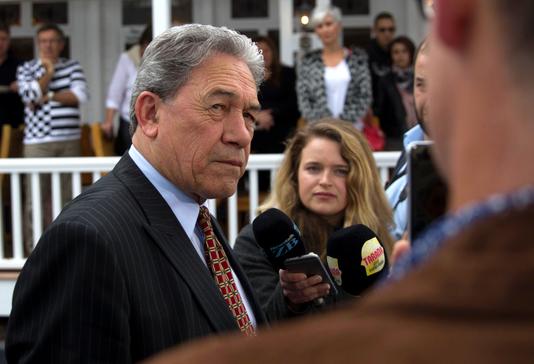
Hon GERRY BROWNLEE (Acting Minister of Agriculture) Link to this
I move, That the Dairy Industry Restructuring (Raw Milk Pricing Methods) Bill be now read a first time. At the appropriate time I intend to move that the Dairy Industry Restructuring (Raw Milk Pricing Methods) Bill be considered by the Primary Production Committee, that the committee present its final report on or before 2 March 2010, and that the committee have the authority to meet at any time while the House is sitting, except during oral questions and during any evening on a day on which there has been a sitting of the House, and on a Friday in a week in which there has been a sitting of the House, despite Standing Orders 187 and 190(1)(b) and (c).
This Government is committed to delivering growth in order to ensure prosperity for all New Zealanders. Part of delivering on this commitment is ensuring a fair and competitive business environment. To this end, the Minister of Agriculture, the Hon David Carter, announced in September the Government’s decision to introduce a bill to amend the Dairy Industry Restructuring Act 2001 in order to replace the current regulated price formula for raw milk. The Dairy Industry Restructuring Act provided the authorisation that permitted the merger of the New Zealand Dairy Board, Kiwi Co-operative Dairies Ltd, and the New Zealand Dairy Group, to form the Fonterra Cooperative Group Ltd.
The Act promotes the efficient operation of dairy markets in New Zealand, and it does that by regulating the activities of Fonterra, thereby ensuring that the market for dairy goods and services is contestable. The contestability is achieved by a suite of pro-competitive measures, which include permitting the Minister of Agriculture to make regulations that compel Fonterra to supply up to 5 percent of its raw milk to independent processors at a regulated price. Raw milk is the milk collected from the farms before it undergoes any processing. The Minister may also specify the price, the method for determining the price, and other items and conditions.
The Act is also the empowering legislation for the Dairy Industry Restructuring (Raw Milk) Regulations, which we seek to amend with this new bill. The review of the raw milk regulations in 2008 identified that Fonterra was forced to sell the raw milk at a price much less than what it paid farmers for the supply of the raw milk, due to the formula being used. That was never the intent of the regulations. This bill proposes to replace the current regulated price formula for raw milk with the Fonterra farm-gate milk price, plus 10c per kilogram of milksolids, for the 2010-11 dairy season. The Fonterra farm-gate price is the milk component of the Fonterra payout, and represents the average price Fonterra pays its farmers for raw milk across the season. The 10c margin addresses the fact that independent processors can access a square or uniform milk supply, rather than a seasonal supply—a much more desirable result for all parties. Given that the uniform supply is considerably more valuable to processors than a seasonal one, the Government considers it fair that the regulations permit a margin to reflect just that.
The price change addresses the immediate underpricing of raw milk. The change is needed to ensure that independent dairy processors that buy raw milk under the regulations pay the same price for raw milk that Fonterra pays its farmers for the supply of that raw milk. The price change also provides independent dairy processors with the right economic incentives to source raw milk directly from farmers where practicable, rather than under the regulations. This better promotes the objective of the Dairy Industry Restructuring Act—that is, to create a contestable market for farmers’ raw milk and to ensure that the market operates efficiently and fairly.
To achieve this price change, the Act must be amended to allow the Fonterra farm-gate price to be incorporated in regulations through reference to an external document. In this case, it is the report of Fonterra’s annual accounts, as contained in its annual report for the respective season. The bill introduces a provision to allow external documents to be incorporated by reference in any regulations made under the Dairy Industry Restructuring Act. An option would provide for a more efficient method of pricing and allocation of raw milk amongst competing processors’ demands, and is one possible long-term solution to a regulated milk price. The bill permits the introduction of an option for the raw milk by regulation, and includes provisions for the Minister of Agriculture to specify the details of how such an option might function. The amendment future-proofs the Act by allowing the Minister of Agriculture to introduce an option in the future for amending regulations rather than further amending the Act. Since the Minister of Agriculture announced his intention to introduce this bill, he has received strong support for it from the primary sector, at both the processor and farmer level; no one should be surprised by that.
The Minister of Agriculture has asked me to inform the House that the review of the raw milk regulations in 2008 also identified considerable industry uncertainty regarding the end of Fonterra’s regulatory obligations to supply raw milk to independent processors. Currently, the relevant regulations will expire once a certain amount of competition for farmers’ raw milk has been reached in each of the North and South Islands. However, there is no mechanism available to industry participants for assessing when this obligation might cease, and no provisions for a phase-down or phase-out period. The Minister of Agriculture has announced his intention to conduct a consultation process on this issue to commence in this calendar year.
On behalf of the Minister of Agriculture, the Hon David Carter, I commend this bill to the House, but I add that it is very much a progressive bill and part of the Government’s overall programme to lift the economic performance of this country. There is no doubt that dairying is a significant contributor to the country’s export receipts, and people can rest assured that the opportunity to encourage growth in this industry at any level lies behind this particular bill.
I know that the Labour Opposition is likely to oppose this legislation, because it will lead to a lot more competition for the milk that is produced at the farm gate. Ultimately, I think that will lead to better prices for farmers. It will lead to the sort of investment that we have seen from the Open Country Cheese Co., and from Synlait, and that we know is planned by others around the country. It will facilitate the sort of stand-alone opportunities taken by farmers who supported their own cooperative on the West Coast, where they have had good prices for their product over a period of years.
In the end, New Zealand needs to be able to sell more produce overseas if we are to start getting the lift in export performance that we want. This enabling legislation will mean that there can be more creative thinking about the sorts of products that may be derived from raw milk. As many people in the House will know, a raft of things can be developed, further manufactured, or enhanced from raw milk.
Hon GERRY BROWNLEE Link to this
The member opposite asks whether I know what I am talking about. I tell him that I do know what I am talking about. The quality of New Zealand milk is served a great testament by one look at him! He once described sheep as “nothing more than smelly sods.” I will not refer to him in such a way, but I will say that the fleece on his head looks as if it could contribute to New Zealand’s export receipts in a way that would be quite substantial.
With those comments I conclude my remarks. This is a very good bill, it is a progressive bill, and it is the sort of bill that people can expect to see more of from the National Government as we free up the economy, and as we free up those entrepreneurs in it who are committed to making our targets of better incomes for New Zealanders a reality.
Hon DAMIEN O’CONNOR (Labour) Link to this
I will not take too long to speak on the Dairy Industry Restructuring (Raw Milk Pricing Methods) Bill, other than to say that Labour will support it. This is an evolution of the Dairy Industry Restructuring Act that was passed under a Labour Government, and it is a natural evolution following a review that was carried out by the previous Labour Government to move forward on some of the problems identified in the supply of milk into the domestic market.
One thing I will say is that this bill should have been in the House some time ago. The National Government has seen fit to privatise the prison system and to do many other things before it moved on this vital area of economic growth for the country. The Government let the dairy industry remain in a period of uncertainty until it finally introduced this bill. I say shame on the Government and on the Minister of Agriculture for not having this bill in the House within the first 100 days. None the less, Labour will support the legislation.
Mr Brownlee has outlined what the bill does. It makes some technical changes to the Dairy Industry Restructuring Act. It allows, ultimately, for an auction system to be put in place. The previous Minister of Agriculture, Jim Anderton, had conducted the review and put to Cabinet a recommendation for an auction system. That would have proceeded, but the National Government, of course, sat on its hands and discovered in June of this year that there was insufficient time to put such a system in place. So the Government has had to introduce this new legislation into the House.
I think the bill is fair. It addresses the concerns that farmers have had for some time in the industry that independent processors were getting cheap milk—that is, milk that was collected by Fonterra tankers and delivered to independent processors at a cost less than the cost of the production, transporting, and coordination. At the same time, Fonterra had to build, I guess, for the possibility of taking all that milk, processing it, and turning it into something. So there was a potential cost there that was not taken into account in the original formula for working out the cost of milk. I think officials should take note that in the original Act they miscalculated a number of things. Their thoughts that there would be no major processors in this country competing with Fonterra have been proved wrong. There are now a number of potential processors, such as Russian companies, Synlait—and no doubt Ruth Richardson will sell that off to the Singaporeans or to anyone who will pay her a price—and other processors, as well.
I ask, however, what bill will be before this House next, and that is a very important question. This legislation is a natural development of the Dairy Industry Restructuring Act; the next bill about capital restructuring, dare I suggest, will be far more important. I hope that the National Government will pay more attention to that next bill than it has done to this one, because this issue should have been addressed back in January. The uncertainty has meant that an auction system cannot be put in place, and an auction system is the only fair way of long-term price establishment for raw milk. In the interim, the raw milk price, which is the price that farmers receive up and down the country for their raw milk less the value-added component that will be paid through their milk cheque payment, is that price plus 10c per kilogram of milksolids. That is a small premium to allow for the uncertainty that Fonterra faces as it has to collect the milk and manage its distribution through the independent processors.
There were some genuine concerns from businesses, like Cadbury’s and other high-value dairy industry processors, that were seeing the potential competition—competition that would mean they would not be able to access the volumes of milk they required for the certainty of their businesses. But we have now moved to a situation where up to 600 million litres of milk can be collected by Fonterra tankers and delivered to independent processors. That is a privilege, I suggest, for those independent processors in both setting up and running their businesses, but they will pay 10c over and above the raw milk price.
Labour will support the legislation, but we issue a warning to the Government that it should show more respect for the dairy industry, and process legislation in a more timely fashion. It will also have to pay careful attention to the next bill that no doubt will be before this House on the issue of capital restructuring. Thank you.
SHANE ARDERN (National—Taranaki - King Country) Link to this
I rise in support of the Dairy Industry (Restructuring Raw Milk Pricing Methods) Amendment Bill. But before I speak, in accordance with the Standing Orders, I need to declare that I am a supplying shareholder of Fonterra, the largest company that this legislation affects.
I will give a little history to the background of this bill, as did the Hon Gerry Brownlee, the Acting Minister of Agriculture, in his opening comments. This regulation came about as a result of much concern about the merger of the New Zealand Dairy Board, Kiwi Cooperative Dairies Ltd, and the New Zealand Dairy Group, which brought together one entity that was going to control at that time about 96 percent of all milk production in New Zealand. The Commerce Commission had major concerns about what would happen if small competitors in the industry tried to set up and Fonterra used its size to price milk in such a way that those competing interests would not get access to milk. That is basically the background to why the regulation was put in place in the first place.
What does this legislation do? It requires Fonterra to make available 600 million litres of its milk—of the milk of the shareholders of Fonterra, who now number about 10,000 farmers up and down New Zealand—to its competitors, the small companies that compete with it, at the price that is regulated. That, on the surface, sounds pretty heavy-handed, but the genesis of the idea was to allow for those small competing companies to get started. Over time, small companies have started up—a number of them have been mentioned—and there are now a large number of small companies in New Zealand. Some of them that compete with Fonterra are not so small, and they have been able to get access to prescribed litreages of that total of 600 million litres of raw milk. Also over time it has been discovered that the price the regulated framework prescribed was less than what Fonterra was having to pay its farmer-shareholders at the farm gate. So the proposal—the compromise, if you like—that has been reached is a sound step forward.
The farm-gate price plus 10c takes into account recognition of the fact that milk is not produced for 365 days a year in a uniform way; in fact, production is very seasonal. If we look at grass growth graphs, we can see that grass grows at a much higher rate in November than it does in July. In fact, in Taranaki in September we were growing 100 kilograms of dry matter per hectare a day, which is a record growth rate, I understand, for the area. Grass does not grow evenly, therefore milk cannot be produced evenly. There are the so-called shoulders, which are the periods in the season when milk production is less than it is at other times in the season. For that reason, the processing side of the industry invests a lot of money in stainless steel—in plants, separators, cheese-processing facilities, tankers, and that type of stuff—to cater for peak milk. There is a lot more capital required for peak milk times than there is for the shoulder parts of the season or the lower producing times of the season.
The 10c premium is in recognition of the fact that not all prices are even and not all production is even. I think it is a reasonable stab; I suspect it is still on the low side but I think it is a reasonable compromise. Fonterra is happy with that. Competing companies are grizzling about the fact that they have to pay a bit more but, by and large, to my understanding they are reasonably comfortable with it. It does reflect the investment that Fonterra has made in the substantial capital required there.
There is a larger issue coming, and the Acting Minister touched on it—that is, when is a small, competing, start-up company no longer a small, competing, start-up company? Some of these companies have been operating now for some time; in fact, some were operating before Fonterra was. So at what point should they no longer have access to milk that is arguably still subsidised by the large company Fonterra? The philosophical debate will go on for ever, and members are well aware of it, about whether one company in New Zealand should be the dominant force, and what percentage of the industry should belong to other companies. That debate, in my view, has been totally debunked over the time that I have been in this Parliament, in the sense that if we talk to any of the other primary industries, or to any other export and manufacturing industries, the one thing they all say to us is that having a dominant or large presence in the markets where we compete is the No. 1 driving factor to price, back in New Zealand. Because of Fonterra’s single focus on international markets and the structure that has allowed that to happen, we are very competitive internationally in the dairy industry—hence, the growth in the dairy industry.
I have listened recently to commentators talk about how Fonterra has been a poor performer, but a 5.8 percent growth year on year since the company was formed makes it difficult for me to understand what they mean by that, especially when I compare Fonterra with other companies, such as Carter Holt Harvey, for example, or any type of company members want to mention in New Zealand that is dealing primarily in the export of products that have to be developed from raw commodities that have a perishable life. We can take any companies—we can go through all the rest of the primary industries—and we can name the lot, but none of them competes with that level of growth. Those who suggest that Fonterra or the dairy industry should emulate the structures that some of those other companies employ need to look at what has actually been the end result of Fonterra and its single marketing structure, which has allowed that company to export to 150 countries around the world, and to have, as I said, those kinds of growth rates.
This legislation about the restructuring of raw milk pricing methods is fundamental to that concept, because if we decide that the company should be broken up, that the industry should fragment, or that we should have 15, 20, 40, or even 50 percent of whatever figure we pick of the total amount of milk produced in New Zealand go to companies other than Fonterra, then we are actually suggesting that that single focus on international markets is not the endgame. That is the ultimate thing. Of course all of these debates come about when we start talking about the further capital required for developing markets such as China, where there is huge opportunity, with which New Zealand has a free-trade agreement, and where the dairy industry has a strong presence and will continue to have a strong and growing presence.
So there is a debate, and there must be a balance in what will be the best in terms of how the industry can develop going forward, where it will secure its capital, and how many competing small companies there are in New Zealand. Surely it is healthy to have some small competing companies in New Zealand; I agree with that concept. Certainly some of the innovation that comes out of our small companies is healthy. But to suggest that Fonterra should be broken up or in some way fragmented, or that its dominance in the market place is unhealthy, is very much a bury-the-head-in-the sand approach that does not look at the history of the other organisations and companies, primary producers, or exporters that have adopted that approach. In fact, all of the other industries that I am aware of are trying to emulate a more focused market structure internationally. Obviously there is a lot of debate about size in the meat industry, and about how that industry and various other industries can achieve Fonterra’s kind of single-focus marketing. You know, they are looking to Fonterra for leadership.
I am happy to support this bill. I know it is a step forward. I look forward with some enthusiasm to the next round of debate. Certainly, this is a good move for the Government and for New Zealand today. Thank you.
DAVID SHEARER (Labour—Mt Albert) Link to this
I rise to speak in support of the Dairy Industry Restructuring (Raw Milk Pricing Methods) Amendment Bill. As my colleague Damien O’Conner mentioned, this bill came about through a review of the dairy industry. That review was conducted under a Labour Government and it identified three key issues that needed to be addressed. Firstly, the current wholesale price of the regulated pricing formula systematically underpriced regulated raw milk to independent processors. Secondly, there was no system for managing the excess demand for regulated raw milk by independent processors. Thirdly, there was unmanaged transition risk associated with the ending of the statutory obligation on Fonterra to supply regulated raw milk. There needed to be an addressing of these issues.
One of the ways in which that was proposed was to introduce an auction process for raw milk in the 2010-2011 season. Unfortunately, although this review was done in 2008, the bill has not entered the House until the end of 2009. That means that the auction process will not be ready for the season as envisaged. The interim solution being proposed in this bill is to amend the regulated price to the Fonterra farm-gate milk price and add a price adjustment of 10c a kilogram to the price of milksolids. That seems a reasonable suggestion, given that the auction process will not be in place in time. That will remove the irritant to farmers of underpricing milk to independent milk processors in the time it takes for the auction price to come into being. The principle underlying this bill is also to ensure that adequate competition is maintained without favouring one group over another. I think it is very important that we acknowledge that independent processors can take New Zealand milk and turn it into high-value products. This part of the scheme should be maintained and we need to acknowledge the value that these independent processors are able to bring.
Applying science and innovation to our primary product is where New Zealand’s real benefit comes from. Of course, we can continue to ship large amounts of raw milksolids abroad, as we do, and it is the major component of our exports and our income in our dairy industry. Over time, I suggest that countries like Chile and China may well be big markets for our products, but they will also be major producers of such products. Indeed, we are sending our scientists over to Chile and China to help them develop their dairy industries. They will become not only consumers but also competitive producers of dairy products. Our ability to stay ahead is, therefore, very much dependent on how we use our brains, our science, and our innovation in the production of our dairy industry. As Rutherford once stated: “We haven’t got the money, so we’ve got to think!”. He was dead right. We are rich in natural resources, but we need to apply our brains to keep us ahead. That will enable us to remain economically viable.
The importance of small processing companies is in contrast to Fonterra itself. Although I do not disagree with my colleague across the House Shane Ardern about Fonterra and the need to ensure that it maintains its market place, we have to note that Fonterra receives 92 percent of New Zealand’s milk. However, its investment to add value has not been particularly successful in Fonterra’s case. Last year its bumper price was a $7.90 per kilogram payout, but only 31c of that was value-added. Fonterra is a great exporter of ingredients that go overseas. These then get turned into products that are sold at higher value by other companies abroad. That needs to change. As the New Zealand Herald noted: “The need to lift Fonterra’s products beyond bulk cheese blocks and milk powder has never been more urgent. Last year, the company cited opportunities in medical nutrition, cheese slices for McDonald’s worldwide, pizza toppings in 30 countries and pharmaceutical grade protein, among others. Eight years ago when Fonterra was founded, these were the sort of sophisticated products envisaged. The medical and pharmaceutical uses chimed well with the Labour Government’s “knowledge wave” of its early days. Now they are close to the heart of a new Prime Minister with ambitions to lift the country’s economy to a higher level of value.” These were the promises that we wanted from Fonterra, but we are not yet getting there.
I argue that our ability to add real value to New Zealand is also our ability to ask Fonterra to consider not just what it gets over the farm gate—and this comes back to the question of its shareholders—but also what real value it can add to the New Zealand economy. It is for that reason that I find the Government’s decision to ditch the Fast Forward scheme so reprehensible. Putting up, as the Labour Government did, $700 million for research and development funding seemed a pretty good deal, and that was going to be matched with private funding that would enable certainty in innovation and in the abilities of our scientists to know where they were going. It would have built partnerships between the private sector and public sector—as we have seen in the case of Fonterra, so desperately needed—and encouraged innovation. Unfortunately, it was ditched. In its place, the Government’s Primary Growth Partnership is a rather cheap and nasty alternative. It offers only a fraction of the advantages that the Fast Forward scheme did. It shows that this Government knows the price of everything but the value of nothing.
Interestingly enough, just to add to that general theme, we recently had a situation where the chief executive officer of AgResearch in Hamilton, Andrew West, was bemoaning that he had to send his scientists to places like Chile to help those countries with their farming industries in order to generate the 9 percent return that this Government insists on. I have absolutely no problems with a Crown research institute being able to wash its own face to, in a sense, not cost the taxpayer money. Under the previous Labour Government, although we set the figure at 9 percent, anything that was produced by the Crown research institutes was turned back and put into research, not, as this Government is doing, put into the deep, dark recesses of the consolidated account. I believe that this Government does not understand that every $1 invested in a Crown research institute could lead to $10 or $100 return by our New Zealand farmers. Instead, it is focusing on the 9 percent return that the Crown research institutes are producing—a rather short-sighted policy.
In conclusion, we support this bill in its first reading. We believe that it addresses some of the anomalies and the difficulties that are apparent and were highlighted in the review that the Labour Government conducted in 2008, and for that reason we support this bill in its first reading. Thank you.
Dr RUSSEL NORMAN (Co-Leader—Green) Link to this
The Green Party will be supporting the referral of the Dairy Industry Restructuring (Raw Milk Pricing Methods) Bill through to the select committee, and there we will have a bit more of a look at it. The Green Party, I think, has an interesting relationship with Fonterra. On the one hand, the Greens have been extremely critical of Fonterra’s performance in terms of its environmental impacts. Although some of the programmes that Fonterra has been running have been good, overall we know that the intensification of agriculture has been driving the deterioration in water quality in our lowland rivers, and now in our groundwater. That intensification is a major problem. On the other hand, the Green Party also has tremendous sympathy for the cooperative structure of Fonterra. The Green Party is a big supporter of cooperative structures. We think that a producer cooperative is actually a very good model, and it is most extraordinary that the largest enterprise in the New Zealand economy is, in fact, a producer cooperative. That is completely at odds with the laissez faire ideology that has dominated New Zealand since the mid-1980s. Fonterra has proven that the laissez faire, neo-liberal ideology is wrong, time and time again.
It has been interesting for us to watch as National has attacked Fonterra time and again. Currently, we see the attack on Fonterra from Open Country Cheese. That company threatens the New Zealand ownership of the dairy industry. The idea of Open Country Cheese, and of a series of other companies like it, is to break into the New Zealand dairy production sector and break up Fonterra. The reason that the Greens have a problem with this is that aside from the fact that Open Country Cheese is basically the “National Party Inc.”—Wyatt Creech and John Luxton were involved in setting up the company—we think that it undermines the cooperative structure whereby the producers own the industry. We are big supporters of the producers owning the industry in the dairy sector; that is tremendously important. Open Country Cheese also threatens the New Zealand ownership of the dairy sector. The cooperative structure of Fonterra means that it is very difficult for foreigners to take advantage of our almost non-existent foreign ownership laws in order to get control of one of our most important sectors. The Greens support the role of Fonterra in protecting a critical part of the New Zealand economy.
So although we have some disagreements with Fonterra, particularly around water-quality issues and agricultural intensification, we are interested to make sure that this bill, and other bills like it, do not fundamentally threaten the cooperative structure of our dairy industry. That is why we will follow the submissions to the select committee. The cooperative structure of the industry is one of the key ways to protect New Zealand ownership. It has also been one of the key ways that we have built the dairy sector into such a productive sector of our economy. If we had not continued to support the cooperative structure, and if we had just allowed a laissez faire approach to be taken, which has been the ideology of both National and Labour Governments for much of the last couple of decades, then we simply would not have a cooperative like Fonterra today. We would have a bunch of competing, foreign-owned corporations that would not be adding much to the New Zealand economy, whatsoever. The Wyatt Creech model, which the National Government supports—Open Country Cheese—has been in conflict with Fonterra. It has been interesting to watch that, and particularly to watch the latest labour relations episode up north. Of course, lots of the local farmers had tremendous sympathy with the workers at Open Country Cheese. Local farmers have no sympathy for the Open Country Cheese corporation, because it fundamentally threatens the cooperative structure of the industry. Most dairy farmers who are part of the cooperative understand that Open Country Cheese is part of the problem, and have no sympathy for it whatsoever, even though the National Party is in donkey deep with Open Country Cheese.
One of the other things that I think has been quite interesting about Fonterra has been the growth of the organic milk sector. Some players that are independent of Fonterra have played an interesting role, but we have also seen Fonterra play an important role in the development of the organic milk sector, and in the increase in production out of organic milk. There is still a really long way to go, and we certainly do not want this bill to threaten that, but so far Fonterra has played a significant role in the emergence of the organic milk sector. We think that it could play a much bigger role than it does currently, and we look forward to seeing Fonterra embrace the organic sector even more, but none the less it has played a really important role.
For those reasons, and with those brief introductory comments, I will leave it there. The only other thing I would say, as the bill touches on the issue of water quality and Fonterra’s role in the agricultural sector, is that it has been quite worrying to watch the Government going after water conservation orders, attacking Fish and Game New Zealand, and now attacking Environment Canterbury as an attempt to protect dirty dairying. The Government is basically acting in the best interests of the big irrigators, rather than standing alongside the other parts of the industry. Lots of farmers inside Fonterra care deeply about water quality and are trying to do something about it, to improve it, whereas the Government is purely on the side of the irrigators and is trying to break water conservation orders, trying to break Fish and Game New Zealand, and now trying to break Environment Canterbury because it dares to stand up against the irrigators and dirty dairying.
I think that most of the shareholders of Fonterra would like the Government to actually protect our clean, green reputation, which, in the long run, will be one of the key ways that we add value to dairy produce. By having a brand of integrity, a brand that respects animal welfare, and a brand that respects environmental performance as well as labour standards, in the long run the value added by the dairy sector will be much higher than if New Zealand milk products are not seen as a brand of integrity. We will not have a brand of integrity if the Government of the day backs dirty dairying instead of clean dairying, which is, of course, the policy of the current Government. In the long run that will undermine New Zealand’s image of being “100% pure and clean and green”. To me it seems quite important to support those elements in Fonterra who have a genuine interest in cleaning up the dairy sector and making sure that, in the long run, we have a brand of integrity, with clean and green milk products coming out of New Zealand. Fonterra can play a key role in that. So the Greens will be looking at the submissions on this bill as they come into the select committee, and we will be watching the issue closely. We will support the referral of the bill to the select committee.
DAVID GARRETT (ACT) Link to this
I rise very briefly on behalf of the ACT Party to support the Dairy Industry Restructuring (Raw Milk Pricing Methods) Amendment Bill.
When I arrived in this place I was told many things, as new MPs are. One of those things was in relation to the Greens—that with Dr Norman it all comes back to water and with the other one it all comes back to trees. We have just seen a wonderful example of that. I despair for the radio audience at home, and I see in relation to the live audience that most of them have more sense than to be in here on such a nice day listening to us rabbit on at length about something that needs very little said.
The bill promotes competition and gives farmers a choice about whom to sell their milk to. That is a very good idea, and we support it, and I do not intend to take up any more of the House’s time.
TE URUROA FLAVELL (Māori Party—Waiariki) Link to this
Tēnā koe, Mr Deputy Speaker. Kia ora anō tātou katoa. Over the course of this urgency we have dealt with issues relating to DNA and identity, the impact of gangs and organised crime, and, most recently, the Whakarewarewa and Roto-a-Tamaheke Vesting Bill. I want to say that those are very important issues for the Māori Party. They are issues that obviously strike at our heart as a people. In the space of one brief morning we have traversed issues relating to our whenua, to the exercise of kaitiakitanga, the relationships experienced by mana whenua, the protection of whakapapa, and the pursuit of whānau ora. In the context of these hefty matters of State it is somewhat humbling to now rise to make a contribution to this debate about the price of raw milk!
The bill sets in place, as I understand it, a process to make new regulations for the auctioning of raw milk at a regulated price to independent processors. The thinking behind the legislation is to ensure that excess demand for regulated raw milk is managed efficiently. There will be a fair and efficient price, and industry uncertainty will be removed.
So what relevance does that have to the Māori Party and, even more so, to the constituents of Waiariki? Well, we know that Māori are the largest natural grouping of pastoral farmers in Aotearoa. We farm an area of some 720,000 hectares, worth an estimated $7.5 billion. If that is not compelling enough, Māori dairy owners own an estimated 100 million shares in Fonterra, so roughly one in 12 Fonterra shares is sourced to Māori. The level of complexity and sophistication of the Māori farming business sector is such that some 19 of the 23 corporations in the Waiariki Māori Land Court district—that is 83 percent—have engaged a consultant. Further research found that every member of the Te Arawa Dairy Group, a collection of Māori dairy incorporations and trusts, employed a farm management consultant or other technical adviser. So what are we doing here today? We hope we will make those farmers’ jobs easier by introducing some consistency to the regulations around raw milk prices.
There is much more than just putting up the price of milk at stake here. Looking at the 2006 census, we see there were some 1,323 Māori—
TE URUROA FLAVELL Link to this
—I am trying—dairy cattle farmers and another 372 Māori dairy cattle farm workers. I pulled these statistics out particularly for Mr Darren Hughes. In essence, the bill permits the current regulated wholesale milk price to be replaced with the Fonterra farm-gate milk price. On top of that, a price adjustment of 10c per kilogram of milk solids will be introduced from the 2010-11 dairy season, and I am sure that will rock the socks off Mr Hughes again. Up to this point, the wholesale raw milk price has underpriced regulated raw milk, I tell Mr Hughes, by between 10 and 35 cents per kilogram of milk solids.
TE URUROA FLAVELL Link to this
OK. If that does not sound like much, it adds up to a difference in price of between $5 million and $17 million per year.
TE URUROA FLAVELL Link to this
Ai, taukiri e. Consultation was undertaken throughout the industry over the last 2 years, and apparently there was widespread concern about Fonterra’s ability to manipulate the price of regulated milk. I am told that more consultation over the future of the regulated milk supply is planned by the end of next year.
At this point, the Māori Party is happy to let this bill go on to the select committee, and mooove on—
TE URUROA FLAVELL Link to this
—I never would—particularly so that people can have a say, and not bleat on too much, as it moves through the House and share their knowledge and wisdom about this particular bill, which we hope will be able to progress rather rapidly. Kia ora tātou.
COLIN KING (National—Kaikōura) Link to this
It is a pleasure to rise and speak on the first reading of the Dairy Industry Restructuring (Raw Milk Pricing Methods) Bill. I think it is worth acknowledging some of the other speakers who have spoken before us and addressed some of these statements. This bill is hugely important to the nation’s economy and needs to be seen in the light that it deserves to be seen in.
It is interesting to go back to the first Labour speaker, Damien O’Connor, who accused the Government of sitting on its hands. I would accuse the previous Labour Government of disregarding farmers, because that member came into the House only due to the retirement of another member. That is where farming is measured, in the minds of the Labour Party. Farmers are so far down the party list that they do not make it into the House unless somebody retires. From that point of view, I think it is a bit lame and limp to accuse the Government of sitting on its hands when Labour did nothing to promote farming in its 9 long years in Government.
Another point that is worth making is that Fonterra has been wearing this inequity for 7 years, and the best that Labour could do when in Government was to just do a report. It has effectively been left up to a John Key - National-led Government to do something about it. Those are two points that I would like to make and put back to Labour—that it has sold farmers down the drain.
With regard to the second speaker, who spoke about primary growth partnerships, we are very positive about that initiative. It will put $140 million per year into research and development, and I am sure that it will satisfy the thirst of Andy West, if Andy would only stay on the same verandah for more than 5 minutes.
I turn to the comments from the Greens. They were advocating support for the cooperative model one minute, then bashing up farming for every other reason in the next. I point out that it was Fonterra that initiated the Dairying and Clean Streams Accord. It has been hugely successful and is something that we want to celebrate. At this time I also take the opportunity to acknowledge Barbara Stuart on the release of her book My Valley, My River: The Rai Area and the efforts of Landcare Trust, especially in my own electorate of Kaikōura, and in the Rai Valley where it has done tremendous work in making sure that it develops best practice and improves on it.
I will touch on the cooperative model for a moment. Having come from the meat industry, I look at it with a high level of admiration. I have given it a lot of thought, and, in my mind, the single answer for why there is a high level of cooperation within the dairy industry is that it is dealing with such a perishable product. If the industry did not cooperate, within 4 days the product would be history. If we stop and think about the meat and wool industries, we see that the meat industry shipped its first shipment of frozen meat from Port Chalmers in 1882 and it took months to get to its market, and then it was sold. Meat is not as perishable as milk. When we look at wool, we see that it is not uncommon for farmers to sit on their wool when prices are low. Today we are seeing a brave attempt by the Minister of Agriculture to work towards a position where we can lock in some gains for producers so that they do cooperate.
I will now move on to the bill because it is very important. To give some context, Fonterra is 90 percent of the industry, but that is 90 percent with conditions. I sometimes lament the watchful eye of the Commerce Commission when it tries to make sure that all the competition rules are in place. When Fonterra was formed, it had to pick up all the milk supplies. That meant that it had to pick up the milk supplies over in Tākaka, way out there in Golden Bay. It had to pick up milk in places where it was not economically viable.
As my learned friend Shane Ardern mentions, Fonterra had to pay the same price. There is no level playing field for Fonterra.
When we look at it in the context of competition, we can see competition sprouting up in the areas where there is low apple production and fewer opportunities. The second Labour speaker also mentioned that we are not seeing innovation. I say to that member, and to the rest of the Opposition, that we are certainly not seeing innovation from the competition. In actual fact, if you look at the commercial disciplines around being successful, you produce the cheapest, simplest product—
—and I was not referring to you, Mr Speaker. I apologise. We go about making a product as efficiently and as cheaply as possible, and we do not take risks in adding value. If we look at where the value is being added, we see the innovative way that Fonterra has been able to market its products into 140 to 150 other countries, overcoming trade tariffs, and overcoming tariff barriers of up to 70 percent. I think it is cruel to an extreme to point the finger at Fonterra and say it is not innovative. If there is one fault with Fonterra, it is that it has become too good too soon. As my friend Shane Ardern mentioned, it has had year-on-year growth of 5.8 percent. If our economy had risen to that level we would be back to where we should be aiming—in the top half of the OECD.
We have 600 million litres of milk available. That is quite interesting because the way the restructuring Act of 2001 was worded, the Minister of Agriculture may require a new cooperative, which was Fonterra, to supply up to 5 percent of its New Zealand milk supply to independent processors at a regulated price. So that is what we are actually talking about. It is all very good, but we are right on that threshold already.
This bill will be referred to the Primary Production Committee, which we will be ably chaired by my learned friend Shane Ardern from Taranaki - King Country, and it will be dealt with in a very professional manner. We will deal with it in such a way that there is the best outcome possible for Fonterra, because we are very, very proud of Fonterra. It has the critical mass, it has an international brand, and on that basis we can celebrate it internationally. It is the only international company, in this land mass of some 4.5 million people, and is a shining light of direction to many of our much older pastoral sector industries, such as the meat industry and the dairy industry.
It gives me great pleasure to commend this bill to the House, and I look forward to the opportunity of casting our eye over it at the select committee. Thank you very much.
SANDRA GOUDIE (National—Coromandel) Link to this
I am delighted to speak to the Dairy Industry Restructuring (Raw Milk Pricing Methods) Bill. Agriculture is the life blood of this country and should never be forgotten. Whenever agriculture takes a setback the effect is felt right throughout the rest of New Zealand over a period of time. The cities feel the very negative effect of the setbacks that happen in agriculture. I do not think people in our cities understand enough the importance of agriculture to our economy.
In agriculture, dairy has its rightful place. Fonterra is an outstanding example of an industry that has taken itself to the international stage and has been one of the leading performers. The dairy farmers of Fonterra work pretty hard. It is a hard life, but it is a good life. They are prepared to do the hard yards, and if people understood what they actually did on the farm they would probably have a much greater appreciation of the time and effort that goes into our milk industry. Why should the dairy farmers of Fonterra put all that effort in just for the results of that hard work to go into somebody else’s pocket? It is great to see the Dairy Industry Restructuring (Raw Milk Pricing Methods) Bill going through this process to make sure it is much fairer and more equitable for the farmers who are doing the hard graft to produce that milk, and that they can do so with the least interference. There should be as minimal interference as possible in the industry, while also making sure that it is fair and equitable.
It came to my attention that Mr Anderton did not consider the arrangements that were in place as a subsidy. That clearly shows that he does not fully understand the issues. On the flip side, the Greens considered that it was a subsidy, and liked it because it was. That is typical of the Greens. They want what others have got, or they expect others to pay for what they want. That is the typical Greens scenario. I also point out that Fonterra supplies organic milk. In actual fact, Fonterra is the biggest supplier of organic milk. So instead of bagging it all the time, maybe it is about time the Greens gave it some bouquets and told it what a great job it is doing in terms of organic milk. Fonterra is actually calling for more suppliers of organic milk. However, it is up to farmers to choose whether they want to take up the opportunity to provide organic milk or continue with the standard milk supply. Over time, the market demand might change, which might change the minds of farmers. It is quite clear that in the United States the market demand for organics is on the increase. There are ever-growing market opportunities for organic products.
One of the continuing problems for the agricultural sector is the on-farm costs. They are the costs that keep building year on year. The worst of those on-farm costs is rates—council rates. Everybody thinks they can clip the ticket whenever a farmer purchases something or has to pay for something. Everybody has the till out and they are clipping the ticket for as much as they can get out of the farming sector. At some point that has to change.
Mr DEPUTY SPEAKER Link to this
Sorry to interrupt the member. The noise level is too loud. I am having difficulty hearing the member.
At least in the Dairy Industry Restructuring (Raw Milk Pricing Methods) Bill we are getting somewhere and stepping in the right direction. I am delighted that National is taking this initiative.
CHRIS AUCHINVOLE (National—West Coast - Tasman) Link to this
I would like to acknowledge some of the speakers who have gone before. I could not quite follow the logic of the Green Party speaker and his assertions—[ Interruption] Well, I was keen to try—over the cooperative model.
Just for the record, the export dairy industry was initially founded in the 1800s by an immigrant to Taranaki from China, a Mr Chew Chong. He bought fungus from Taranaki farmers, which was sent overseas for bird’s nest soup and that sort of thing. On occasions he also bought dairy products, and, in particular, salted butter. He was a speculative individual and an enterprising person. He sent a barrel of salted butter to the UK and had it immediately sent back again to New Zealand to check the quality. It returned in perfect condition, and that started the beginning of export products to the UK from the dairy industry. However, unfortunately for Mr Chong, as his business grew—I think he was at Eltham—the industry developed into some proprietary production companies and some cooperatives, a referendum was held, and the industry determined to establish itself as a cooperative industry. That has been repeated, I think twice, since then. It is not an accident that dairy farmers work in a cooperative. It was a deliberate, considered intention.
Also, price management is not new to the dairy industry. Indeed, when I was involved in that particular industry, I well recall there were limits. I think my colleagues here will be able to help me out. I think any price for a new season could be only 10 percent above the price of the previous season, and it could be only 5 percent below the price of the previous season. [Interruption] An equalisator was not necessarily, in economic terms, the best way to run an industry, because what happened, I think it was in the 1980s, was that the Dairy Board carried a full year’s value of cash equivalent so that it could pay farmers out on that basis. But I would have thought Labour would be singing more joyfully about the whole thing, even though it has been very good in supporting it, because Labour Governments of the past have certainly been fundamental to the development and growth of the dairy industry, and Labour should be able to share in the parliamentary pride. I think it was 1936 when the Labour Government responded to industry calls for assistance, and introduced a minimum price for milkfat of—I do not know, someone might be able to help me again—I think it was a shilling a pound. Again, it provided stability. It provided certainty. The Dairy Industry Restructuring (Raw Milk Pricing Methods) Amendment Bill does the same thing. We are enacting procedures that have a historical part to play in the industry. The dairy industry is a very, very strong part of the New Zealand economy.
I certainly will say it again. The dairy industry is a very, very strong part of the New Zealand economy.
It is extraordinarily strong.
The National-led Government is committed to delivering growth to ensure prosperity for all New Zealanders. Part of this commitment is ensuring a fair and competitive business environment. The bill provides that for the farming and dairy sectors. The interesting thing is—and I am sure my colleagues on the other side of the House will forgive me and indulge me—
I am sure they will indulge me if I point out that I have not heard any comments from that side of the House on the real value of independent cooperatives operating within New Zealand. The second-largest dairy company in New Zealand is the Westland Cooperative Dairy Co. It declined to join with Fonterra and it has had a very successful time since the amalgamation, and it will continue to do so. It works in harmony with the rest of the industry.
Thank you. It would be wrong of me, as the local member, not to mention the excellent efforts made by Westland, and by Tatua Co-operative Dairy Co., which I think would be the third-largest company in New Zealand. It has been known for a very, very long time for the way in which it has developed. I think it started with frozen creams and aerosol creams. There is certainly no lack of initiative, no lack of enterprise, and no lack of good management within the New Zealand dairy industry.
I will just finish by acknowledging the contribution that you, Mr Deputy Speaker, have made to the dairy industry in a previous career. It was a time that I shared with you at the Dairy Board, and I would like to acknowledge the time we had together. [Interruption] No, it was not a load of bull. I was involved not only in artificial breeding but also in dairy products themselves. Thank you.
Hon NATHAN GUY (Minister of Internal Affairs) Link to this
I move, That the Primary Production Committee consider the Dairy Industry Restructuring (Raw Milk Pricing Methods) Bill, that the committee report finally to the House on or before 2 March 2010, and that the committee have authority to meet at any time while the House is sitting (except during questions for oral answer), and during an evening on a day on which there has been a sitting of the House, and on a Friday in a week in which there has been a sitting of the House, despite Standing Orders 187 and 190(1)(b) and (c).