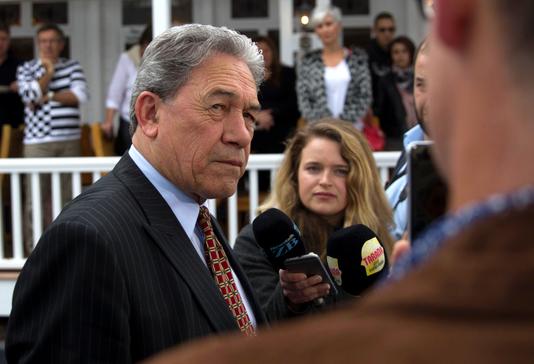
Hon GERRY BROWNLEE (Minister of Energy and Resources) Link to this
I move, That the Electricity (Renewable Preference) Repeal Bill be now read a second time. It has been very interesting listening to the speeches this evening from those who are opposed to this bill. I would have thought that the real effort that New Zealand should be making in the energy sector was to lower emissions. That is what the game should be all about. The thermal energy ban introduced by the Labour Government is a large and pretty obvious impediment to achieving that particular result.
I will explain that in a minute, but first I want to challenge some of the statements made earlier suggesting that the ban, while it was in place, was about protecting New Zealand’s clean, green image, and about making sure that when New Zealanders in the climate change sphere attend international conferences we can tell a so-called good story. A little bit of a look behind the scenes tells a pretty ugly story. In the time that the Labour Government was in office, the extent of production of energy from renewable sources fell from about 72 percent to about 66 percent. That is the record of the people who say they care about New Zealand’s clean, green image and about being able to say the right sort of rhetoric at international conferences. They simply saw the extent of renewable energy fall. The image that was supposed to be created was that they had great care for the environment, but the record shows quite the opposite.
It is also interesting to note that as this policy has been in place, and as the Labour Government struggled with the whole concept of having a vibrant energy policy, the retail price for electricity paid by New Zealanders when they turned on the light, turned on the heater, washed the clothes, made the toast, boiled the kettle, or whatever, rose from 1 November 2001 through to 1 November 2008 by a staggering 63 percent; it rose by 63 percent through those 8 years during which Labour was saying it was about protecting our clean, green image, and about having the right story to tell when we attend international fora on climate change. What is worse is that when that price rise of 63 percent is broken down, it works out that electricity prices for consumers rose each year—each of those 8 years—2½ times the rate of inflation.
Clearly, something has been going wrong. The price has been going through the roof, and we can also see that the extent of energy generated from renewable sources has fallen. Worse than that, the emissions profile of the energy sector has massively increased.
I know that the opponents of this bill tonight will say that all of that is just because we had a few years of bad hydrology. Well, those same years that saw the 63 percent price rise—2½ times the rate of inflation, each year—included 4 years when we had a supposedly one-in-60-year scenario to deal with. That indicates gross neglect of the generating capacity of this country.
What this Government is saying in removing the thermal ban is simply this: what is the elephant in the room—
Hon GERRY BROWNLEE Link to this
—and I use that term somewhat advisedly, I might say, and I say “what”, not “who”—in the energy sector? It has to be the large coal-belching plant at Huntly. I can tell members that when that plant was commissioned in 1987, it was to be a peaking plant; it was to come on whenever we needed it. But it has been a baseload plant for some years now, running for 7, 8, 9, 10, or more hours a day, burning coal as it goes. That plant alone contributes the largest part of the emissions from the energy sector.
If we wanted to do something about it, the smart thing to do would be to say that that plant would be retired, that plant would be stood down, and we would meet the costs of replacing it with an e3p plant or some such other plant—a combined-cycle plant. If that were to happen, if the megawatt capacity of Huntly coal were replaced by gas, New Zealand’s emissions from energy in this year, when thermal power has run at extraordinary rates, would fall by over 3,000 tonnes. Why would we want to have a policy in place that prevents that? That is what the ban does and that is why we are going to repeal it.
Hon GERRY BROWNLEE Link to this
The member over there says that the ban would take the emissions down to nothing. Tell me where the projects are! I ask Mr Mallard to tell me where this country is going to get megawatt capacity, in the time that we need it—in the next 5 or 6 years—that is able to be fired up to give electricity to the grid at very short notice. It simply is not there. So the Government is saying that we reject Labour’s idea of belching out lots of carbon dioxide through coal burning over successive years, and we are saying to the industry that it should look at some alternatives.
It gets worse. When we start to consider the response of the Labour Party in Government to emergency generation, we might have thought it would say: “Why don’t we build one of those highly efficient combined-cycle gas plants that we could fire up very, very quickly”—
Hon GERRY BROWNLEE Link to this
The previous Minister of Energy says it is expensive, so let us not put a price on carbon dioxide emission. He does not care; he says it is acceptable to use the solution that his Government came up with. Here is how it works. New Zealand consumers, through the levies on their power bills, have paid some $230 million over the last 5 years to the Electricity Commission. The Electricity Commission’s response to a requirement that it have generation in reserve was to build a diesel-fired plant at Whirinaki.
Hon GERRY BROWNLEE Link to this
A diesel-fired plant. The “We don’t like thermal energy and let’s clean up the emissions from energy” Labour Government built a diesel-fired plant at Whirinaki. And what did it burn this year? Well, it was not 10 million litres of diesel.
Hon GERRY BROWNLEE Link to this
It was not 12 million; it was closer to 70 million litres. One has to ask what sort of argument against this bill there can be from people who have such a shoddy record.
We have a determination that the emissions profile from energy will change. We believe that part of that is rapid fuel substitution. We also believe that backing up some of those renewable projects with the speed of thermal generation is going to be very, very important, because this country cannot go on having power price rises 2½ times the rate of inflation. That is the Labour Government’s record.
Hon DAVID PARKER (Labour) Link to this
We heard the last speaker, the Hon Gerry Brownlee, and the Hon Dr Nick Smith saying that National believed in the 90 percent renewable generation target by 2025 set by the previous Government but that it is going to build more thermal generation. How does that work? How does one increase the percentage from, currently, two-thirds renewable generation to 90 percent by building more thermal generation? That is what the Electricity (Renewable Preference) Repeal Bill is about. It is about building more thermal generation. Those two propositions are just irreconcilable. Members opposite cannot say they want to get to 90 percent renewable generation but they are going to build more thermal generation, too. They cannot do both. The two are absolutely irreconcilable.
I want to deal with one of the other propositions put by the Hon Gerry Brownlee. He said that the legislation currently prevented retiring old, inefficient thermal plant and replacing it with more efficient gas-fired plant.
That is rubbish. The legislation currently expressly allows that as one of the exemptions to the restriction. It expressly deals with it. Repeal the legislation, I say to Mr Brownlee, and what we get is the new gas-fired power station but not the retirement of Huntly. We get both—that is the problem, you see. The problem is that if extra thermal generation is built and the old stuff is not retired, we get extra thermal generation. We get increasing, not decreasing, greenhouse emissions, because we have both.
“Rubbish!”, he says. Well, where is the control on Huntly staying when someone else builds a new gas-fired power station?
Oh, it is price. So why has price not already retired Huntly? The Minister of Energy and Resources cannot answer.
Goodness me!
The other thing he says is that nowhere else in the world is doing this sort of thing. Again, he is wrong. Lots of countries have virtually no renewable generation and have set legislated targets to increase from nothing, or close to nothing, to 20 or 30 percent. That is a 20 percent increase in renewable generation from nothing. What was the legislation doing? It was effectively legislating to go from our current two-thirds, 66 percent, renewable generation to 90 percent. That is a 24 percent increase, which is not much different from the increase that has been legislated for in other countries when they use renewable preference methodologies to bring forward renewable generation that would not otherwise happen and to avoid increases in thermal-related greenhouse gas emissions. So again the Minister, I am afraid, will have to take responsibility for increases in thermal-related emissions.
He said that somehow renewable generation is responsible for the increase in power prices in the last few years. I tell him that what has caused the increase in prices is the rising price of gas. The price at which electricity is dispatched sets the market price in New Zealand. Under our auction system, the bid that is the highest of those for electricity that is dispatched is paid to everyone. What sets the price? It is never renewable generation that sets the market price, because we all know that once a renewable power station is built its fuel is free. Whether it is water, air, or geothermal, the fuel is free. Once those power stations are built they cost very little to run. Gas-fired and coal-fired power stations always have a fuel cost they have to recover, so the gas and coal-fired bids into the market are always the bids that set the market price. It is because the price of gas has doubled following the lifting of price controls, following the Māui gas running out. It is still a lot less than average prices for gas overseas. That is why, even now, New Zealand electricity prices are substantially lower than world averages. Indeed, even now our industrial tariff is as cheap as Australia’s, although our residential tariff has crept higher. So the idea that it is renewable generation that has bumped up the price of electricity is again wrong; it is the price of gas. Yet the Minister wants us to build more gas-fired power stations.
The other thing the Minister mentioned was the risk of liquefied natural gas (LNG) importation. How does using more gas decrease the risk of reliance on LNG imports in the future? Is that not twisted logic? I think it is. It cannot be right. If we do not want to run out of gas, we should use less, not more. If we use more gas we are more likely to run out and to have to import LNG, and if New Zealand imports LNG then its electricity prices will, for the first time in our history, be pegged to international fossil fuel prices. New Zealand’s electricity prices would go up by about double. They would probably be close to double if we had to import LNG. That would be the worst of all futures for New Zealand. Going to renewable generation, of course, avoids—or minimises—the risk of that being a future reality.
In terms of constraints and where renewable generation is going to be built, I tell members that there are already plans on the books of the major generators to build 1,400 megawatts of new renewable generation over the next 5 years, and the Minister knows that.
The geothermal energy, which is the biggest source of that new-load growth, is in the central North Island. We had a 130-megawatt geothermal facility completed this year, bearing in mind that demand growth in New Zealand is about 150 megawatts per annum. If we want to retire the likes of some of the Huntly generators, we have to build about 175 megawatts per annum on average for the next period, until 2025, to meet that 90 percent renewable figure. A big slice of it will be geothermal. It is already economic because that is what the major generators are investing in.
They are building it. They have just finished one—130 megawatts—this year. There is another one of 200 megawatts already under construction by Mighty River Power. That is next year’s demand growth. Contact Energy has also committed to another large facility at Te Mihi. That is about 600 megawatts that I have just given you. That is 4 years’ demand growth at the rate of 150 megawatts per annum.
I apologise, Mr Assistant Speaker. In addition, we have large amounts of wind power consented. That was one of the successes of the Labour Party’s climate change policy. We brought forward wind power, through the projects to reduce emissions. We made it economic before it would otherwise have been economic. It now stands on its own feet. It is economic. Where is it being built? I do not know whether Mr Brownlee has been to Palmerston North recently, but if he had a look around there he would see some big wind farms on the horizon. That is one of the places they are being built.
They have been extended within the last year, and if the member did not know that then he really needs to do his homework. Mākara is the biggest wind farm built in New Zealand so far. It is under construction at the moment. I think its first windmills are due to be producing power early next year, and it is set to be completed by the end of next year.
Some of the locals did not like the idea, but that is true of any project. Some of them did not like it. The wind farm got a consent, though, and, from memory, 150 megawatts is being built—but it might be bigger. There are consented sites throughout the South Island. Consents are being sought by Contact Energy for about 500 megawatts of wind power in the North Island.
There is oodles of renewable generation. But do members know what the biggest risk is to that? The biggest risk is if Todd Energy or one of the other big owners of gas decides: “We’re better off turning that into electricity. We’re going to invest in a gas-fired power station.” If the Government is silly enough to let Genesis proceed with Rodney—it never came to the previous Government for shareholder approval, and probably would not have got it; it never got to that point—and it builds a 400 megawatt gas-fired power station, then it will close out renewable generation. It is that simple. We are at a fork in the road. If New Zealand goes down the path of more thermal generation, we will close out the renewable sources. We will never get to the target National says it has adopted to have 90 percent renewable generation by 2025. There will be rising emissions from electricity, when we could have emissions starting to go down from electricity.
Again I say that if New Zealand cannot get this right, there really is no hope that the world will. I find it very depressing to know that the National Government is once again, as it was on biofuels, the canary in the cage on these issues. If New Zealand does not get it right, we have to conclude that there is very little hope that the world will. Our Labour Government was not ready to reach that conclusion. We knew it could be done, we had the policy in place to do it, and that member’s Government is irresponsibly reversing it.
Hon PANSY WONG (Associate Minister of Energy and Resources) Link to this
There was a lot of wind and hot air blowing from the Labour Opposition. If it could be turned into energy, we might not need to build any more renewable generation, or whatever. After 9 long years the Hon David Parker has said that everything is under control; New Zealand is leading the world. I am sure that New Zealanders will be so glad that Labour is no longer the Government. Mr Parker was trying to tell them that they are lucky that New Zealand’s power prices are very reasonable. Tell that to our senior citizens and the households that year on year are facing the threat of power price increases and power cuts.
The Labour Party’s mate, the Green Party, pointed out that the thermal ban in the emissions trading scheme legislation was nothing but a sham, so why should it continue to defend the indefensible? I think at least the Green Party’s credential on renewable energy is slightly superior to that of the Labour Opposition. Government members are pleased to say that we do not have to, once again, support banning or mandating alternatives that will not be viable, because the Green Party has already said that the thermal ban is not workable. So why not be honest and remove it from the legislation? The Minister of Energy and Resources, the Hon Gerry Brownlee, has already pointed out that the emissions trading scheme that National supports will be the pricing signal, because thermal generation will attract carbon charges, while renewable generation will not. I also hasten to point out that during the 9 years of Labour’s rule, we found that a hydro scheme was not able to go ahead—
No, not one. That was because the Resource Management Act was the legislation that was acting as much as a barrier to renewable generation as to any—
Exactly. Obviously, the Minister of Energy and Resources, the Hon Gerry Brownlee, felt very strongly about that. Not only will National remove this dishonest legislation, the thermal ban, that the Green Party says will not work, but we will advance changes to the Resource Management Act. That will do a lot more to lead to more renewable generation being built. Members on this side of the House are about practical solutions, not about slogans and action about leading the world.
Hon TREVOR MALLARD (Labour—Hutt South) Link to this
I think that was a 3-minute contribution of a possible 10-minute speech, and it is fair to say that the member said almost nothing that was intelligible or intelligent during her contribution.
It is important for the House to realise what we are doing here today. We are taking New Zealand from a position of international leadership, first in the biofuels area, then in the emissions trading scheme, and now in the thermal generation ban, which we are removing. We are moving from a position of international leadership and the possibility of having cheaper power prices to having a system where we become more and more reliant on gas. Gas prices, of course, are dictated very much by oil prices. The thing that we know is that in the future oil prices will go up. They have been up and they have come down, but we know that over a 20-year time-scale they will go up. The thing that we also know about gas prices is that they tend to track oil on the way up, but they do not fall away in quite the same way afterwards.
What is happening is that the National Government has chosen to let power prices go up in New Zealand at the rate that they have gone up in recent years. The reason that they went up so fast in recent years was that there was effectively a strike of capital, a very small amount of building of power projects, as a result of the Bradford reforms of the 1990s. I might ask why we would build extra plants. If the companies knew that they could sit tight with their already established generation, and as a result of a shortage of generation have prices go up, that means they could get an increased return without risking any investment at all.
But after the legislation was passed we had quite a rush towards increased generation. Contact Energy, one of the companies I was not responsible for, announced plans to invest about $3 billion in 1,400 megawatts of increased generation over a period of 10 years. It included 500 megawatts of geothermal power. Just to let people know, I can tell the House that we need about 175 to 200 megawatts of increased generation each year to keep up with growth. The Greens will disagree; they would probably say that we do not need any, or that we should be running down the supply. But with the sort of economic growth that we were averaging under a Labour Government, that was roughly what was needed.
What will happen now, because of the removal of this ban, is that people will build the plants that are cheapest to build, and most expensive to run. It is much, much cheaper to build a gas-fired thermal plant than it is to build a geothermal plant, for pretty obvious reasons. Companies do not have to drill 5 kilometres down in order to get the steam coming out. But the difference is—
Hon TREVOR MALLARD Link to this
No, no. There is a lot of drilling for gas, but for the next few years there is quite an available gas supply. I think, in fact, the member will know that the problem is somewhat the opposite: some people for a while thought they had some gas they could not get rid of. Notwithstanding the fact that we had an oversupply of gas for a period of time, the oil companies managed, as they generally can do—and as Todds are experts at doing—to screw the system and get some pretty good returns on it.
Mighty River Power is probably New Zealand’s most expert company at building geothermal plants. It managed to get its latest project at Kawerau going about, I think, 5 months early. It is a very, very good plant at Kawerau, running at peak capacity, and it is probably now the cheapest plant in the country to run. The company has a new site that has received consent near Taupō. People were complaining about the Resource Management Act. Do members opposite know how long that one took to go through?
Hon Gerry Brownlee Link to this
It was very, very fast, because there was a limited number of objectors.
Hon TREVOR MALLARD Link to this
Six months! It took 6 months to go totally through the Resource Management Act process, and there was a limited number of objectors—
Hon TREVOR MALLARD Link to this
That is exactly right; it is exactly the point. Paul Quinn has got it! That is the first time he has got anything in this House. The vast majority of geothermal energy in New Zealand is under Māori land, in the Tūwharetoa area, mainly—heading through to Waiariki—and those people are desperate to use their resources. But Paul Quinn, who has never done a thing for those people in his life, objects to that. He thinks that Tūwharetoa should not be allowed to develop their geothermal resources; he is going to block them by having a thermal plant built in John Key’s electorate. That is what he wants; he wants an expensive thermal plant built in John Key’s electorate. That is his preference. He wants to block Tūwharetoa. There might be some local jealousies involved; I do not know about the iwi relationships up there, but why that member is so against the people around Tūrangi and Taupō having some more geothermal power—things that are jointly owned by iwi—I do not understand. It is a system that works very, very well. It is working well in Kawerau, it is working well in the Resource Management Act consent—
Hon TREVOR MALLARD Link to this
Hey, the member will have a heart attack or start crying if he keeps going like that. It is hard to tell with that member what he is going to do. [ Interruption] Oh, he has to be on his feet to cry.
We know that as at 1 July this year, 426 megawatts were under construction, and it did not include the Contact plants. So that is enough for 2 or 3 years—189 megawatts of wind power and 237 of geothermal power. Those that were under construction and due by December 2009—that is, those due to start in the next period—were for another 188.6 megawatts of wind power and 105 megawatts of geothermal power. There are also another 665 megawatts - worth of consented projects, and consent has been applied for in respect of 2,875 megawatts.
The point I am making to the House is that an enormous amount of renewable energy is coming downstream, but it will be killed by this legislation because it is cheaper to build a gas-fired plant. These companies are not stupid. If they can get a plant with a lower capital cost, with almost a guarantee of the price going up—the price will go up because they are relying on gas, and it is inevitable that the price of gas will go up—then these companies will go down that route.
I find it just amazing that in this House the priority for the Government is to shift away from the things that we can give international leadership in. John Key has asked to have another meeting with Gordon Brown, but whether he will get it, after calling Gordon Brown a hypocrite yesterday in the House, I am not sure. When John Key goes to the UK to see Prime Minister Gordon Brown to say: “Please do not put your tax for environmental reasons on people coming to New Zealand.”, he has to go there in good faith. But he will have to disclose that we have removed the emissions trading scheme, that we have effectively stopped people from using biodegradable fuel in New Zealand by killing the tallow plant, and that at the same time we have switched our production from geothermal to dirty thermal products. I just ask how we can ask the Brits to keep our tourism industry going when we are heading in exactly the opposite direction from what everyone knows has to happen around the world.
Dr KENNEDY GRAHAM (Green) Link to this
I rise, following the intervention of my co-leader Jeanette Fitzsimons, to oppose the Electricity (Renewable Preference) Repeal Bill. I do so in the knowledge that the reasons that have been advanced by this Government have not been found to be convincing. The Minister has indicated his view that the legislation that banned thermal generation amounted to pure symbolism, that it put the electricity supply at risk, and that it therefore was required to be repealed. The Minister Gerry Brownlee, and others among his National colleagues, took it upon themselves to criticise Jeanette Fitzsimons’ intervention on the grounds that if the original bill was toothless, then it should never have been put in place and that it should be immediately repealed. That is a rather thin point of logic, and when I weigh it up in the context of the broader issue of the contribution of this current bill, and others, to the daunting challenge of combating climate change, I find that it is found wanting.
What I would like to do, to try to place a constructive interpretation on both the Government’s position and that of the Opposition, is to ask the Minister some questions, and to put those questions in the broader context of the wider issue of climate change itself. If we look at the basic facts of climate change—an anthropogenically induced phenomenon that is recognised as a fact, through scientific consensus, by, it seems, everybody in this House except for possibly five members—we find that the prognostication is that sea-level rise will occur to the extent of at least 0.5 metres over the next 50 years, and that in the event of a more drastic phenomenon of ice-melt in the Arctic, in Greenland, and in the West Antarctic, sea-level rise could possibly occur to the level of anything between 6 metres and 15 metres, without any of us knowing the precise probability of that.
That possibility is not discounted, and it is not discounted in the Intergovernmental Panel on Climate Change recognition—it has not been included in the fourth assessment report, simply because it was not yet reflected in the peer-reviewed literature. So we have to recognise that that possibility cannot be discounted. In that event, the implications for the physical integrity of the planet, and certainly for the integrity of human society as we know it, are extraordinarily grave.
That is all based on an expected global warming of somewhere between 2 and 3 degrees. From that basic point we proceed to the Kyoto Protocol, whose binding legal obligations we have assumed. Let nobody in this House be in any way over-impressed by the limited effect the Kyoto Protocol will have on combating climate change. I am happy to be corrected on my facts by experts—other than, perhaps, those sitting in this House—but my understanding is that, of the anticipated 2 to 3 degree increase in temperature, the Kyoto Protocol, if fully implemented, would result in a diminution of somewhere around 0.2 degrees. It follows that the Kyoto Protocol, if fully implemented, would have a very, very modest effect on global warming.
Because of that, every Government and State that is party to the Kyoto Protocol has not only a binding legal obligation but an overwhelming moral obligation to do everything in its power to cut greenhouse gas emissions. Is New Zealand doing that? Let us look at the previous Government’s track record. In the last recorded year, there was an increase in greenhouse gas emissions over and above the 1990 level of somewhere around 24 percent. It is projected that that increase will double to somewhere around 47 percent by 2012. So the previous Government has a rather uninspiring record.
Now we turn to the present Government, with its aspirations to meet its recognised Kyoto obligations. Will it meet its aspirations? The Minister of Energy and Resources, Gerry Brownlee, tells us that the Government is committed, in principle, to 90 percent renewable electricity generation by 2025. Do the Minister and his Government have a well-thought-through strategy, articulated clearly before us, to attain 90 percent by 2025? Personally, I am less interested in the niceties of precisely what will happen to power generation, whether or not this bill is repealed, than I am to hear from the Minister on whether he has a credible strategy to attain the goal of 90 percent renewable energy generation by 2025. Are we about to see a strategy that perhaps puts in benchmarks or milestones every 5 years: in 2010, 2015, and 2020? I propose to the Minister, in a constructive spirit, that he take it upon himself to table in the House a proposal by which we can monitor the progress towards 90 percent renewable energy generation by 2025 using 5-year benchmarks. If that were forthcoming, then we would be able to take the Government at its word and put faith in the credibility of its stated intent to switch to 90 percent renewable energy generation. I hope that such a proposal is forthcoming; I will genuinely, in good faith, look to see whether it comes. Thank you.
DAVID GARRETT (ACT) Link to this
I am one of the two people in this House who will be directly affected by the lifting of the so-called thermal ban. The other person is the Prime Minister, Mr Key, who, as we all know, is the member for Helensville. I live in the Helensville electorate and regularly have a beer at the Kaukapakapa pub, where, I have to say, the so-called Helensville thermal power station is not a popular cause. Both Mr Key and I will have some problems with the repeal of Part 6A of the Electricity Act, but, of course, we are here for a wider purpose.
Most locals are opposed to the Helensville power station, but, unfortunately, locals oppose everything. Just a second ago I heard a laudatory statement about the latest proposed wind farm. I am not sure whether it is the same one, but in the paper this morning there are the usual protests from the residents who live near the latest proposed wind turbine farm. Of course, that happens everywhere.
Unfortunately, nimby-ism is alive and well in this country. Whether it is prisons or power stations, nobody wants them nearby. But we all like hot showers, we all like to have the lights going, and we all like to have our heat pumps working. I think that even the Greens and those who live sustainably, whatever that means exactly, like to have hot showers and to cook their meals on an electric stove. So whether or not we like it, we all need electricity. In an ideal world we all would have—and I would have, too—solar panels on our roofs to supply all of our electricity needs, but, sadly, the reality is that we just do not have the much vaunted replacements for current energy sources.
I touched a second ago on wind power. Every time there is a proposal for a wind farm, the nimbies come out. There have been complaints about the wind farm in the Manawatū; there are complaints about the wind farms proposed for the South Island. It happens everywhere. As I have said, no one in my local area wants a power station to be built down the road. We see these silly billboards talking about our having Christmas trees for 365 days a year, even though the thing is proposed to be built 2 kilometres off State Highway 16, where, in reality, no one will really notice it. But that is the way we do it.
Tidal generation is another one. I am 50 years old and I recall tidal generation being the next big thing in the 1970s. It was going to be around within 5 years, especially in a country like New Zealand, which has tidal surges such as those through the entrance to the Kaipara Harbour. I have seen them when I have been out fishing. When I went out there the first time and people told me I would need a two-pound sinker, I thought they must have been joking, but they were not. The tide through there is tremendous. Well, tidal generation is still at the experimental stage. Part of the reason, of course, is the Resource Management Act. God knows how long those people have been trying to get their experimental turbine in place, but I believe they finally have. But 30 years on from the 1970s, we are no closer to using water turbines to generate all our electricity.
We rely heavily in this country on hydro power. I am not a conservationist or tramper—I am a getting a bit long in the tooth for it—but I know many people in the conservation movement, in the Royal Forest and Bird Protection Society and other organisations of that kind. I have not heard any of them suggest we should dam another river. As far as I am aware, they all say that all the rivers that do not have major conservation values have been dammed. So there is hydro power gone.
What about nuclear? As I said in an earlier contribution in the House, the local Greens get very green when we talk about nuclear, but the European Greens have said that it is a great idea and that, in fact, it is the most green alternative. The local Greens do not agree and, funnily enough, I agree with them. It is not a good idea for a number of reasons. There are intractable problems with waste, and as far as I am aware there has been no sensible solution to that. I lived in Tonga for 4 years and the King of Tonga proposed that a dormant volcano be the world’s nuclear waste disposal dump. That was one of the silliest proposals, but I have heard of other proposals that are almost as silly. No one has offered a good proposal for nuclear waste.
We live in an earthquake zone. As members will know, the Japanese recently suffered a major earthquake—
—no, I was never paid enough—and there were major concerns about damage. But one of the things that very few people mention about nuclear stations is terrorist risk. People go on about the fail-safe protections of nuclear plants, but they are all predicated on one thing and that is that the operators of the plants do not want them to fail, so they have seven or eight fail-safe back-up mechanisms. But if we have terrorists who are prepared to die, then it does not matter whether there are 27 fail-safe mechanisms, they will come in and blow the rest of us up, as well.
I agree with that.
I have gone through wind power, nuclear power, and hydro power. What does that leave in a country like ours? It leaves gas, oil, and coal. Oil is pretty dirty.
We went through hydro. Oil is pretty dirty, so that leaves gas and coal. I understand that the technology for—
I am told that the technology for scrubbing coal is now advancing at a great rate, as it all is, and that is my next point. As to gas, I can remember that not that long ago liquefied petroleum gas, which is the same gas we are talking about for firing gas-fired power stations, was touted as the green alternative.
There is a big difference in emissions, is there? It is still a lot cleaner than oil, and it is a lot cleaner than coal.
It is good, is it not? The removal of emissions from the burning of gas is a rapidly evolving technology. As I have said, it is a lot cleaner than the coal alternative.
I believe we have 1,500 years’ worth of coal in New Zealand, and I can see that getting burnt at some stage, but not yet. The technology is still developing. Everybody realises that for a whole host of reasons it is desirable that we have alternatives to fossil fuel burning. As I said in a contribution on an earlier bill, I would be delighted if we could all burn 100 percent biofuels tomorrow, but the reality is that the technology is not there. I think that its time will come, but that time is not now.
Thermal generation is a very sensible alternative in the short term. The life of a power station is 20 or 30 years. We might as well burn the gas. It is sitting in the ground. It is a pretty clean alternative. It is not the cleanest, but it is a pretty clean alternative. The technology is advancing. Let us take the Kaukapakapa, or Helensville, station—by the time it has reached the end of its natural life, or probably before, we will have much better technology, and maybe even tidal generation will finally have come. But right now gas is a pretty good alternative. ACT supports this Electricity (Renewable Preference) Repeal Bill, to allow us to keep on having hot showers in the meantime. Thank you.
CHRIS AUCHINVOLE (National—West Coast-Tasman) Link to this
I would like to correct a comment that I made last time I spoke. I said that the retail price rise was 48 percent, but after listening to the Minister I realise that I was wrong. The retail price rise was not 48 percent, it was 63 percent from 1 November 2001 to 1 November 2008.
The member should not say that remark too loudly. There have been 4 years in which we have had a one-in-60-year near crisis in supply. Huntly is the biggest generator of emissions. If the bill we are now proposing were not passed, we would not have any prospect of changing to something like the e3p plant, which would dramatically reduce the generation of greenhouse gases. Again, this is an act of honesty on the part of the Government. We are removing a piece of inert legislation.
I listened with interest to Mr Mallard, who talked about exercising international leadership. He also introduced a new phrase that I did not hear in the electricity debate when we were sitting on the other side of the House. Whenever we charged the previous Government with having insufficient supply and insufficient capacity we were told that everything was all right. Mr Parker kept saying that there was adequate generation capacity and that National’s criticism was ill-founded. But from listening to Mr Mallard now, I understand that it was a capital strike. That was the reason for generation not being developed over the period of Labour’s 9 years.
It seems to me that we are now having a little bit of a history rewrite; it was a capital strike. I do not think that will wash. But, again, there are a range of views on the effect of power generation systems. Mr Mallard referred in his speech to the United Kingdom. I understand that it is having a burst of enthusiasm for hydro electricity generation over there at the moment. I was told on what I think is fairly good authority—although I do not know the veracity of it—that the Brits are planning hydro schemes on 1,000 Scottish rivers. [Interruption] Aye, and it is not just the fishing. I have to tell the House that by passing this bill, this Government will meet with the approval of a group of environmental enthusiasts on the West Coast whose preference will be for thermal rather than hydro. Before the election I was approached by this particular group and asked whether we would make a commitment to bringing back thermal generation, and I can assure the House that they are very enthusiastic environmentalists.
No, no, these are a very dedicated group of people and I frequently discuss things with them. They are dedicated to river use. They are kayakers and rafters and they see nothing wrong with developing clean-coal technology for power production. They will be particularly happy to see this bill go through.
We will measure that in a future speech. We still have another reading to do and I will certainly include that in my next speech. There is a wide range of views beyond the myopic view of Labour. In spite of Mr Parker wringing his hands over the demands of the increasing population, the reality is that the increasing population demands energy supply. To put a block on it with legislation is like saying that we can stop the tide from ebbing and flowing, and we cannot.
CHRIS HIPKINS (Labour—Rimutaka) Link to this
It is always an honour to follow such an eloquent speaker from the Government. I would like to take up the theme of rising power prices.
Is that the best the member can come up with?
I would like to take up the theme of rising power prices and what has contributed to those. We need to face up to the reality that the era of cheap electricity generated by non-renewable sources is over.
Actually, one of the big drivers behind the recent significant increases in power prices has been the end of cheap Māui gas. If we look at the history of what contributed to that, we see that way back when the Māui gasfield was first developed, the then National Government under a gentleman called Robert Muldoon, I believe his name was, decided to fix the price of Māui gas. All of the gas coming out of that field was at a fixed price. And it was fixed for a very, very long time, because the field was such a large one. What that did was artificially suppress the price of all the other natural gas throughout the country. It made it uneconomic to explore other gasfields—and any exploration company will tell members that. The Māui gasfield was effectively New Zealand’s only major gasfield, because it was not economic to explore any others and it was not economic to start drilling wells. When that gas started to run out and that artificial price constraint came off, suddenly it become much more economic to drill other wells, and the price of gas went up because the gas coming out of those other fields was much more expensive. That was a major contributor to the increase in power prices.
That highlights for us that we will never get cheaper power prices by relying on non-renewable energy sources. If we want cheaper power, then renewable energy has to be one of the key ways to go. We have to look at sources such as wind. Once wind generation is in place it is a relatively cheap source of energy. The member from ACT, David Garrett, talked a little bit about the nimby approach, and claimed that rather than try to find places where we can put wind turbines, the solution is to do away with the Resource Management Act so that people do not have a say at all. So we need to look at renewable energy sources.
We also need to face up to a couple of the other realities about gas and about burning fossil fuels. Burning natural gas in an electricity plant is one of the least efficient ways of using natural gas. Even if we say that it is worth using natural gas—that we have a supply of natural gas and we should use it—burning it in a power plant is one of the least efficient ways that we can use it. If one burns it where it is used—in the home, under a hot-water cylinder, or on a hob, or whatever—that is a lot more efficient. We waste a lot of gas if we burn it in a power plant, because we then have to transmit it to the point where it will be used—to the home or the industrial user. That is very inefficient, because we lose a lot of it through the transmission of it and we lose a lot of it through converting it from one type of energy to another. It is incredibly wasteful.
Of course, we see the nimby approach again in that not many National Party people seem keen to have high voltage power cables go through their land. I have not seen very many National Party members standing up and arguing for that! I would like to take up—[Interruption] There we go! That certainly woke them up; I wondered where they had gone, but they are back. It is good to know that Government members are on the job and wide awake. I would like to pick up one of the comments that the member from ACT, Mr Garrett, made. He said: “I am not [much of] a conservationist … I am getting a bit long in the tooth for it”. Is that not a revealing statement: “I am not [much of] a conservationist … I am getting a bit long in the tooth for it”?
Oh, right. I thought he was saying that once we get a bit older we do not have to worry about what comes next, we do not have to worry about saving the planet, or any of those pesky little things; we do just what we like—
—and do not worry about what kind of state we leave the planet in. Speaking of Maurice Williamson, I think he should take the next call and give us his views on climate change.
Oh, that is such a shame, because it would be good to know what National really thinks. I know that Maurice Williamson is a very, very honest member of National, and we can rely on him to stand up and tell the truth. I would really like Maurice Williamson to stand up and give us his views on climate change. I think they would be incredibly revealing. But he is not allowed to, and that is such a shame for this House and for the democratic process.
That is right—it is so 6 years ago.
This Government really does not have any vision when it comes to dealing with climate change and it really does not have any vision when it comes to promoting renewable energy, and we have seen that twice today. We have seen that in this bill. Instead of promoting renewable energy, Government members would rather go back to using fossil fuels. We saw it in the earlier biofuels bill. They are not really into biofuels, either; they are not really into alternative fuel sources for our transport, and all those things. They would rather bury their heads in the sand and pretend that climate change is not happening. There is no real issue of climate change, according to the National Government and its good friends from the ACT Party. What is more, those members are not very interested in encouraging research and development on our clean, green future. That is a real shame for New Zealand. We could be world leaders in this stuff but National members do not want to be world leaders. They would rather wait and see what happens. When we are all up to our necks in it they will be saying: “Wasn’t it good that we didn’t show any leadership? We are one of the first countries to drown, but that’s all right. We didn’t show any leadership, but never mind.”
They do not have any commitment to energy efficiency, either. All of these issues are related. Those members do not have much commitment to energy efficiency. That is why they scrapped the home insulation scheme. We have heard a number of members opposite talk about nice warm homes and people being able to afford electricity to have nice warm homes. But what did they do? They scrapped the home insulation scheme. They scrapped the extra money that would have gone into the home insulation scheme. No, we are not going to live in nice, warm homes any more, under this National Government—at least, not unless we can afford to insulate them ourselves. National members are not really interested in that, at all.
So what is this bill all about? This bill is being rammed through under parliamentary urgency, as has happened with every bill that this Government has passed—every piece of legislation. I think that is a really important point, for the people at home who are listening to the radio or watching Parliament TV. [Interruption] That is right—on a Wednesday night. This Government has yet to pass a bill using the democratic processes of this House; it has yet to send a bill to a select committee where people can have a say. Government members are not really interested in hearing what members of the public have to say. They do not trust the people. They are not interested in their views. They won the election and they will do whatever they like. It was in their manifesto, like their tax plan.
H V Ross Robertson Link to this
I raise a point of order, Mr Speaker. I am sorry to interrupt the member, but you yourself have drawn to the attention of the House on at least three occasions now that there is continual interjection from the other side of the House. If members on that side would look at Speakers’ rulings 57/3, they would know that interjections are out of order unless they are rare and reasonable, relevant, and restrained. A running commentary is totally out of order. That is the first point. The second point of order is that a number of new members—and I accept that they will not know the rules—have moved seats in order to facilitate interjection, and are not in their own seats. They are also out of order, and I hope you will bring them to order.
Mr DEPUTY SPEAKER Link to this
I thank the member for those points. I have brought to members’ attention on a number of occasions that there is too much barracking, and barracking is out of order. The point that the member makes is very correct: members cannot move to a seat that gives them an advantage. Members of the Government have moved seats and have been barracking. Although you can sit in any seat you wish, you cannot interject from a seat that gives you an advantage compared with where you normally sit.
It is unbelievable that right at the very beginning of the Government’s term the new Prime Minister, the new Minister of Tourism, comes along to this Parliament with two pieces of legislation that absolutely ransack our reputation as a clean, green country. Two of the first pieces of legislation that his Government wants to pass will absolutely dent our clean, green image overseas. This is recklessness, it is backwards-looking legislation, and it is another nail in the coffin of our international climate change credibility, which this Government does not seem the slightest bit interested in. It is backwards looking, it is unnecessary, and these energy policies are putting our children’s future at risk. Future generations deserve the same clean environment that we grew up with. That does not appear to be something that this Government is committed to or interested in. It is not interested in renewable energy. It is not interested in home insulation. It is not interested in climate change at all, really. In fact, the Prime Minister of New Zealand thinks it is a hoax, but on another day he thinks it is not, and then he does, and then he does not.
Who knows what the Government members really think, because unfortunately Maurice Williamson is not willing to stand up and tell us. He might be willing to take the next call. He is ready! He is ready to roll. Maurice Williamson is going to stand up and give us the National Party’s real view on climate change, and we are all looking forward to hearing it.
Hon MAURICE WILLIAMSON (Minister for Building and Construction) Link to this
Before I begin my contribution I tell the new member Chris Hipkins that I am a very strong believer in climate change. I always have been and I always will be. I believe the climate has always changed, and if it stops changing, then we will be in deep shtook.
I think the measure that we are debating tonight is very, very important on one basis alone: it is something we committed to do during the election campaign. I know that does not sit well with the Labour Party, and I know it would be really churlish of me to do the Michael Cullen line tonight—“We won. You lost. Eat that!”—so I will not. Nor would we want to be that churlish. But we made it very clear with regard to energy sources that the best method of determining what was right was a general market model based on all of the parameters, including carbon emissions, being taken into account, not some artificial ban that said that as one particular mode of generation is evil we are cutting it out—even if, in fact, the evidence over time showed that some of the generation methods might actually replace some of the very old and very heavy carbon-emitting coal-burning methods.
Members from the other side do not like that. They have a pre-defined position that they will stick to and control. I understand that the Greens are opposing this measure, but I do not know of any of their members who do not use electricity, and I do not know of any of their members who do not think that some of the modern progress society has made from the benefits of electricity is valuable. Yet they come along and try to have us all living in sackcloth and ashes because they think it is so evil and so wrong to be using some of these modes of generation.
National’s view is very simple on this: a market model is the best way to determine outcomes. In fact, best generation will be that which produces the least emissions at the best cost and at the best rate for society. This artificial ban, which was put in force by the previous Labour Government, was exactly that—an artificial ban. It was trying to make everybody feel good. Labour members say that this particular method is wrong and everything else is better, but they know in their hearts that that is not right. Labour members know that that artificial ban is not right and that we are best to go through each of the modes. My personal preference is hydroelectricity. I still think there are options for hydroelectricity in this country, and I would love to think about how it would be if, 50 years ago, we had taken the “We do not want hydroelectricity” position. If the Greens had had their way 50 years ago we would not even have the dams that we currently have. Yes, they are intrusive, but they are a hell of a lot less intrusive than some of the other methods of generation.
In this Electricity (Renewable Preference) Repeal Bill we have said that we will remove the ban on thermal generation and move to a sensible, balanced, and focused approach to the energy needs of the nation. I want any member of this House to get up tonight and say that he or she does not care about the energy needs of the nation if we are to compete in the world of the future and be a participant on the world stage, or care about what the cost of generating that energy is, and that he or she will just be stuck in some myopic, absolutely elementary view of the world that says: “I will not allow things that I have decided should not occur.” From my perspective, that is exactly where New Zealand cannot be.
We have to look at every mode of generation. We have to look at cost-benefit ratios of those modes. Yes, I accept that in the line items of those spreadsheets there has to be the carbon cost—of course, there does. But if in the end one particular mode is beneficial to this nation, then having an artificial approach of “I have come to Parliament with a ban and I will stop this.” is simply a bizarre way to go.
National saw that; it said at the election that there was not a secret agenda. We said that the ban is wrong and artificial, and this legislation moves accordingly. I am very, very happy to be a member of a caucus, a party, and even a coalition Government that wants to look at highly efficient forms of generation, to look at those that contribute as little as possible to our greenhouse gases, and to not put in place an artificial ban.
Hon NANAIA MAHUTA (Labour—Hauraki-Waikato) Link to this
Under normal circumstances the Electricity (Renewable Preference) Repeal Bill would have gone to a select committee, and we would have had submissions from the public. Views, opinions, and evidence would have been canvassed, more information would have been gathered, and there would have been time for honourable members to consider the evidence and the information, to prepare a report, and to bring it back to this House so that we could have an informed debate on the issues we are now addressing in the House. We cannot do that, so we are forced under urgency to have a discussion and a debate on some very serious issues.
I heard the member Maurice Williamson say that he, like us, supports the pursuit of renewable energy sources. We can all agree on that—the question is about the methods we use to get there. For that same member, then, to say we were closing our eyes to our reliance on electricity or putting a ban on thermal energy only and closing our eyes to the real opportunity there—which is greater demand in the electricity market—is, I think, very myopic in itself. I say to Mr Williamson that we know we have to shift the frame. That is what the future of energy reliance will look like in a new generation. But the member might not understand that; when we look at members sitting in the House proportionally, we see that the new generation view of what the future vision of electricity supply might look like is probably coming from the views represented in the Opposition.
Hon NANAIA MAHUTA Link to this
I am making a very serious point. When members opposite talk about other forms of electricity generation and about looking at renewable generation, we would agree on those. But we differ on the method, and in terms of the ban we are saying that putting a ban on thermal generation just highlights the fact that thermal generation is a higher carbon emitter than other sources of energy generation. That is quite a simple point.
For anybody listening to this debate and probably trying to work out what is really being said, I point out that only the Labour Opposition and members of the Green Party are taking this issue seriously, are putting a comprehensive and coherent range of tools at the front and centre of tackling the issues of climate change, and are providing the types of sustained arguments that we have provided over the last 2 weeks. That is an important point, because if we look at the views out there in the community on this particular move by the Government, we see that the Sustainable Electricity Association New Zealand said, in respect of this move by the Government: “The government will face more big power price hikes like Genesis’s 9 per cent rise unless it acts quickly to encourage more renewable generation,”. That remark was made today by the chairman of the Sustainable Electricity Association, Brendan Winitana. He went on to say: “Overturning the thermal power station ban is only a short term solution.” That might appeal to the supporters, the big backers, of the Government, but it does not provide a comprehensive vision about what the Government will do, and what steps it will take, to tackle the very real challenge of climate change and the effects on our environment.
Brendan Winitana went on to say: “As the Prime Minister acknowledges we need more renewable generation. That’s why he should be looking at small scale renewable generation as part of the solution. … Importantly, small scale renewables will mean less thermal generation and so lower emissions. It’s a win-win for the environment and power consumers.” That is the balance that this Opposition is looking for, I tell Mr Williamson, not the balance the member is saying is thermal generation at all costs. Meanwhile, by the way, we also support looking at other renewable energy sources. It just does not add up; it is a really important point in terms of ensuring that the public have a say on this, because we just cannot ignore the informed views of people out there who have long-standing reputations on issues to do with the environment.
Let us take another view—that of the Environment and Conservation Organisations of New Zealand: “Local Government has embarked on consultative processes under both the Resource Management Act and the Local Government Act allowing communities to define the objectives yet Mr Hide as Local Government Minister is likely to want to override them. ‘The communities and the environment will suffer,’ said ECO spokesperson Cath Wallace. The Resource Management Act has an important role in protecting New Zealand’s threatened biodiversity, improving water quality, air quality, and making communities more sustainable. National and ACT by putting on hold climate change action and reviewing the emissions trading regime is making New Zealand an irrelevancy in international negotiations in the lead-up to the crucial Denmark meeting on Climate Change at the end of next year 2009…”.
So what is the Government not listening to? It is certainly not listening to the voice of the public; that is why we are under urgency. It is certainly not hearing the very serious views expressed by Opposition members in this House, and Government members are certainly burying their heads in the sand on this challenge of meeting climate change. And what for? National members want to signal to their supporters that, yes, National has won the election and, yes, the ship is turning in a different direction. The ship is turning in a different direction with a new leader at the helm—Mr Key. And how have they signalled this? Their ship is turning with a new leader at the helm, and what are they doing? They are turning and reversing decisions on climate change through delaying the introduction of the emissions trading scheme and through the setting up of a special select committee on climate change. What are they doing? They are removing the biofuel sales obligation that would help to reduce our reliance on petroleum oil through fostering alternative biofuel sources. What are they doing? They are repealing the Electricity (Renewable Preference) Amendment Act that places a 10-year moratorium on new fossil-fuelled thermal electricity generating capacity. Their ship is turning; that is all this is about. This is the symbolism that the National Party wants to show.
It is just before Christmas, so we have to ask ourselves what is so urgent about this legislation that National has to ram it through under urgency, with no public participation and no views exhausted, and, with respect, with very, very little or limited debate. It is all about symbolism; that is all it is. I want to make that point, because the Act the Government is actually seeking to repeal includes quite an interesting provision around public consultation. I heard the member Pansy Wong; I listened very carefully to her when she said: “It’s OK. Renewable projects will go through under the RMA.” But what she has not told the public is that the National Government wants to gut the Resource Management Act in order to be able to streamline a whole lot of decisions on a number of nationally identified projects that the Government will identify as important, so what will probably go will be public consultation. [Interruption] I challenge Nick Smith to say that public consultation will not go, under the reforms he is proposing in the months ahead.
Hon NANAIA MAHUTA Link to this
I challenge that member to stand up in the House to say “absolutely”. Is that member going to repeal any provision relating to public consultation and the Resource Management Act? Will the member take a question? There is silence. So that is indicative that there is a strong intention to remove public consultation when National amends the Resource Management Act. We should be very concerned, because this will be about National ramming through its projects for its mates so that it can show that the ship has turned in a wholly different direction and that there is a new leader at the helm. Climate change is not at the front and centre of National members’ decision making, and they have proved it.
Dr PAUL HUTCHISON (National—Hunua) Link to this
I am thankful for the opportunity to speak on the Electricity (Renewable Preference) Repeal Bill. I congratulate the Hon Gerry Brownlee for the elegant brevity of this bill. What a marked contrast to Labour’s emissions trading scheme legislation! How many pages was it? About 600 or 700—
Dr PAUL HUTCHISON Link to this
No, there were something like 1,863 last-minute amendments. But I was making the point that it was very good to see the elegant brevity of this bill, which is 2 pages long.
This bill repeals Part 6A of the Electricity Act 1992, which was added by the enormous tome that was Labour’s climate change legislation. It will remove a barrier to investment in new baseload fossil-fuelled thermal electricity generation plant. It is very important to remember that Labour’s thermal ban allowed Huntly power station to continue burning coal. The Hon Nanaia Mahuta should be aware of this—as anyone should be. Labour had not turned the ship—or the waka, as the case may be—around, at all. The provisions allowed Huntly to continue burning coal. The point I want to make is that using gas is twice as efficient as coal—
Dr PAUL HUTCHISON Link to this
Well, I did some investigations this afternoon, and the official figure was that it is at least twice as efficient in terms of emissions per megawatt of power generated. There is a certain madness in what the last Labour Government did.
I quote from an article from 13 October 2008—a time when New Zealand was exposed to extraordinary seasonal weather patterns—“If it wasn’t for existing baseload gas and coal fired thermal power stations, blackouts would have occurred. Rather than banning baseload thermal plant, we should be encouraging more diversity for electricity generation; subject to generation investors themselves factoring in future carbon cost risks.” National has committed to an emissions trading scheme. If we go back to the 1990s we see that it was the National Government that signed up to Kyoto; we have committed to abiding by our international obligations. But we expect a rational response, and not one driven by sheer ideology, as in the case in question. Who in their right mind would ban an efficient method of generating power in favour of one that was over twice as inefficient?
Dr PAUL HUTCHISON Link to this
It is a good question. Who would do it? Maybe the Hon Maurice Williamson could tell us.
Dr PAUL HUTCHISON Link to this
No, he cannot. Well, I thought it was the Labour Government that did it.
I quote a media release from the Major Electricity Users Group that came out on 13 October 2008, before the general election: “Ban on thermal stations a regulatory nightmare”. The quote is from Ralph Matthes.
Dr PAUL HUTCHISON Link to this
The Hon Steve Chadwick says that it is a lobby group. But, after all, it is the Major Electricity Users Group. Surely it is a group that is concerned about consumers and not concerned about straight ideology. Even if the price of power were twice as much, the Labour Government would have forged ahead and made New Zealand consumers pay for it, but pragmatism has to be shown if we are to have an emissions trading scheme in this country that is to some degree realistic.
The point made by Ralph Matthes was that “The discussion paper is a reminder that the legislative ban on new thermal power stations is all about reducing carbon emissions no matter what the additional economic cost to New Zealanders.” Unfortunately, that was the attitude taken by Minister Parker at the time. Matthes says that “The ban on new thermal power stations is over the top.” He goes on to say that “The ban on thermal has had a chilling effect on investment in petroleum exploration. The timing of the ban when capital markets world wide are struggling to attract new investment couldn’t have come at a worse time. When most other countries are happy to migrate from largely coal based to gas based power plants, New Zealand’s approach of saying no to baseload gas but embracing weather dependent new hydro and wind generation is foolhardy.”
The second article I draw members’ attention to is from the Independent Financial Review back in April 2008: “Government has head in the sand over emissions”. The author says—and this may be unparliamentary, but I am quoting it—“Sniff, sniff! Can anyone smell hypocrisy? There is more than a whiff of hypocrisy to the government’s energy strategy. It seems that on many fronts the government wants to reduce carbon emissions at home, but is quite happy to make money from its own state-owned enterprises exporting fossil fuels for use overseas.”
Dr PAUL HUTCHISON Link to this
I say to former Minister Hodgson that his Government was quite happy to export coal to Korea, to Indonesia—
Dr PAUL HUTCHISON Link to this
—to Japan, and to China, and was quite happy to do so as long as it was not responsible for the emissions.
Dr PAUL HUTCHISON Link to this
I am quoting a fellow by the name of John Pfahlert—I think that is how it is pronounced.
Dr PAUL HUTCHISON Link to this
Well, he is a very good thinker. The point he is making is that the Government is just being—I cannot use the “h” word again—
Dr PAUL HUTCHISON Link to this
No, I could not do that. In his words, “they can clip the royalty payment ticket while conveniently overlooking the fact the gas or oil will be used to fire CO2-emmitting power stations in Japan, Korea and China.”
The very last issue I point to is that the Labour Government was great at talking the talk, but the record shows that 74 percent of new generation over the last few years has been thermal. That is quite extraordinary. Now, suddenly, Labour members want to ban it. They want to ban it in favour of a method that is twice as inefficient. That seems to be plain barmy. Thank you.
JEANETTE FITZSIMONS (Co-Leader—Green) Link to this
It is very easy to demolish things. It is very easy to repeal things. It does not take very long to destroy things. It takes a lot more creativity, time, and effort to actually build things up. I guess we could say that the one good feature that this Electricity (Renewable Preference) Repeal Bill has is its brevity. Part 1 consists of four words. In essence, the entire bill consists of four words, but those four words have quite an effect.
I want to go back to something the Hon Dr Nick Smith said in his first reading speech on the bill, because it was a very significant few words. He said “the genesis of this bill” several times. We know about the genesis of this bill; we know that Genesis was the genesis of this bill. We know that this repeal bill is being rushed through urgency because Genesis—one of the three State-owned power companies—plans to build the biggest gas-fired power station ever in New Zealand’s history up on the Kaipara. It is concerned that under this bill it would have to apply for permission to do so. Of course, Genesis is New Zealand’s fossil generator. It runs the Huntly power station burning the coal that produces the majority of our electricity greenhouse emissions. Genesis runs e3p, the gas-fired station that produces some more of our carbon dioxide emissions.
Because Genesis has been focused on fossil fuels for so long, it has not developed expertise in geothermal and wind, and it has missed the boat in terms of getting access to the best sites in New Zealand where those renewable sources are. This plant is not about New Zealand’s needs for electricity; we could easily demonstrate that this plant is not needed for New Zealand’s electricity supply. This plant is about Genesis’s profits. Why is it that Genesis has to make profits? It goes back to a certain Max Bradford, who split up an integrated, efficient, single national generator into five profit-making entities that had to compete. Although it might be very sensible for the power consumers and for New Zealand’s industry to let those businesses that have expertise in renewable energy like geothermal and wind to get on and build more, in fact Genesis has to build more in order to compete. That is what this bill is all about. No other generator wants to build fossil generators at the moment.
Meridian has already positioned itself as a wholly renewable generator, is proud of it, and trades on that. People have switched power companies just to buy from Meridian, because it is wholly renewable. TrustPower is also totally renewable, but it is quite small. Contact Energy is also a fossil generator, and it has some gas-fired plants. But members of Contact Energy came to see me quite some time back, before this part of the bill was even drafted, and said that they already had consent for a new gas-fired power station they were going to build in Ōtāhuhu. They decided to put it on the back-burner because they thought it was better to build geothermal and wind, and they could build enough geothermal and wind for New Zealand’s needs without having to build any more fossil, as long as they could get them through the consent process, and they are getting them through the consent process just fine. So Contact Energy is building renewable generation even though it is a fossil generator. Mighty River Power has hydro and a lot of geothermal, is into a lot more geothermal, and is not proposing any fossil power stations.
There is only Genesis, and Genesis is the genesis of this bill. If it builds its nearly 500-megawatt plant, which is very big, up on the Kaipara, what will happen to the New Zealand electricity system? First, the next renewable energy power plant will not be built because if there is a big fossil plant sitting there that is able to run, nobody is going to invest money in renewable generation as it will corner the market first. We will have an oversupply. Of course, the Major Electricity Users Group wants these stations to be built, because it wants an oversupply of electricity to bring the price down as generators desperately try to sell it to someone. That is what will benefit its members. That does not benefit New Zealand; New Zealand still has to pay all that unnecessary capital cost.
The Government says it supports the 90 percent renewable generation target. If that is true, it simply has not thought through its position. We have done the numbers. We did the numbers with the Ministry of Economic Development and the Energy Efficiency and Conservation Authority. It is not possible to meet that target, if the Genesis plant is built, without closing a lot of other perfectly good gas-fired power stations. When we project forward the growth rate in electricity demand and we look at how we would get from 70 percent, or a bit less, to 90 percent by 2025, we find that we not only need to close the Huntly power station, which would be a very good idea, but we need to close another of the existing gas plants as well, replace it with renewable generation, and build no more fossil plants. So the Government cannot possibly support the target of 90 percent renewable energy unless it is planning for people to build more fossil plants, just in order to close perfectly good ones that are operating already. There are plenty of renewable energy plants to build. Some are being built, and a lot more could be built.
The irony of all this is that Part 6A of the Electricity Act has a specific exemption for Genesis. We always called it the Genesis clause. It is section 62G(1)(e), and it covers exactly the situation that Paul Hutchison was talking about a minute ago, where we want to build a more efficient plant to replace a less efficient plant. I argued strongly that that clause should be taken out, because we have already built two gas-fired power stations in New Zealand on the grounds that they would back out Huntly power station. They were more efficient than Huntly, and Huntly was to be closed in favour, first of all, of the Stratford gas-fired power station in the 1990s, and then, secondly, for e3p on the Huntly site. Both of them got permission and support on the grounds, really, that they were more efficient than Huntly, but Huntly still runs full bore on coal. So are we to justify a third big gas-fired plant on the basis that it will back out Huntly, then a fourth, and then a fifth, and will Huntly still be running in 50 years’ time? It is ridiculous!
It is time to replace Huntly with renewable generation. We have the geothermal capacity to do that, we have the wind capacity to do that, we have the capacity for more direct solar, and, coming on stream in, I would guess, around 10 years, is marine energy—tidal and wave—which will contribute in the future. We simply do not need to fill up the atmosphere with carbon dioxide in order to keep warm, even if we are stupid enough to want to keep our heated towel rails running 24/7 with no towels on them, which is what some people use electricity for today.
A party vote was called for on the question,
That the Electricity (Renewable Preference) Repeal Bill be now read a second time.
Ayes 63
Noes 58
Bill read a second time.