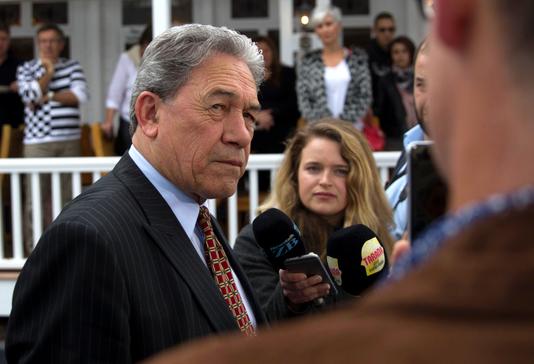
Hon DAVID PARKER (Labour) Link to this
As I said last night when this debate started, Labour will be supporting the Private Security Personnel and Private Investigators Bill at its first reading. The bill in its present form was drafted on behalf of the outgoing Labour Government.
It concerned us last night when Sandra Goudie stood up and said that the reason for the bill’s extraordinarily long period at a select committee is so that the committee can investigate whether the powers of private investigators and similar positions of responsibility ought to be considerably enlarged. That is something that the previous Labour Government would have opposed. We do not think there is a case for giving powers to arrest or increased investigative snooping powers to private investigators, any more than there is a case for giving those powers to lay people. They do not need them. There is no mischief to be overturned by changing the law, and overturning the law would erode civil liberties that we ought to guard zealously.
Private investigators, unlike the police, can be pursuing functions that are not being done on behalf of all people through the State. The police are obviously prosecuting crime on behalf of all New Zealanders. They are subject to various controls under the Police Act, and to political controls through this Parliament and through the ballot box. Private investigators are subject to no such controls. They can pursue private vendettas on behalf of private clients. They can pursue politically motivated actions; the police cannot do that. Although we support the bill, we will oppose increases to the powers of private investigators.
AMY ADAMS (National—Selwyn) Link to this
I rise to take a call in support of the first reading of the Private Security Personnel and Private Investigators Bill. As we have already heard, this bill will repeal and replace the existing 1974 legislation, which is, of course, the Private Investigators and Security Guards Act. When the operation and sufficiency of that Act was reviewed, a number of areas requiring further work were identified. The bill before us, which was introduced at the end of the previous Parliament, is the result of that work.
In my time this afternoon I will speak directly about the importance of robust legislation in this area, because I believe that shows the necessity to replace the law we have currently with stronger and more effective law. The need for appropriate and effective legislation in this area is, at its heart, recognition of the importance of the safety and security of our people and our information. The professional roles that are regulated by this bill are those entrusted with the care of exactly that—our people and our information.
There are two words that I have been surprised I have not heard more of in this debate so far: “trust” and “reliance”. It is the trust and reliance that we put in these professionals that justifies and, indeed, demands a robust system of regulation that the public can have confidence in. If we consider first the personal security roles covered by this bill—personal guards, security officers, bouncers, crowd controllers, and the like—we see that the importance of those roles and of those who carry them out well is evident from just about any worst-case scenario that could be imagined.
I am sure we are all very well aware of the image of crowd controllers and guards hovering around the fringes of people and events, yet very few of us, I imagine, would be able to recall ever seeing any of them actually put to the task, as it were—except, perhaps, taking down a streaker or two at the rugby or the cricket, which I have certainly seen on occasion. It would not be too difficult to be lulled into thinking that they do not do much and that anyone could do it. I would suggest, though, that nothing could be further from the truth.
The fact that these roles exist, and increasingly so all the time, tells us of the very real risks they guard against, and it tells us what could go wrong if the people employed to do this work do not have the skills, training, or personal characteristics required to be effective in their roles. It is not just about having physical strength and, in the case of catching streakers, a good turn of speed. I would suggest that a fair degree of psychology, behaviour management, discretion, judgment, and self-control are required. The people in these roles have to be relied on to act instinctively yet still appropriately in highly charged, adrenalin-laden situations. Getting that right is not just a matter of chance. It is a matter of careful selection, skills training, and experience.
Through this bill we will have a mechanism to ensure that those who are in such roles are able to meet the threshold criteria. In addition, I will just mention the ability to promulgate codes of conduct by regulation, as I think this is an important part of the bill that will allow us to have a streamlined way of reacting to on-the-job issues as they arise and to set out the behaviour that is expected. Personal security is one of those fields where staff doing their job well, as the vast majority do, are almost invisible, yet if the job is not carried out in the way that it should be, even once, the consequences can be significant. In fact, they can be disastrous.
All members of this House, I am sure, will also understand all too well the importance of the security of our information, which is the other area that this bill caters for. Certainly, in my previous professional role as a lawyer, confidentiality was paramount. As a lawyer, and now as a member of this House, I am, like other members, aware that we are often entrusted with the most personal information about the lives of others or with highly sensitive commercial information.
Although I have no doubt at all that those in professional roles and their staff understand that very well and work extremely hard to maintain that confidentiality, I have always been extremely aware of how vulnerable that confidentiality becomes with regard to our computer security people, our technicians, our secure document storage people, document destruction contractors, and our site security. All those people wander through our places of work, both physically and electronically, and they have access to important and confidential information. Our ability to keep those confidences really rests not just on our own use of that information but also on the ability of those people to maintain the standards of professionalism and responsibility that we trust they have.
We all place exceptional trust in the integrity of those who fill those roles. I do not think it is unreasonable that we should be able to rely on the fact that licensing systems are in place to ensure that suitable training has been undertaken and that the people who are engaged in those roles have the skills and the reputation that we would expect them to have.
The framework was set up under the Private Investigators and Security Guards Act 1974, but in this bill, with the advantage of our ability to review 35-odd years of operation under the existing legislation, we are now able to address existing weaknesses and make sure that the framework is as robust as we want it to be. We can address the shortfalls, and we can encourage our communities to have faith and trust in, and reliance on, the people who carry out such important work.
The types of professionals required to be licensed under this bill hold roles of trust and safety, as I have said. Society has a right to demand standards of conduct from people who hold themselves out as being able to perform these roles. As I mentioned earlier, when these roles are carried out as we expect them to be, we often do not stop to think about what would go wrong if they were not. We do not think about the potential consequences of unqualified or inappropriate people who hold themselves out as doing this work, are engaged in doing this work, and have access to all sorts of situations.
I know that everyone in this House will have heard stories about patrons of bars or clubs being seriously hurt or killed in altercations with bouncers or indeed with other customers. I am sure we have all seen television footage from overseas of people being trampled to death when crowds and riots have got out of control. We all know about, or can imagine, the damage that can be done through identity theft or the improper use of personal or confidential information. These are the very real and very significant risks that this bill addresses.
The other thing I want to mention in relation to bills like this is that the good people in this industry, the vast majority who carry out their roles with the highest degree of integrity and take pride in their work, stand to gain as much as society. Any industry is degraded by the presence of cowboys. Therefore, those who hold themselves out as able to perform those roles with integrity and skill are protected by a bill ensuring that that is the case. We can have faith as a society that the people carrying out those roles have the skills and the training, and that serves to enhance the reputation of the profession as a whole.
I will look for a moment at who is covered by the requirements of this bill, but I will start by considering who is excluded. Just as members on this side of the House want to provide appropriate levels of protection, we certainly have a healthy reticence about putting in place any new compliance regimes where they are not justified or where any perceived benefits are likely to be outweighed by corresponding costs. Certainly, volunteers, neighbourhood patrols, community watch groups, and the like, who give up their spare time to make their communities safer, will not be put through hoops. They will not have to fill out forms and be approved. Equally, our policemen and policewomen, our Department of Corrections staff, and other Crown employees will not need to prove themselves on several separate occasions.
This bill will not mean that in-house security provided in an employment relationship has to be licensed, with the exception of crowd controllers. I want to comment on that for a moment because I think there is an important reason for that distinction. If employers employ their own in-house security staff, then the risk is theirs, and if they choose to employ inappropriate people, then so be it. But when crowd control staff are employed, the risk is the crowd’s. That is why we are entitled to make that distinction and say that crowd control staff, employed or not, should have to be licensed so that the crowd can have faith in their competence.
I acknowledge the Hon Clayton Cosgrove and Mr Ron Mark for their work on the development of the bill. I would like to thank the Hon Richard Worth for his role in making sure that this bill is progressed, after three reviews this millennium—there were three reviews but nothing happened. The bill was finally brought to the House at the end of the last parliamentary term, but it is the Hon Dr Richard Worth who brought it to the House. I support the first reading, and I am pleased to commend the bill to the House. Thank you.
CHRIS HIPKINS (Labour—Rimutaka) Link to this
I rise in support of the first reading of the Private Security Personnel and Private Investigators Bill. The Labour Party supports this bill—in fact, it was introduced by the previous Labour Government on 11 September 2008. This bill is yet another introduced by the previous Labour Government that the National Government is progressing. I congratulate the National Government on progressing all of the bills that the previous Labour Government—the very diligent and hard-working Labour Government—left on the Order Paper. I am looking forward to seeing some new ideas and new bills from this new National Government. National has had 6 months to come up with some ideas, and we are still waiting to see what it might come up with.
This bill is very important. The aims of the bill are to prevent certain people from either running businesses or working in various roles in the industry, to ensure that the participants in the industry have at least a minimum level of appropriate training, to require industry participants to comply with appropriate rules of conduct, to prescribe penalties for offences against the Act, and to ensure the effective and efficient administration and enforcement of the Act.
Labour introduced this bill to ensure that there are suitable checks and balances for the private security industry, which has broadened in scope and responsibilities in recent years. We have seen some pretty dodgy cases of private investigators in recent years, and I refer in particular to a case that will be well known to the House, although it occurred before my time here. It is the case of the private investigators engaged by the Exclusive Brethren, in concert with the National Party, to investigate senior Labour Party figures in order to gather dirt to smear the then Labour Government. I found it ironic to listen to National Government members heaping praise on Helen Clark during the last House sitting week—the week that she gave her valedictory speech—when those members spent years trawling around with their Exclusive Brethren mates trying to find any piece of dirt they could. They were aided and abetted by dodgy private investigators, who were paid for by the Exclusive Brethren, with the knowledge and support of the National Party, in order to smear the previous Labour Government. Is it not ironic that National members are now supporting a bill that cleans up an industry that has done so much for them and so much to get them into their position in Government now?
One might think that the National Party has turned over a new leaf, that its members have left their Exclusive Brethren days behind, and that they have forgotten about the fact that John Key cosied up to the Exclusive Brethren. There is TV footage of him cosying up to the Exclusive Brethren, but National members have forgotten about that. They have turned a new page. They are in Government now; they are going to clean up their act. They are going to leave behind their days of digging dirt and smearing Labour politicians. But what did we see only yesterday? National is so desperate about Mt Albert that the National research unit was trawling around in order to find dirt on a person who may be a Labour Party candidate. National is so desperate to exceed expectations that before the Labour Party candidate has even been selected, National members are already digging for dirt against the candidate. They are up to the same dirty tricks that they were up to when they were aided and abetted by the Exclusive Brethren and the private investigators, who were paid for by the Exclusive Brethren with the knowledge and support of the National Party.
National members want to defame and smear a person who, as Phil Goff said today, has put his life at risk and has done more for humanity—receiving gallantry awards for saving the lives of children—than anybody in the National Party. National members wanted to smear him, so they got their amateur, unregistered private investigators to go out there and dig for dirt to see what they could find. That should not happen. The private investigation industry needs to be cleaned up, and the National Party needs to clean up its act as well. Is it not interesting to contrast those standards? National members are willing to trawl through and try to find any piece of dirt they can on Labour Party politicians, but what about a case in their own backyard where there are serious issues of public transparency and accountability? What are they willing to do about that? They are willing to do nothing.
Is it not ironic that the Hon Dr Richard Worth, who cannot even follow the most basic rules of the Cabinet Manual, is the Minister in charge of a bill that aims to clean up an industry by requiring industry players to comply with appropriate rules of conduct? Let us think about the Cabinet Manual, and whether Dr Worth himself has applied the appropriate rules of conduct for his industry. Has he complied with the appropriate rules of conduct for his industry? The answer to that would be: “No, he has not.” Richard Worth failed to declare to the Prime Minister a serious conflict of interest when he went on his junket around the world. The conflict of interest was revealed on 30 March 2009 when he was caught out travelling to India as a Minister to talk up aviation training in New Zealand, all the while operating as a director of New Zealand Aviation Ltd and holding shares and directorships in the India Trade Group. Let us continue. On 30 March the Prime Minister John Key said that Dr Worth’s actions were stupid and unwise, and that he had given him a bollocking. He said that he did not expect to see Richard Worth’s poor judgment repeated. Already a Minister in Mr Key’s own Government is failing to comply with the appropriate rules of conduct for his industry; this bill seeks to impose rules of conduct on a number of other industries, including the private security industry.
It gets better. On 2 April Dr Worth continued to hold shares in WSD Global Markets, an Indian-focused company, and J P Morgan Indian Investment Trust, despite assurances that he had resigned from “absolutely everything.” Then on 6 April, when John Key was asked whether Dr Worth had no more chances or lifelines, John Key said “Yeah.” It goes on—
I raise a point of order, Mr Speaker. I appreciate that this member is new to the House, and I appreciate that this is a wide-ranging debate, but the member’s speech has to be within the topic of the bill. I believe that the new member is straying far away from the topic of the bill, and I ask you to call him back to the main, substantive part of the bill. Thank you.
The ASSISTANT SPEAKER (Hon Rick Barker) Link to this
The member makes a point. I just make the observation that it is unnecessary for the point of order to relate to the experience of the member—I think it does not add to the substance of it.
The ASSISTANT SPEAKER (Hon Rick Barker) Link to this
I do not need anyone speaking to the point of order, thank you—I am ruling. The point that has been made by the member is valid; I think the member should be talking about the Private Security Personnel and Private Investigators Bill. It is fair enough to make some other observations, but that should not be the basis of the substantive part of the member’s speech. The occasional reference to other things is acceptable, but I think that at this stage we have dealt with that matter sufficiently. The member will continue.
Thank you, Mr Assistant Speaker. I refer, in particular, to clause 77(e), which allows for the cancellation of a certificate for a potential private investigator, if he or she “has been guilty of misconduct or gross negligence in the course of the business to which the licence relates:”. Of course, that rule is a code of conduct. Were these rules to apply to Cabinet Ministers, Dr Richard Worth could be deemed to have breached them and he could have had his licence revoked. In fact, he could have had his ministerial warrant revoked, were this Government to have any standards of conduct for its Ministers whatsoever—which we know it does not. On 7 April, when Dr Worth failed to disclose that he was a director of WSD Global Markets and its associated company in the Cook Islands, John Key said that he had an extensive discussion with him. John Key had previously said that Dr Worth had no more lifelines and he was on his final warning, yet Dr Worth continued to breach the code of conduct for his profession. This Minister now brings a bill into this House that seeks to impose a code of conduct on other professions, yet he is not willing to abide by the code of conduct for his own profession.
One of the aspects of this bill is about ensuring that private security personnel have appropriate levels of training. There is a question here: did Dr Worth receive appropriate levels of training in conflict of interest issues? Did he receive appropriate training about the conflict of interest criteria in the Cabinet Manual? It would appear that he did not, or, if he did, that he ignored them.
Would Dr Worth pass the vetting process that bouncers will have to go through under this bill? The bill allows the licence authority to weed out people who have serious criminal convictions, or who have been guilty of gross negligence or misconduct in the performance of their duties. We know that Dr Worth has been guilty of gross misconduct as a Minister, yet John Key continues to turn a blind eye to that gross misconduct; he will not do anything about it.
The Private Investigators and Security Guards Act has been largely unchanged since its passage in 1974. It is now outdated, and major reforms are needed. Private security personnel perform a valuable and responsible role in the community, and the risks associated with their work need to be addressed. We need to ensure that appropriate people are working in this sector, who are properly trained, for instance, in dealing with potentially violent situations, for their own protection or the protection of the public safety. Currently, businesses and their staff are required to be licensed if they offer services in security consultancy work—for example, installing burglar alarms—or if they are doing private investigation work. However, there are some serious gaps in the current legislation, and standards among private security businesses and staff vary widely. This bill, introduced by the previous Government, extends the licensing requirements and introduces mandatory training for private security staff, and it will bring New Zealand into line with the United Kingdom and Australia. I am glad that the National Government has picked up this bill in order to raise standards.
KANWALJIT SINGH BAKSHI (National) Link to this
I stand to support the Private Security Personnel and Private Investigators Bill. This bill was introduced by the previous Labour Government, but was left without anything being done. That Government kept introducing bills, but did not have time to pass them. The bill is very important because security personnel have become a very important part of our lives. Security personnel can be seen at large public events and sports events, where they have the huge responsibility of maintaining discipline. As members may have recently seen at one of the cricket matches between India and New Zealand, the public became very rowdy and started throwing bottles on to the grounds; it became a security issue for the players and other officials. Security personnel need proper training so that they can handle such situations, and this bill provides special instructions for them to have special training. As members know, the Rugby World Cup is coming to New Zealand, and we will need to have a lot of tight security during that big event. It is a prestigious event for our country, and we cannot labour that point enough.
This bill will require the following groups of people to hold licences: private investigators, security technicians, security consultants, property guards, and crowd controllers. This bill will stop any Tom, Dick, or Harry from becoming a private investigator, which is what many members opposite claim would happen. These categories of licences can be held by either individuals or public companies. In-house security personnel who are required to provide security directly to their employers do not have to have licences, with the exception of people employed by bars, like bouncers; they will be required to have a licence or a certificate of approval. Security personnel can find themselves in situations where there is a risk of violent physical confrontation. It is in the best interests of both the public and the industry that security personnel are adequately trained and briefed for such situations if they arise.
The bill also requires security personnel to take special training for these purposes. It ensures that there will be better screening and monitoring of individuals who want to enter this industry. It will disqualify any individuals or companies from holding a licence if they have been previously convicted or if an individual wanting to enter the industry has a history of mental health issues. A licensing authority will be established, and it will manage and monitor the industry to enforce the licensing requirements. The cost of the licensing authority will be met through the licensing revenue. The bill intends to reduce the compliance burden, as it requires full renewal of the licence after 5 years. There will be an annual return, with updated information about the licence holder and responsible employees. Licence holders will have to pay an annual fee, but they will not have to go through a full licensing process each year.
This bill will create flexibility in relation to the different types of training that can be imposed on different classes of personnel. The use of regulations will provide the power to impose training, which also creates the flexibility to respond to the changing circumstances and technology. As we know, the technology is changing on an everyday basis, and we need to have security personnel updated through training so that they can maintain the technology. I stand here to support the bill. Thank you.
Hon Dr RICHARD WORTH (Minister of Internal Affairs) Link to this
I move, That the Justice and Electoral Committee consider the Private Security Personnel and Private Investigators Bill, and that the committee finally report to the House on or before 30 March 2010.