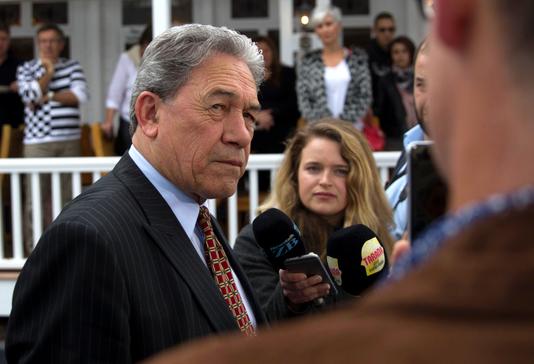
Hon PETER DUNNE (Minister of Revenue) Link to this
I move, That the Taxation (Annual Rates, Returns Filing, and Remedial Matters) Bill be now read a first time. At the appropriate time, I will be recommending that this bill be referred to the Finance and Expenditure Committee for its consideration. This bill is an omnibus tax bill that proposes some wide-ranging reforms to our tax system. Some of the proposed changes aim for greater efficiency and innovative tax services, some deliver on changes announced in Budget 2011, and others ensure that the current rules continue to work efficiently and with greater fairness.
The centrepiece of the bill proposes a major shift in the way individuals and businesses currently deal with routine tax-return filing and record-keeping requirements, making these processes simpler and easier. These changes have been progressed from the proposals that were outlined in the public consultation paper Making tax easier, which was released by the Government last year. Under the proposed changes, the two main tax forms for individuals, the IR3 and the income statement, will be replaced by one form. The bill will also remove the requirement for taxpayers to file an income tax return merely because of their Working for Families entitlements. These people will, however, still be required to provide their income information to the Inland Revenue Department and to reconcile their Working for Families payments.
To bring greater equity to the returns filing system, the bill will also tighten the rules that currently allow certain salary and wage earners to cherry-pick only the most favourable years in which to square up their tax obligations in order to receive a refund. Instead, the taxpayers who choose to file a tax return will be required to have their tax obligations squared up for each of the previous 4 years as well as the current year. This rule will be phased in over 4 years, beginning from the 2014-15 tax year, and will remove a tax advantage over other taxpayers who are required to file a return every year.
For businesses, the bill simplifies and reduces the costs of record-keeping by removing a number of legal barriers to electronic filing, as the Inland Revenue Department moves away from cumbersome paper-based systems and towards greater use of electronic services. For example, under the changes proposed in the bill, taxpayers or their agents who send electronic returns to the Inland Revenue Department will be able to retain copies in an electronic rather than a paper format, thus reducing their record-keeping costs. Together these measures will make taxpayer filing requirements simpler, easier, and fairer.
As I mentioned earlier, the bill also includes two measures that were foreshadowed in Budget 2011. To encourage a higher level of private savings and make KiwiSaver more financially sustainable, the bill introduces changes to the minimum employee and employer contribution rates, which will increase from 2 percent to 3 percent from April 2013, as previously announced in the Budget.
In the second Budget 2011 - related measure, the bill also gives effect to an increase in the minimum equity requirement for foreign-owned banks operating in New Zealand. From 1 April 2012 the minimum equity rate will rise from 4 percent to 6 percent, and this change is part of the Government’s continuing focus on ensuring that all taxpayers pay their fair share of tax.
The remaining changes in the bill are of a practical nature and ensure that the tax rules are applied consistently, that they are clear, and that they achieve their correct policy purpose. Accordingly, the bill introduces changes in order to give businesses greater certainty over the tax treatment of costs incurred on software development projects. Under this bill a deduction will be allowed for expenditure on an unsuccessful software development project in the year the project is abandoned. This measure addresses the immediate concerns of businesses involved and will help to ensure that the tax rules do not act as a deterrent to investment and innovation.
The bill also contains measures to change the tax treatment of profit distribution plans. Under the changes proposed, shares issued under these schemes will be treated as a taxable dividend, to ensure that the tax treatment is consistent with other similar arrangements such as dividend reinvestment plans. This will ensure that such schemes cannot be used to undermine the imputation credit rules by streaming imputation credits to shareholders who can best use them. The Government is strongly opposed to the misuse of imputation credits in this way, as it undermines the whole basis of the imputation credit system, which is to tax all shareholders evenly on their share of a company’s profit.
In further clarifying the rules for businesses, a number of GST-related changes are included in this bill. These largely deal with technical matters resulting from rules that were introduced last year to prevent phoenix fraud schemes. The changes will ensure that the rules operate as intended, thereby improving their fairness and the overall integrity of the tax system. Other measures in the bill will bring greater certainty to the GST rules more generally. For example, the bill clarifies that late payment fees charged by businesses to customers who are late in paying their accounts are subject to GST. That will resolve any previous uncertainty.
Finally, the bill confirms the annual income tax rates for the 2012-13 tax year and introduces a range of remedial amendments to give greater certainty to taxpayers. They include enhancement to KiwiSaver operational processes, clarifying entitlements to Working for Families tax credits, amendments bedding in the new look-through company rules, adjustments to the binding rulings and depreciation determination regulations, and clarifications to the life insurance transitional rules and the emissions trading rules.
These are the main features of this omnibus bill. Taken together they help strengthen our tax system to make it easier for taxpayers to comply with their obligations, and they are generally more fair for taxpayers overall. With those remarks it gives me great pleasure to commend the bill to the House.
Hon DAVID CUNLIFFE (Labour—New Lynn) Link to this
I recognise the member who has just resumed his seat, the Minister of Revenue. He may not be the Minister for much longer, but we will leave the good voters to decide what happens in Ōhariu.
Labour has a number of points of disagreement with matters covered in the Taxation (Annual Rates, Returns Filing, and Remedial Matters) Bill, but we support the bill going to the Finance and Expenditure Committee. This is part of the normal process of remedial legislation, which ensures that our tax system keeps up with necessary changes—partly as private entities try to stay one jump ahead of the law, and partly as issues are uncovered that require a non-policy fix.
The first key provisions of this bill refer to tax rates for the 2012-13 year. It would be utterly remiss of me not to acknowledge the context within which that occurs. National has lowered the top tax rate from 39 percent to 33 percent. That has probably been the single most important—certainly, the single most expensive—economic decision that this Government has made in this term of Parliament. It is a signal transfer of wealth to the wealthiest New Zealanders. One might say that at the expense of the many, the few have benefited. Labour absolutely objects to that realignment of the tax system. Income maldistribution is increasing. The gap between rich and poor is widening, and it benefits no one if National supporters park their Mercedes behind barbed-wire fences and security cameras while others in the rest of the country go around smashing windows, as occurred in London during the riots.
Hon DAVID CUNLIFFE Link to this
That is why, I tell Mr Bennett, immediately upon taking office, Labour, in its first Budget, will be raising the top tax rate back up to 39 percent above an indexed threshold of $150,000.
Through that and through Labour’s insanely popular capital gains tax package, which has been well received the length and breadth of this country, we will be able to give every New Zealander the first $5,000 of income that they earn tax-free. That includes beneficiaries, it includes superannuitants, and it includes people on all income levels. It could not be fairer. It applies equally to everybody. About 98 percent of taxpayers will be better off because of that tax switch—the capital gains tax in exchange for the lowering of the $5,000 threshold to zero.
Of course, families are under enormous cost of living pressures, and this bill also deals with GST and changes some of the GST provisions applying to late payments. It is a controversial issue and one that we look forward to hearing submissions on at the select committee. The Minister claims to be simply trying to clarify the law around GST on late payments, but tax experts say that late payment fees are neither a good nor a service and therefore are not supported by a first-principles approach to GST. The Government has, if you like, form on GST. It has raised the rate during this term of Parliament from 12.5 percent to 15 percent on all goods and services, despite a clear promise from the current Prime Minister that it would do no such thing if elected. It said there would be no change to GST. Well, here is further change.
Let me again make it clear—Labour will reduce the rate of GST to zero on fresh fruit and vegetables. On the advice of the University of Otago medical school, that will clearly increase the consumption of healthy food to the benefit of children and families—[Interruption] Members opposite are baying like hounds because they do not like to see hungry families feeding their children healthy food. Well, we in Labour do. We visited many families where it is getting harder and harder in the face of inflation, in the face of a tax switch that was not, and in the face of a rampant increase in the cost of living—in the last year, around 7 percent on food prices and 1.9 percent on wages.
If people feel worse off under National, that is because statistically they are. They have gone backwards. National’s tax switch was really a tax swindle. Hard-working Kiwi families have ended up paying more every time they go to the shops, and have seen little in the way of tax cuts. Under Labour they will get a reprieve; they will get the GST off fresh fruit and vegetables, they will see the minimum wage rise immediately from $13 to $15 an hour, and they will see the first $5,000 of everybody’s income reduced to zero.
The bill raises the employee contribution rate for KiwiSaver from 2 percent to 3 percent. This is somewhat ironic, as it was only a year ago that the Government reduced it from 4 percent to 2 percent. So one of the signal achievements of the current Budget was to undo half of what it did the previous year. The problem is that the chopping and changing around KiwiSaver has really said to New Zealanders that they cannot trust this Government in terms of policies around their long-term savings. New Zealanders are looking for certainty. Very soon, when Labour unveils its, I think, ground-breaking savings policy, they will get certainty, because we are planning for the long term. New Zealanders will be better off with Labour’s savings policy. I know there is a lot of eagerness out there, both in the media and in the electorates, to see the details of that policy. We look forward to bringing that to the country in the very, very near future.
Let me briefly refer to several of the more technical aspects of the bill. Working for Families springs to mind as a thing that the Prime Minister said National would not change. Of course, in this year’s Budget it did—same old, same old. He is the “Minister for Broken Promises”. “Look-through companies” is a euphemism if ever I heard one. Everybody knows that loss attributing qualifying companies attribute losses to the taxpayer but benefits to the directors and shareholders. Look-through companies are a way of preserving some of that entitlement without sounding like they are. The problem with look-through companies is that it is pretty hard to look all the way through to who is actually taking the loot. It is not the taxpayer; it is the person setting up complex tax structures such as look-through companies and trusts.
Many of those issues will be dealt with by Labour’s capital gains tax. In the words of one senior tax expert, it is like playing netball on a court full of potholes. The capital gains tax fills in not all of them but certainly the largest one. That is why it is being advocated by Treasury, by the Reserve Bank, by the OECD, by the International Monetary Fund, and, of course, by all the major newspapers in New Zealand and most major media. It is polling extremely well—I think better than two to one, relative to the Government’s proposal of selling down public equity in State-owned assets like power companies. The public wants to keep them, and it does not want to be sold down the river by tax law that is full of loopholes.
I turn to expenditure on unsuccessful software development. Why, on a first-principles basis, would the Government allow people to write off a failed software project? Why is that distinctly different from any other business proposal? That is one of the issues, like the fifth rules, like the bank thin capitalisation rules, which we support increasing, and other matters in this bill, that we look forward to discussing with the Government at the Finance and Expenditure Committee and in the House. Thank you.
AMY ADAMS (National—Selwyn) Link to this
I will take just a brief call on the first reading of the Taxation (Annual Rates, Returns Filing, and Remedial Matters) Bill. I commend to anyone who did not have the opportunity to hear the Minister of Revenue’s introductory speech that they refer back to it as an excellent summary of the operation of the bill and the matters it contains.
In essence, a world-class tax system is a fundamental component of this Government’s growth agenda, and a part of that is making sure that the tax administration system represents both value for money and ease of use for the taxpayer. This bill, in the main, contains steps to continue that reform, making electronic filing in particular far less burdensome for taxpayers and far easier to do. I note, certainly, that the bill removes the requirement to retain paper copies for those who have filed electronically, and on that basis alone I am sure we can look forward to having Green Party support for it.
The bill puts in place Budget changes to KiwiSaver and a number of other matters that previous speakers have referred to, including the thin capitalisation rates, software deductibility, and the like. I look forward to a full discussion of the impact of the bill at the select committee. I commend the bill to the House.
STUART NASH (Labour) Link to this
As my colleague the Hon David Cunliffe mentioned, Labour will be supporting the referral of the Taxation (Annual Rates, Returns Filing, and Remedial Matters) Bill to a select committee. We think this bill has some very good aspects, and we look forward to further discussions with officials and with submitters, and around the table.
One of the reasons for this bill, and one of its big parts, is to make tax easier. This is a plan by the Inland Revenue Department to make tax easier. It sounds like a good idea, and Labour is supportive, and always has been supportive, of any legislation that makes it easier to pay one’s tax or makes it easier for taxpayers to comply. It was a good paper, and I think the Inland Revenue Department is making some great progress in this area. As mentioned, I look forward to dialogue with the Inland Revenue Department, with submitters, and with the rest of my colleagues when the bill comes to the select committee.
There are some points that I would like to make, very briefly. Again, as my colleague mentioned, one of the things the bill does is set the tax rate for the next tax year. We are one of the very few countries in the OECD that has cut tax rates for the very wealthy. If I may, I will give an example. With National’s tax cuts we saw those who had a declared income of over a million dollars receiving about $1,000 a week extra in the hand. The Inland Revenue Department has told me that there are about 700 New Zealanders who have a declarable income of over a million dollars. If they earn a million dollars, they received about a $1,000 a week extra. Someone on the median wage in Napier received about $11 a week extra. The question I ask, and the question people ask me, is whether that is fair. Quite simply, it is not fair.
One of the reasons it is not fair, apart from the obvious, is that these tax cuts were paid for by an increase in GST. This bill deals with GST matters, and, again, we are all for anything that makes the system or improves the integrity of the system. But the thing that I have a slight problem with is the fact that Mr John Key, when he was the Leader of the Opposition, stood in front of New Zealanders, looked into the camera, and said: “National will not increase GST.” Yet one of the first things Mr Key did was to increase GST from 12.5 percent to 15 percent. The money that the Government collected from that increase in GST funded the tax cuts of $1,000 a week for those men and women earning over a million dollars a year. Paul Reynolds, who is one of the highest-paid gentlemen in this country, received $4,500 a week extra, in the hand, from the tax cuts. We have to ask whether that is fair, and we do not think it is fair at all.
The other things the bill deals with are Working for Families and KiwiSaver. National went into the 2008 election telling New Zealanders that a National Government would not cut KiwiSaver. Yet in the last Budget KiwiSaver was cut. Many people around the country said that they had a contract with the Government, in the form of KiwiSaver, and the Government reneged when it made cuts to every person’s KiwiSaver account.
Another aspect of this bill is Working for Families. Let me give one example. I come from Hawke’s Bay, and Working for Families contributes about $120 million into the Hawke’s Bay economy. At the moment in the provinces things are a little bit tough. People are working very hard, but things are tough. The cost of living is going through the roof, and the $11 a week that someone on the median wage received in tax cuts is simply not covering it. So when the Government makes cuts to Working for Families, it affects the whole regional economy.
The people who are receiving Working for Families are receiving it because they need the money to raise a family. They spend the money in the local economy, and it creates jobs and creates demand, and it helps those workers who are working in the Hawke’s Bay area. Making cuts to that scheme was detrimental to the whole Hawke’s Bay region and in fact to the whole New Zealand economy.
Someone asked me: “Why does Mr Key hate New Zealanders who are struggling hard to get ahead?”. I am seeing a number of people coming into my office, which is based in Napier, who are working very hard. These are full-time workers, but they are having to make a choice—whether they pay the rent or the mortgage, whether they pay for food, whether they put petrol in the car, whether they pay for electricity, or whether they put clothes on their kids’ backs. They are having to make that choice. I wonder whether this is the sort of country that New Zealanders believe New Zealand should be. People who work very hard are still struggling to make ends meet. That is all I will say on that issue.
But there is one other thing I will bring up, and this is one issue that we will tease out in the select committee. It is something that Mr Cunliffe mentioned. It is the tax treatment of unsuccessful software development. I wonder whether this is a little bit self-serving. The key feature here is that the amendment allows a deduction when a person, or a company, I assume, incurs expenditure on developing software for use in their business and the development of this software is abandoned.
Earlier this year the Inland Revenue Department abandoned a software project in respect of its student loan scheme. The cost of that to the Inland Revenue Department and the taxpayer was about $20 million. That was $20 million of taxpayers’ money that went into a scheme that had the plug pulled out from it. I wonder whether this amendment is slightly self-serving. We are all for economic development and we are all for businesses getting ahead. There is no doubt that increasing productivity is the only way forward for this country, and software systems help that. But when everyone knows that the Inland Revenue Department wrote off $20 million, I wonder whether this is slightly self-serving.
On that note, as mentioned, Labour will be supporting this bill’s referral to the select committee but there are many conversations that have to be had before we will support it all the way through. Thank you very much.
Dr RUSSEL NORMAN (Co-Leader—Green) Link to this
I rise to speak on behalf of the Green Party on the Government’s Taxation (Annual Rates, Returns Filing, and Remedial Matters) Bill. This bill, in a way, is a bit of an overview of the Government’s fiscal and taxation strategy. It does not cover all aspects of the tax strategy by any means, but it does give a very clear signal about where the Government is going. Of course, part of what the Government is doing, at a time when around the world we face tremendous pressure on sovereign debt, is driving us further into debt by means of the very, very expensive and significant cuts it has made in income tax rates. This is, of course, the annual rates setting bill, and the cut in income tax that the Government has made has cost the country very large amounts of money.
The Government, at the time, argued that its changes to the income tax rates were fiscally neutral. That was not true at the time; according to the Budget papers, it was going to cost a billion dollars over 4 years. Of course, since then the changes have cost more than that, because the GST take is not at the level that the Government had expected. So the Government’s changes with regard to the taxation system have put the Government books in a worse fiscal position than they would be otherwise. At a time when there is enormous pressure on Governments around the world on government borrowing, why did we make a series of changes to the taxation system that resulted in the Government going further into debt? It was not logical and it was not rational. At the time, the Green Party warned the Government that driving the Government books further into the red was not a very wise fiscal strategy, but the Government took no notice, of course. It carried on regardless and went ahead with the tax cuts. The result has been that it has had to borrow billions of dollars from overseas. That seemed to be OK, but now every day that passes, the pressure on sovereign debt grows and grows.
So developing a strategy that increased Government debt at a time when there is enormous pressure on sovereign debt seems to me to be an extremely dangerous strategy. I think the Government needs to reconsider its general direction with regard to its fiscal and taxation policy, which is basically a “let’s borrow lots of money” taxation policy.
The other measure that the Government has failed to introduce is a broadening of the taxation system. Every report we read about the New Zealand taxation system argues for a broadening of it—that is, to move on to some other bases, rather than relying so heavily on the existing forms of taxation. The most obvious one here is around property: a capital gains tax. The Government, for entirely political and ideological reasons, has not accepted the advice that has come from pretty much every international organisation, as well as numerous New Zealand domestic ones, that we should fill the hole in our taxation system with the missing tax—a capital gains tax—the absence of which distorts the system. This bill, unfortunately, once again fails to address that particular hole in the taxation system—the absence of a capital gains tax—and it misses taking the opportunity that is clearly available to broaden the tax base in New Zealand.
One of the other measures that the OECD has been calling on New Zealand to introduce is a charge on irrigation water. The OECD has said consistently that if we wish to broaden the taxation base, we need to look at levying charges on resource use, and the most obvious one in New Zealand is on irrigation water. Once again the OECD has put forward a very strong case for broadening the taxation base by having a levy on irrigation water, and once again the Government has said no. So one time after another we have seen the Government turn its back on taking opportunities to broaden the taxation base. This bill was yet another opportunity to do so, but in the very large number of remedial changes that the Government makes in this bill, at no point does it attempt to broaden the taxation base, which is what all the international studies have been calling on New Zealand to do.
Of course, the Government is making changes around GST. The increase that the Government introduced in GST has a largely regressive nature, because it tends to affect those on lower incomes more than others. By making sure that GST applies to late payments, which tend to be from people who have trouble meeting their payments, whether it is for their electricity bill or for their phone bill, the Government is saying it will make sure that it gets to those who are on lower incomes—whatever happens, it will make sure that they pay more. The increase in GST was one part of doing that, and, now, extending the GST to late payments is the other part of it.
The other element that is missing in the Government’s taxation system concerns greenhouse gas emissions. If we read the literature—and unfortunately, I guess, the Government does not—we see that there is a vast amount of economic literature about making sure that we do not subsidise greenhouse pollution. In fact, Tim Groser made some very interesting comments recently about not subsidising pollution. He talked about fossil fuel subsidies; he made reference to them in a speech. He said it was terrible that there were all the subsidies around fossil fuels. Well, here we have a tax bill that continues the system whereby we subsidise greenhouse gas emissions, to the tune of about $1.2 billion this year and another $1.2 billion over the next few years. We are in a situation where the Government has made a conscious decision to subsidise greenhouse gas pollution in New Zealand, rather than make polluters pay their way. The taxation system the Government is introducing not only is narrow and fails to broaden the tax base by making sure we actually have taxes in other areas but also continues, through the emissions trading scheme, the subsidies that go towards pollution. Here we have Minister Groser saying we should not subsidise fossil fuel, and on the other hand we have a Government that subsidises greenhouse gas pollution.
If the Government had removed those subsidies, then it would mean that the amount of taxes we need to raise through bills like this one and others would be significantly reduced. We could have either cut the amount of taxes that people pay through other mechanisms or paid off debt faster. At a time when the international markets are looking at countries like New Zealand with growing levels of sovereign debt, having the ability to pay down or reduce debt more quickly is actually a real benefit. So the fact we have these subsidies in place has added to the pressure on New Zealand in the international markets.
The other aspect of this bill that is a bit strange concerns software development. One could well argue that there is a case for the special tax subsidies for unsuccessful software development. But we then have to ask why we do not have an across-the-board research and development taxation support, rather than picking particular kinds of industries for which to provide tax subsidies. Why do we not spread research and development support, if we do it through the taxation system, by having across-the-board research and development tax credits, rather than targeting our tax credits, in this case, at unsuccessful software developers, which is essentially what this bill does? There is a strong case for doing that, because of the positive externalities around research and development. It is very difficult for any particular firm to get the benefits to that particular firm from all of the research and development that it pays for. There are positive externalities with regard to research and development, but it is quite difficult for any individual firm to capture them, which is why Governments around the world subsidise research and development.
We could argue that maybe that is what the Government is trying to do with this particular element of the bill. But then why would we not have an across-the-board, consistent approach to supporting research and development through the taxation system, rather than this ad hoc approach—if we were to be charitable—which is what the Government is doing with the changes around unsuccessful software development? That seems to me to be a much more consistent approach. New Zealand spends about 1.31 percent of GDP on research and development, private and public, which puts us at the very low end of the OECD and well below the OECD average, which is over 2 percent. So the fact that the Government is taking what charitably could be called an ad hoc approach to supporting research and development seems to be very strange. Why does it not take a much more consistent approach?
Finally, one of the issues that has come up, about how to deal with Government deficits, is being widely discussed now in the international media. The most recent Economist addresses exactly this question. The media say we actually need to make sure that the taxation system addresses inequalities. The Economist magazine talks about taxing the rich. Another way to look at it is to make sure that we address inequalities. And one of the things it talks about is making sure that property is taxed properly. What we find in New Zealand, without a proper capital gains tax and without proper taxation of capital gain, particularly in the property sector, is that we do not have proper taxation of the property sector. Completely against the advice of a magazine like the Economist, this Government continues to go down a path where it does not tax properties properly, and it does not broaden the tax base through introducing elements like a capital gains tax and an irrigation levy. This bill demonstrates why the Government has got its fiscal and taxation strategy wrong.
RAHUI KATENE (Māori Party—Te Tai Tonga) Link to this
I rise to take a very brief call on the Taxation (Annual Rates, Returns Filing, and Remedial Matters) Bill. This is one of those bills that attempt to take on a broad series of amendments to be introduced to several inland revenue Acts and regulations. The main proposals are simplifying tax filing requirements, including simpler requirements for individuals, and supporting employers in an electronic environment; taxing bonus shares issued by companies under profit distribution plans; deductibility of unsuccessful software development costs; the changes to KiwiSaver contribution rates announced as part of Budget 2011; ensuring that recent GST changes to phoenix fraud schemes and apportionment of input tax deductions operate as intended; and conferring donee status on four overseas charities.
I do not propose to talk in detail about these points, or even to talk about the economy, which other speakers have done today, other than to say that the Māori Party supports an economy of investment, which leads to greater productivity but also is richer because of the tangible difference it makes to well-being. In this context, then, the Māori Party supports the effective administration and collection of taxpayer funds, and, by implication, the party supports less compliance for businesses. We have always seen it as important to incentivise small businesses to grow by reducing unnecessary compliance costs, and the proposals around software development and simplifying the tax filing requirements should be received positively by small-business owners. We believe that these changes will help to ensure that tax law does not discourage investment and innovation.
Finally, the only other point I would make on this bill is regarding Māori authorities’ income tax rates for the 2012-13 tax year being the same as those for the current year—that is, 17.5 percent. This tax rate was lowered last year, which was a positive adjustment.
We are inclined to support this bill, as we believe that the changes will reduce filing requirements for individuals, businesses, and authorities alike, and help to produce a more innovative and efficient tax system. Thank you.
—and those legions of Kiwis listening to our speeches here this afternoon, of course. They will be spared the agony of listening to Wayne Mapp into the future as he warbles on, as he writes yet another unreadable contribution about political heritage and political culture. I have it on good authority that he actually worsened the literature of tax when he did his PhD. The thought of Wayne Mapp’s name being linked to a PhD defies logic. However, that might be one of the hidden talents that the man brings to this particular House. He does have a redeeming feature, though: he is married to a woman of Ngāti Hine descent. Unfortunately, she is related to Tau Henare, but, that blemish aside, that is one of his—[ Interruption] Well, I will not go quite that far.
We support the Taxation (Annual Rates, Returns Filing, and Remedial Matters) Bill. An area that does require a great deal of additional attention is the propensity of the current Government to continue to change and not so much to make amendments but to show an ideological predisposition to undermine KiwiSaver. We took a very principled stand. We thought, several years ago, that the country needed a source of indigenous savings. By saying indigenous, I am not talking about Hone Harawira; that is to ruin a good word. I am actually talking about New Zealanders building up a reservoir of savings that could operate as an alternative to the constant importation of capital. We all know that if we want to grow a long-term, robust economy, we need a savings scheme capable of sustaining confidence amongst the families who may have only a few pennies under this Government. They do not have cents, because the Government has no sense, so families are reduced to saving a ha’penny or three.
A ha’penny, when it looks bald, may represent the head of the member from Waikato who is yelling, mooing like one of those half-empty cows that he possibly owns, and which, fortunately, as a consequence of tax changes that are on the way, will not represent a tax write-off.
We are disappointed that this bill represents a further set of unfriendly and ill-conceived changes to KiwiSaver. KiwiSaver is a key institution that we are prepared to fight for, going into the future, and to defend as a part of our political heritage. It is disappointing that members on the other side of the House have not found it possible to enjoy common ground with members on this side of the House, to ensure that a credible, robust scheme—an institution called KiwiSaver—goes into the future, so that each generation will put money aside and reduce the country’s reliance on importing capital. KiwiSaver represents a sustainable basis for investing in our firms, investing in businesses rather than constantly bemoaning the fact that foreign direct investment is undermining our economic security or, indeed, our long-term sovereignty.
Those are the key differences, but we will park up those differences for addressing at the select committee, and what we do not address in the select committee, we will hammer those members on the other side of the House on during the hustings, and we look forward to that. Thank you very much.
DAVID BENNETT (National—Hamilton East) Link to this
The Taxation (Annual Rates, Returns Filing, and Remedial Matters) Bill is important because it sets the tax rates for New Zealand as we go forward. Each year we set the tax rates. This is very important, because it is part of the growth plan for New Zealand. We have heard Labour members indicate that they are not very happy with that growth plan. They would much rather have a plan very similar to what the Americans have, with very high taxation leading to no growth. New Zealand has a much better plan, whereby we incentivise people to get out there and make successes of their opportunities and abilities. [ Interruption] We hear a few Labour members reacting to those comments, because they know that it is the truth. They know that the US economy is not doing so well, and that their plans would put New Zealand even further into the quandary of the world economic malaise, and would not lead to our getting out of those problems in a quick and successful manner.
The Greens have made comments about debt. It is interesting that when we go to an election candidates meeting, the Green Party candidates stand there and listen and say: “Yes, we will do everything that anybody wants.” So money is no limit to the Green Party. When Green candidates go along to these meetings they have no limit on what they will spend; then they come into this House and say that debt is too high. If we look at Green policies and add them up, we come to some very big debts, and that is the nature of the Green Party.
This bill is important because the National Government is firmly focused on lifting New Zealand’s economic performance. We want to set up for New Zealand citizens these strategies and approaches so that economic performance can lift, and taxation is one of those key elements. There are also a number of other measures in the bill that are important and that people would want to acknowledge, and they are in respect of the handling of tax returns, with the ability to handle those obligations electronically. That is very important in a modern world, where many businesses and individuals use electronic means of communication and accounting records, and if we can simplify the tax filing requirements, it makes sense to do so, because that is good for New Zealanders.
There are also some announcements on software development expenditure. That will now be deductible under this bill. That is very important, because a lot of New Zealand’s high-tech companies engage in software development. It is one of those things where not necessarily every project that is engaged in will be successful. The ability to write off those unsuccessful ventures into software development is important. It means that companies can continue with software development, and will not feel that once they have used their one go at software development, they have compromised their ability to do so and they stop further software developments. It is important for New Zealand’s high-tech industry to maintain and enhance its ability to deliver to the world stage products that have the highest degree of technoho—technological input, especially through software development.
I know our members may be laughing because of my slip-up in pronunciation.
There are also some measures on KiwiSaver in this bill. Labour members made some comments about KiwiSaver. I think Shane Jones used the words “principled approaches”—I think he said the Labour Party took a principled approach to KiwiSaver. Well, that cannot be further from the truth. The reality is that Labour members used KiwiSaver to buy votes, as they have done in previous elections, and as they have continued to do with other policies. It was merely a vote-buying approach by Labour, and it is not principled in any sense of the imagination. It is very sad to see someone like Shane Jones coming into this House and using those words when he is referring to a policy like that, which was simply there to try to retain power for Labour.
When we look at those changes to KiwiSaver, it is important to look at setting the right signals around retirement, and also at giving New Zealand taxpayers the opportunity to save for their retirement in a way that is a fair but also balanced approach, so that New Zealanders have the opportunity but also are realistic about what those contributions can be, and what they need to be to ensure that that scheme is viable, and that this country as a whole is able to maintain that retirement savings approach through KiwiSaver. So those changes are very important when we look at what is necessary to encourage New Zealanders, and to achieve the purposes we need for New Zealanders going into retirement.
Some changes have also been made in relation to phoenix fraud schemes and GST on those schemes. We have had in this House a number of bills dealing with phoenix transactions and schemes, and this bill is part of that approach. Those bills have really been there to try to put a dampener on the tax evasion that has been occurring through the use of such schemes. This legislation ensures that the recent changes in GST on phoenix fraud schemes and the apportionment of input tax deductions operate as they were intended to. That is an important part of this legislation, as well.
When we look at the legislation, we see there is also some clarification of treatment of GST on late payment fees. There are some changes in relation to fees being charged for binding rulings and depreciation determinations, and some clarification of entitlements to Working for Families tax credits. Basically, the bill has a number of elements that are important for the economy going forward. The first element is those tax rates, which are crucial for setting the economic growth agenda we need for New Zealand, and for sending the right signals and incentives to our citizens as they look forward to what their opportunities are in the economic platform we have created. Only by lifting that economic performance can we create the jobs and opportunities to boost incomes and improve the living standards of our people going forward.
The core part of the bill was setting those tax rates, but, as we said earlier, the bill attends to some other very important issues in relation to software development, the KiwiSaver minimum contribution rates for employees and employers, and the minimum equity holding for foreign-owned banks. The bill also covers some clarification of some minor GST and depreciation determinations. We look forward to this bill passing through the House.
A party vote was called for on the question,
That the Taxation (Annual Rates, Returns Filing, and Remedial Matters) Bill be now read a first time.
Ayes 110
- New Zealand National 57
- New Zealand Labour 42
- ACT New Zealand 5
- Māori Party 4
- United Future 1
- Progressive 1
Noes 11
- Green Party 9
- Mana 1
- Independent 1 (Carter C)
Bill read a first time.
Hon PETER DUNNE (Minister of Revenue) Link to this
I move, That the Finance and Expenditure Committeeconsider the Taxation (Annual Rates, Returns Filing, and Remedial Matters) Bill.
A party vote was called for on the question,
That the motion be agreed to.
Ayes 110
- New Zealand National 57
- New Zealand Labour 42
- ACT New Zealand 5
- Māori Party 4
- Progressive 1
- United Future 1
Noes 11
- Green Party 9
- Mana 1
- Independent 1 (Carter C)
Motion agreed to.