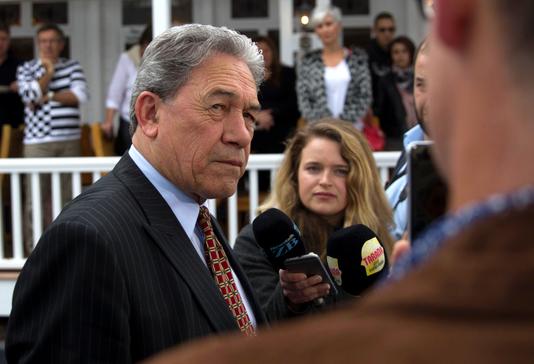
GARETH HUGHES (Green) Link to this
Kia ora, Mr Chairperson. Ngā mihi nui ki a koutou. Kia ora. Having been a student at university last year, I have been pretty interested in the big changes that we have seen in the sector since this Government has been in office. We have seen, essentially, the Government make tertiary education less accessible and more expensive. In some ways it is making it downright impossible to even be a student in New Zealand. Today I will grade the Minister for Tertiary Education. He comes across as being a very effective Minister. He is spoken about in sort of hushed and awed terms. When we look at his record and grade what he has done in this sector, we find we could give our Minister something below an A, probably below a B, and probably even below a C. I think the Minister would get an F. I think he has been a failure as a Minister.
Right now, if you want to study at Victoria University, the University of Otago, Waikato University, Massey University, or Auckland University, the chances are that you might not get to be enrolled, even if you have good grades—
H V Ross Robertson Link to this
I raise a point of order, Mr Chairperson. I draw your attention to Standing Order 103 about the use of the word “you”. I know the member is a new member here, so we can make exceptions, but—
The CHAIRPERSON (Eric Roy) Link to this
The member does not have to qualify the point of order by referring to matters of age or the time that a member has been here.
The CHAIRPERSON (Eric Roy) Link to this
The member responsible for saying that will be walking—whoever said that. I do not need any assistance. The member Ross Robertson simply raised a point of order. The point of order was a valid one. The member Gareth Hughes ought to be a bit more careful about the use of some pronouns.
H V Ross Robertson Link to this
I raise a point of order, Mr Chairperson. You are a very experienced Chair, and you will be aware that during the time that you spent addressing my point of order, there was an interjection. People should know, especially long-serving members, that there are to be no interjections whatsoever during the taking of a point of order. It came from members opposite.
The CHAIRPERSON (Eric Roy) Link to this
Yes, and I caution the member responsible for the interjection that if there is one more infringement like that, someone will be taking an early shower.
I apologise, Mr Chairperson. I would not give you an F. We are seeing our universities close their enrolments, in some cases, such as Massey University, with only 30 minutes’ notice. I was at Waikato University this morning. This year it has turned away 403 students, many of whom were school leavers who had anticipated being able to study at university, who wanted to become educated, and who wanted to contribute to the economy.
Why are we doing this? It is not because of a well-thought-out policy. It is not because there are more well-paid jobs out there, attracting all the potential students. It is simply because of a lack of funds. It is because the Minister would not get any more funds for the sector. Like Ruth Richardson and Roger Douglas in the 1980s and 1990s, this Minister has used the crisis of the recession to ram through possibly the most fundamental changes to the tertiary education sector. No longer do we have the open, egalitarian system that Kiwis are proud of; rather, we are seeing a more closed system. In this area, the Minister would have to get an F.
In Budget 2010 the budget for tertiary education was $4.2 billion, which is the same as last year’s budget. When we look at inflation, we see that the most recent budget was, essentially, a cut. When we compare ourselves with Australia, which we are trying to catch up to, we see it is investing an extra $5.7 billion over the next 5 years. Compared with other OECD countries we are ranked at 18th out of 30 for the proportion of our population with a tertiary degree—at 27percent. Australia is aiming for 40 percent. How will we catch up with Australia if we put less funding into tertiary education? In fact, we spend $3,000 less per student than the OECD average, and we are in the bottom quarter of the OECD for expenditure on tertiary education as a percentage of GDP.
Throughout the Budget process we have seen all sorts of “kites” floated throughout the year, and some of those measures were announced in the Budget. We saw a few additional places being funded, but not enough to cater for all the students who want to become more skilled and educated. In that matter the Minister would possibly get a C, or maybe a B. It is good that we have a few more students there, but not enough. The Minister reduced the fee maxima, making certain courses more expensive. I reckon that gets a D: a D for dumb. Do members know why that is? It is because we have a doctor shortage. That initiative will make it more expensive for doctors to enrol in courses. It is bad for our economy, students, and our health.
We have seen the Minister limiting access to tertiary education, based on performance. I thought this Government was about incentivising people, not about regulation, but instead we are seeing in the tertiary education sector more punishments and regulations. The Government could have gone down an incentivised path to promote performance. It also gets a D because this approach will disadvantage minorities, including migrants without English as a first language. It will disadvantage students from poor and disadvantaged backgrounds, and it is not smart for the economy.
The Minister has also introduced a lifetime limit to access to student loans. It does not matter to him that we already have a lifetime limit to access to student allowances, which is already a good balance and check within the system. This Minister is limiting those people who want to do a double degree, or who take a while, like the Minister did, to get their zoology degree. It means the system is very inflexible and very rigid, and again I think we have to give it an F.
We have also seen the Minister prevent access by Australians to student loans. I think the rest of the Committee might agree that that possibly gets a B; it is not the worst thing in the package.
We are seeing the introduction of a $50 student loan administration fee for the 560,000 Kiwis who have student loans. Of course, that has to get an F. Maybe the Government gets an F for failing because the Minister and the Prime Minister would love to bring back interest on the student loans, but the policy that we do not have interest on our student loans is just too damned popular for that to be done. That measure will increase the burden. Nationally, the total student loan debt stands at $11 billion. We need to be reducing the burden on students. This Government gets an F for tertiary education.
Hon ANNE TOLLEY (Minister of Education) Link to this
Tēnā koe, Mr Chairman. I am proud to stand in this Chamber as the Minister of Education in a National-led Government that has an unrelenting focus on lifting student achievement. I am very proud to be part of this Government. I am very proud to be part of a National-led Government that added $1.4 billion to the education budget over the next 4 years. It means that an extra $417 million will go into the into the education budget this year, and I am very proud, as the Minister of Education, to be a part of that.
I am also very proud to be part of a National-led Government that delivered to schools a 4 percent increase in their operations grant, which was well above the rate of inflation and well above anything that was expected. It means that an extra $156 million is going into front-line services in our schools over the next 4 years.
It means an extra $156 million is going into schools.
I am very proud to be in a National-led Government that has put an extra $350 million into property development—on top of the $500 million we put in last year—for school property. Part of that funding, of course, is for new schools and upgrading existing schools, but I am really proud that this Government has faced up to the fact that we have leaky schools. As part of Budget 2010, $82 million is being spent fixing leaky schools during this financial year, but we have to spend another $22 million over the next 2 years to find out how many leaky schools there are.
I do not know what the previous Labour Government did over the last 9 years, when we all knew there were leaky buildings, but it did nothing about leaky schools, and we did not even have the information. I am proud to part of a Government that has faced up to the fact that we have that problem, and has put some money in to start addressing it. Out in our communities there are some unsightly school buildings that have been abandoned or closed down, and they drive communities crazy because of graffiti and vandalism. I am proud that we have put some money into the Budget to take care of those problems.
I am proud to be part of a National-led Government that has put an extra $15 million into the Positive Behaviour for Learning plan, which will make training available for an additional 3,000 families and an extra 2,000 teachers. This programme was developed by the education sector and is being rolled out across the country. It is assisting both teachers and parents to deal with unruly students, and I am proud that we have found an extra $15 million this year to support that.
I am very proud to be part of a Government that has put over $48 million into ultra-fast broadband support for schools. That increases the School Network Upgrade Project and connects nearly 500 schools to the National Education Network trial. I am very proud to be part of a Government that is putting that sort of money into making sure that our children have a modern learning environment.
I am also proud to be part of a National Government that has put $48 million into the Youth Guarantee to give another 500 young people the opportunity for fees-free level one to three education in a tertiary environment. We have already got 2,000 students this year. There will be another 2,000 students next year, plus 500. I think that is fantastic. It means that 2,500 young people who were on the streets, who were not in education, work, or training, will have an opportunity at a tertiary institution next year.
I am also proud to be a part of a National-led Government that has more students in tertiary institutions than ever before. We are funding more students in tertiary education regardless of the half-truths that are told out in the community by the Opposition. We are funding more students than ever before. I am proud to be part of a National Government that has put an extra $107 million into early childhood education, bringing our total expenditure on early childhood education to $1.3 million, and $91.8 million of that is focused on lifting participation.
GRANT ROBERTSON (Labour—Wellington Central) Link to this
It is interesting to hear the Minister of Education get up to talk about all of the things she is proud of. I wonder how proud she is of the Building Act 1991, which created the problem of leaky buildings by deregulating the building industry.
Oh, yes, it did, by deregulating the building industry and allowing the cowboys to take charge. If those schools were leaky, it would be interesting to see how many of them were built in the immediate period after that National Government put in place the Building Act 1991. She also talked a little bit about empty schools. I tell members that there is one time of the day now when there are a lot of empty schools around New Zealand, and that is in the evening.
Well, that was when night classes were being held around New Zealand. But, unfortunately, in this appropriation and in last year’s appropriation, there was a reduction in funding for adult and community education and night schools.
Mr Quinn interjects very loudly. I ask him how many schools in the Hutt Valley, where he allegedly tries to represent people, are offering night classes this year. I ask him how many. I tell Mr Quinn that there are zero, absolutely none, because that member’s Government cut the funding. Mr Quinn can interject all he likes, but in the Hutt Valley—where the people he says that he represents live—there are no night classes this year as a result of the funding cut.
It was interesting to hear in the House today the Prime Minister’s comments on the interest-free student loans scheme. What the Prime Minister said today was instructive. He said that he has no intention of getting rid of the interest-free student loan scheme. Presumably, this is a similar kind of intention to having no intention to mine national parks—“Oh no, we are not sure; maybe we will; we will think about it in the future.” So it was a decisive statement from the Prime Minister today that he has no intention to get rid of the interest-free student loan scheme, except that when he talked to Victoria University students yesterday he said that the scheme is a disaster, economically it does not really stack up, and there has to be a better way of doing it. Well, if he really believes that, why does he not do something about it? Why does he not actually put in front of the public the policy that he believes in? Those members across the Chamber do not believe in interest-free student loans. I know that Chris Finlayson does not believe in interest-free student loans.
Because I have listened to the member on many occasions. That Government does not believe in interest-free student loans, but it does not have the courage of its convictions to stand up with a different policy, which is what the Prime Minister actually wants. We have a lot of proof of what the Prime Minister thinks about the interest-free student loans scheme, because in this House on 16 November 2005 John Key said: “What a cost to the country. What an unaffordable and irresponsible cost to the country. It is a sad day.” Then he went on to say that National members would be opposing it with every bone in their bodies.
Well, there is not a lot of backbone being shown here by Mr Key. If he really believes that interest-free student loans are such a cost on this country, why does he not have the courage of his convictions to put that in front of the public?
The problem with National’s approach to tertiary education is that it sees it simply as a sector to take money from rather than a sector to invest in for the good of all New Zealanders and for our future. I think it is very important to note that this appropriation for education covers the period in which a fundamental change will take place in universities. People who have university entrance will be denied entry to university next year. That is a major change, and the Government is standing there—Mr Joyce is standing there—like a bystander at a car accident, doing absolutely nothing but expressing concern and kicking the tyres. That is all that Mr Joyce is prepared to do while thousands of New Zealanders will not be able to go on to university next year. If they want to go to a polytech, they will struggle to get into a lot of those because tens of millions of dollars are being taken out of the polytechnic sector, as well.
Tertiary education should be the engine room of this economy. It should be part of the plan, if National had a plan, but it is not. Tens of millions of dollars are out of the tertiary sector. There are cuts to adult and community education and to university funding, and now there is a tax on the student loans scheme, as well. It is quite clear that this Government is not interested in catching up with Australia because it has no plan to catch up with Australia. If it did, it would be a plan that would involve investing at least a fraction of what the Australians are, but that is not what this Government has done. We will fall further and further behind Australia if this Government is not prepared to invest in tertiary education.
The CHAIRPERSON (Eric Roy) Link to this
We now have a motion in the name of the Hon Trevor Mallard to change Vote Education. The question is that Vote Education be changed by omitting from Schedule 1 “1,364,193” from the item relating to “School Property Portfolio Management”, and substituting “1,364,593”, and also by omitting “17,610” from the item relating to “Schools Furniture and Equipment”, and substituting “17,210”.
A party vote was called for on the question,
That the motion be agreed to.
Ayes 53
Noes 69
Motion not agreed to.
RAHUI KATENE (Māori Party—Te Tai Tonga) Link to this
E te Rangatū Pou Mua o te Reo o te Whare, tēnā koe. E aku koko tātaki tēnā koutou katoa. We come to this vote in the context of a damning statement from the United Nations special rapporteur on indigenous rights and fundamental freedoms of indigenous peoples—namely, that “the Treaty’s principles appear to be vulnerable to political discretion, resulting in their perpetual insecurity and instability.” Of course, we understand that the appropriation for Vote Treaty Negotiations is not the sole and exclusive authority of Treaty principles, but it is as good a place as any in which to start.
We join the select committee in being generally very impressed by the momentum driven by the Minister towards the aspirational goal of achieving just and durable settlements. It is very heartening that from practically the moment the coalition agreement and the ministerial warrant were signed, the Minister took off at a cracking pace. Over the last 18 months this Government can now boast of having reached 39 significant negotiation milestones, including seven deeds of settlement. That is something to be proud of! There are also some achievements that distinguish this vote, and they include recognising the progress since the Te Kōkiri Ngātahi hui held last year, the Minister’s commitment to addressing issues relating to the asset value of the land bank, and the investment in the rangatira ki te rangatira approach preferred by iwi. This third concept, the promotion of chief to chief negotiation, is something that we, the Māori Party, campaigned on and brought into the coalition, so it is great to see that concept coming to fruition.
With such positive progress being advanced, how is it that the special rapporteur could be so harsh in his comments about political discretion? That comes down to one word: Tūhoe. Although the pace of settlement negotiations is commendable, the manifestation of Treaty principles is primarily observed in practice. So when the Government failed to honour commitments that Tūhoe felt had been promised, specifically in the return of ownership of Te Urewera National Park to Tūhoe, many questions were asked about how genuine the commitment was to the Government’s dealing with iwi, and specifically with Tūhoe.
Anyone who has questions around the Tūhoe claim need look no further than the research of historian Dame Judith Binney, who has traced the history of the Crown’s treatment of Tūhoe back to 1871 and a promise made by Donald MacLean, the Native Minister, for Tūhoe to enjoy a large degree of self-government of tribal authority over the area. Twenty-five years later, in 1896, the Liberal Government of Richard Seddon passed a law granting a form of self-government to Tūhoe, a measure that Binney described as unique. The action was in direct relation to the Crown’s confiscation of large amounts of land in the Tūhoe nation during the wars in 1866 and 1867—confiscation that was neither justified nor compensated for. Over the decades, however, the initiative of Seddon was gradually whittled away, and 50 years later the Urewera National Park was formed out of the land that Tūhoe owned in 1896. Dame Judith Binney has suggested that the Prime Minister should have understood this history of the Urewera before talk of precedence entered the frame. The precedent that we in the Māori Party are interested in is how the Government can willingly offer up Department of Conservation estate for the purposes of mining, yet deny Tūhoe claims to the Urewera.
I leave the last word to a young boy from Kavanagh College, who featured in that fine publication, the Otago Daily Times, this morning. Sam Murphy, a year 13 student, wrote to the paper about his concerns that “in many cases, the treaty has been ignored and dishonoured.” He describes some of the issues we have seen outlined in the estimates, such as land claims and the foreshore and seabed dispute. He finished with a resounding challenge for this Minister, this Government, and this Parliament: “most of all, we need to understand and honour the Treaty of Waitangi, our nation’s founding document, a fruit of the goodwill and hope of those who signed it.” Let us learn from the wisdom of our youth, and put in place the policy commitment to ensure that the Treaty is indeed a foundation for goodwill, an opportunity to promote the rights and identity of our indigenous people, and a blueprint for unity.
PAUL QUINN (National) Link to this
Tēnā koe e te Heamana. Tēnā koutou, tēnā tatou e te whānau Paremata. It gives me great pleasure to speak in this particular part of the debate. I first acknowledge the excellent and, in fact, superb work that the Minister for Treaty of Waitangi Negotiations, the Hon Chris Finlayson, has done in carrying out this aspect of the Government’s policy. That work is demonstrated first and foremost by the fact that in these estimates we are now considering, an extra $6.5 million has been allocated in this year’s Budget to enable the Government to meet its target of settling all the claims by the year 2014. We have, for the first time, seen a significant increase in the Office of Treaty Settlements budget. More important, we have given a sense of purpose and satisfaction to that office in the work that it does—a sense that it has never had before, certainly in the over 20 years that I have dealt with it. It has been a lost ship—
It has been a rudderless ship, particularly during the 9 years of the previous Labour Government. That is demonstrated, for Mr Grant Robertson’s information, by the fact that during the 9 years that Labour was in Government it produced 1.6 settlements per year—1.6 settlements per year. In the short time that this Government has been in power, we have already signed, under the outstanding leadership of the Minister for Treaty of Waitangi Negotiations—and the excellent work the Minister is doing was recognised in the speech made by my friend and colleague Rahui Katene—seven deeds of settlement, 11 agreements in principle, 11 deeds of mandate, and seven terms of negotiation. This is an extraordinary amount of work, and the people who actually understand what is involved in achieving these milestones will understand that.
Absolutely. This shows us just how poor the performance of the previous administration was. That administration was supposedly into closing the gaps. Remember closing the gaps? Yet all that administration achieved was 1.6 settlements per year, starting with Margaret Wilson, who did nothing for 2 years. I know that because we waited for a meeting with her. We waited desperately for a meeting with her, and she did nothing. We were very close to signing a deed of settlement, prior to Labour coming into power in 1999, and then we sat around for 2 years waiting to get a first meeting with Margaret Wilson. She, of course, was followed by that wonderful chappie called Mark Burton, who was even worse than Margaret Wilson—even worse. Even Shane Jones will agree with that. The Labour Government did have one or two Ministers who tried to do something, including my friend Parekura Horomia. But sadly even he was ignored.
The great thing is that we are moving on. But the one other aspect that I will cover briefly—and we will see it later on tonight, when we debate another settlement bill—is not only that National, in coming into power, has done an outstanding level of work but that this Minister has had to clean up a mess left behind by the previous administration in a number of areas.
Hon CHRISTOPHER FINLAYSON (Minister for Treaty of Waitangi Negotiations) Link to this
I am pleased to take a call briefly to address some of the points raised by the previous speakers. I say in answer to some of the concerns expressed by the Māori Party member in relation to the UN special rapporteur that I had a couple of meetings with him last week. He had made no definitive conclusions, because his report has not yet been released. He generally was of the impression that in many respects this country, in a bipartisan way, is leading the world in this area and that since Mat Rata established the Waitangi Tribunal in 1975, and Geoffrey Palmer extended the jurisdiction in 1984, some very, very good work has been done. I agree with him. He said that so many of these issues finally are determined as a result of the exercise of a political discretion, but of course that has to be right. When one comes down to making decisions on pieces of conservation land or the level of commercial redress, of course it will be at the exercise of a discretion, so I have difficulty in seeing how that is necessarily a criticism. I think, on the basis of his experience with land claims in North America, that he would have a preference for more statutory-based ones, and perhaps he places more faith in the litigation process than I do. He is a professor of law, but perhaps he believes that litigation is a cure-all, whereas I do not. But I think that his visit was a success, and I very much look forward to his final report.
I thank Mr Quinn for his generous comments. A lot has been achieved over the last year. There is a huge amount of work to be completed, and that is why I am very grateful particularly to the Minister of Finance for facilitating an increase in the funding of the Office of Treaty Settlements in two Budgets, and that office is indeed working very, very hard. I am pleased that tonight we will have the first reading of the upper Waikato River legislation. Those iwi were very gracious after we came into Government. They knew that we wanted to renegotiate the lower river legislation, and they were very patient until that could be done. I think the final product is very good indeed. When we sign the deed with Ngāti Maniapoto in relation to the Waipā, and when that part of the river system is brought in, then that, together with the clean-up fund, which is a very generous sum, will see some substantial improvements in that river. My impression of local authorities and the various sectoral interests is that they have put their initial fears or apprehensions behind them and are getting on with the job.
I have been very pleased with the work done in Tāmaki over the last 12 months, and I am quite excited that the logjam that was created in 2006 will be broken over the next 12 months as we sign deeds with them. I am very hopeful that this time next year all the deeds with Te Tau Ihu iwi will have been signed, and their legislation will have been passed. Certainly, that is my hope. I have met with them today, and will meet a group after making this speech to ensure that we keep up the momentum there.
I am very hopeful, given that Mr Jones is here, that Te Tai Tokerau iwi will have their day in the sun very soon. The Te Hiku Forum iwi have been working very hard since agreements in principle were signed at Ahipara on that beautiful day on 15 January, and I believe that a good settlement for them will release huge amounts of funds into that magnificent area of New Zealand and give them the chance to shine, as they deserve. In relation to the central North Island, hopefully in the not too distant future we will have legislation to give effect to the settlements entered into last year with Ngāti Manawa and Ngāti Whare, and I am very, very hopeful that the terms of negotiation that we signed with Taranaki and Te Ātiawa on 17 March this year will progress very well next year. There is also the Whanganui River claim that I am keen to progress. There is a lot of work to be done, and I am so grateful for the support that I have received from my colleagues in the Māori Party in advancing these matters. Yes, one listens to the special rapporteur. I think it is good that we as a country expose our systems to international scrutiny, but I think we can be very proud as a Parliament of what we have done in this area, and in a bipartisan way I look forward to the next 12 months.
SHANE ARDERN (National—Taranaki - King Country) Link to this
It is my pleasure to rise and speak with regard to agriculture and forestry. The Hon Shane Jones commented earlier about a need for leadership in this area, and I could not agree with him more. There is a strong need for leadership, but the need for leadership is not so much in the agricultural sector as it is in the Labour caucus. I hope that the honourable member’s probation and rehabilitation period is not too long, because the vacuum in leadership on that side of the Chamber is such that the House will not function unless something happens to improve that.
In agriculture, however, there has been some strong leadership, and there are a number of things that this Government is pleased to do. First of all, I will mention in passing—because I mentioned it in my previous speech—the Primary Growth Partnership, which will be a significant step forward for the agricultural sector. I am proud to be part of the agricultural team, ably led by the Hon David Carter, who has come forward with this major initiative.
Science investment in this sector is essential if New Zealand’s economy is to prosper. There is one way, and only one way, that we can have prosperity and be competitive with the world, and that is through the export of protein products—the low-hanging fruit. I acknowledge the Minister in the chair, the Minister of Trade. I acknowledge the fine work that the Minister, the Hon Tim Groser, and his team have done internationally in opening up markets, as we have never seen before, and giving us the opportunities that exist for us to export high-tech, smart products based on the scientific work that was part of the initiative in this year’s Budget round. That has been a wonderful step forward for the agricultural sector.
Changes to the Resource Management Act will inevitably lead to the opening up of opportunity. One of the opportunities that is glaringly obvious to anyone who spends more than 30 seconds studying the agricultural sector is the ability to irrigate some of our drier lands, particularly, but not entirely, the Canterbury Plains—in fact, the whole of the eastern belt right up into Hawke’s Bay, where my colleague, the senior whip, represents the Napier seat. The opportunity that that could unleash in terms of economic growth for New Zealand is enormous, so the changes that have already been announced and the ongoing work in the resource management field are essential to unlocking the potential for our primary sector.
Forestry has been on the back foot for a long, long time—for 9 long years at least under the previous Government. I am pleased to see that the leadership of the Hon Shane Jones has returned, because without leadership in this field—which we are now starting to see under a National Government—we are in danger of seeing our second-largest export industry disappearing over the horizon and our Australian counterparts benefiting from that.
It always beggared belief, in my view, that Australia, a country that took 5 years longer to grow a Pinus radiata tree and then export it to exactly the same markets that were available to us, was able to do that more competitively than we were. Given that our distance to the market was the same, and that it took the Australians 5 years longer to grow the same product, why was it that they were more competitive and better able to develop markets in that sector than we were? The answer simply lay in the amount of nonsensical silly regulation, tax, and various other policies that were put in place by the previous Labour Government, which brought that industry to its knees.
The ability to unleash potential, remove some of those shackles, put the right tax incentives in place, and create an opportunity for the forestry industry to grow is something we should truly be proud of. I see that the Chairperson is leaning forward, which probably means I do not have time to touch on the dairy industry, which is the biggest industry in the country.
COLIN KING (National—Kaikōura) Link to this
It is always a pleasure to follow the chairman of the Primary Production Committee, who, I realise, has a wealth of knowledge. I start by making the statement that if there is one reason why Labour members are on the Opposition side of the House, it is their total failure to recognise the potential of agriculture in this country. When we look at the 9 years that they wasted in Government, we will find that they concentrated on such things as microchipping dogs, and that angered farmers. Then the Labour Government pushed the right to roam, and that angered farmers. It closed off trade access because it had leaders who said stupid things, and that also angered farmers. The Labour Government did nothing for 9 long years, and that angered all of New Zealand. The outcome was that the Labour Government was tossed out. It was so preoccupied with social engineering that it did not have time to do the main things such as stimulating the economy.
During the time that Labour members will now have to observe the Government build the country and make it prosper, they will realise that the Labour Government had agriculture on the back-burner. The Labour Government obstructed progress around water management, which, we know, is a key ingredient to growing this wonderful country’s economy. It stymied any initiative whatsoever. It did not go anywhere near the wool industry, but sat on its hands and watched the industry shrink and wither. It could not organise the meat industry, either, and it did not go near that. During the Labour Government’s time in office the greatest deforestation occurred that we have ever seen, and that is something that will hang around the necks of the Labour Opposition for many a long year.
When we look at the challenges in agriculture that are before this Government it is very fitting that we have a very able Minister of Agriculture in David Carter. He is grounded in the farming sector, has a great knowledge of the economics, is highly educated and out of Lincoln College, and sees tertiary education and the alignment of those aspects in the applied sciences as very important. The previous Labour Government, whose members are now in Opposition, failed to make it happen. There is a lot of work to do, and that is why I had to articulate some of the problems around agriculture. To rebuild the communities that contribute and help to grow agriculture and make it thrive will be a demanding job, but it is a job that is not beyond this Government and the Minister of Agriculture.
We have seen the rural schools communities decimated and we have seen maternity services wiped out. Policies of this Government that support agriculture, such as bonding doctors, nurses, and midwives, will actually do an enormous amount to attract and retain the quality people into agriculture that this Government sees as necessary. Unless we have the very best and brightest working in our primary industry sectors we will not survive; we will not move ourselves forward to where we want to be.
There is no doubt that agriculture, from the point of view of this National Government, led by John Key, along with the Māori Party and ACT, is the prime mover of this economy. We will engage with the wool industry—and we see the Minister of Agriculture doing that at the moment—to galvanise a relationship where the industry speaks with one voice. That is very important, because unless we can get harmony, trust, and such things, we will not rebuild the wool industry back to where it needs to be.
On the subject of water, one of the first activities undertaken by the Minister of Agriculture was to have a meeting of water management interests in Canterbury and to start to move towards enshrining the Canterbury Water Management Strategy in legislation so that we can get to a situation where we have a common view and a focus as a nation—a win-win situation. Again, I give full credit to the Minister of Agriculture.
In relation to trade, I pay tribute to Tim Groser for his wisdom and ability. He is able to work with the knowledge of what agriculture means to this country, because he saw how we lost so many of our markets. It is an absolute pleasure to be in a Government that recognises agriculture as important.
KEITH LOCKE (Green) Link to this
Last Sunday the New York Times ran an appropriately titled article called: “Inside the Fog of War: Reports From the Ground”, describing the contents of 92,000 secret US Government records dated between January 2004 and December 2009. They sketched the sad inside story of the disastrous American war in Afghanistan, which, unfortunately, New Zealand is still a part of. I hope that some of the money we are devoting to foreign affairs in the Budget goes towards analysing these documents, because they show how misguided our participation is and why our SAS should be withdrawn from that country.
A week ago the Minister of Foreign Affairs, Murray McCully, attended an international conference in Afghanistan in which President Karzai vowed that his Afghan forces “will be responsible for all military and law enforcement operations in our country by 2014.” This does not square with what the leaked documents say about the Karzai Government and its security forces. According to the New York Times, the documents “recount episodes of police brutality, corruption—petty and large—extortion and kidnapping. Afghan police officers defect to the Taliban with trucks and weapons”, etc. According to these documents, the extremist Taliban is much stronger than we have been led to believe. One report on a meeting with Afghan district officials in Paktia Province quotes them as saying: “The general view of the Afghans is that the current Government is worse than the Taliban.”
The oldest official in the group said: “The corrupted Government officials are a new concept brought to Afghanistan by the Americans.” This is an important point. The US forces have facilitated the corruption of the regime locally and nationally, as ordinary Afghans see it. The US forces have also set a bad example in the conduct of the war, with large numbers of innocent civilians being killed in air strikes and many others shot at coalition checkpoints, according to the documents. Then we have the newly appointed head of the US Central Command, General James Mattis, who said in 2005 that war was: “A hell of a hoot. It’s fun to shoot some people when you like brawling.”—referring to the Taliban. He said that the Taliban who had mistreated women: “Ain’t got no manhood left anyhow, anyway, so it’s a hell of a lot of fun to shoot them.” So there you have it. The United States Central Command chief, who is running the war of which New Zealand is a part, is a psychopath—if a psychopath is defined as someone who likes killing people, which is the correct definition. New Zealand is, inevitably, complicit in all this. We have officers functioning in the Central Command headquarters in the United States. We have an SAS unit in Kabul, and there are some New Zealand Defence personnel in Kabul, Bagram, and Khost helping in other ways with the US-run war effort. This creates a huge moral problem for us, not least because of the clear violations of international humanitarian law by both the US and Afghan Government forces.
In response to select committee questions, our Government has admitted that: “NZ SAS personnel have been in the vicinity on 22 occasions when Afghan authorities have arrested or detained Afghans.” In effect, they have been a part of the capture of those prisoners. Handing those prisoners over to Afghan soldiers does not absolve us of responsibility for what happens to them later. Our Government cannot escape being responsible for the mistreatment of prisoners against international law, which commonly follows the capture of such prisoners. Replies to select committee estimates questions did confirm that the SAS will be withdrawn at the end of March 2011. We just hope that John Key will not be swayed by American pressure to keep the SAS unit in the field, even in reduced numbers. Any such pressure will come from the American Government, not the American people. A Bloomberg National Poll conducted this month showed that 60 percent of Americans want the withdrawal of US troops to start in July 2011, even if the war is not going any better for them. The Dutch and the Canadians are also withdrawing, and other countries will follow suit.
TODD McCLAY (National—Rotorua) Link to this
It gives me pleasure to rise and speak on the foreign affairs and trade appropriations. I will start by saying what a hard-working Government this is. The work that we do is typified by two very hard-working Ministers.
I will mention them in a moment and talk about the work that they are doing for the benefit of the member opposite, and it is hard, hard work.
Murray McCully is out there improving relationships with countries and regions of the world for the good of New Zealand. There is also Tim Groser, our Minister of Trade, whose great achievements in trade negotiations are free-trade agreements all over the place and negotiations that have been started. What an impressive and staggeringly hard-working Minister he is.
On the area of trade, it is worth mentioning for the benefit of members opposite, who are looking very sleepy so late in the afternoon, the very hard work that has been done. We have signed agreements with Malaysia and Hong Kong with regard to the ASEAN countries. We are moving towards negotiations with India, the Gulf States, and Korea. We have the Trans-Pacific Strategic Economic Partnership Agreement, and there is that wonderful trading opportunity with that country over the top of the European Union—Russia. What does this mean? It means more work for New Zealand businesses and better access to markets. The businesses of my electorate tell me that that is a great thing.
What can a free-trade agreement do for us? Let us think about that jewel in the Crown—China. Last year the world was in a pretty bad recession, and we know that New Zealand went into recession before many other countries of the world. While the world was doing it the tough way, our exports to China increased by $1 billion because of the free-trade agreement with China. That was $1 billion in tough times. In two-way trade, there was a 15 percent increase. Of that, there was a 43 percent increase in trade for New Zealand companies and products to China. I congratulate these two Ministers and I ask them to keep up that very good work.
As I said earlier, New Zealand’s relationship with the world is improving and prospering. New Zealand aid funding has been increased to $169 million in 2010-11, and a lot more of this will be directed towards sustainable economic development. That is nothing but good news for Pacific Island countries—countries that we have a very close relationship with. It means that New Zealand taxpayer funds will be directed towards making their economies more sustainable, making their businesses better, and growing their economies. I recognise the work that has been put into the PACER-Plus negotiations and I look forward to more work over the current financial year. I believe that the countries of the Pacific are equally committed to making sure that we can get this agreement right as we move forward, so that it will not only be a good agreement for them but also grow the relationship that we and Australia have with them. It is a very important agreement to them and, because they are important to us, it must also be an important agreement to us.
I will touch on China and talk about some of the work that has been ongoing there. It is our second most important trading relationship, and the potential of China is huge. It is unbelievable. I mentioned earlier that our two-way trade has increased. The Prime Minister has set out a challenge to New Zealand and to New Zealand businesses to increase our trade with China to $20 billion over the next 5 years.
I had the opportunity to visit China and to go to Shanghai just last week with a group of Bay of Plenty exporters. They were a trade delegation that went to the expo at Shanghai to meet with their counterparts in order to promote the Bay of Plenty to them. Based upon the reception that our businesses in the Bay of Plenty got, although the increase in two-way trade to $20 billion will be hard work, it is more than achievable. We visited the New Zealand pavilion at the expo in Shanghai. A number of committed and hard-working New Zealanders were there representing our country. I understand that about 2.5 million Chinese people have visited New Zealand this year for tourism reasons. Well, last week the 2 millionth visitor went through the New Zealand pavilion in Shanghai. The reception that New Zealand is getting is unbelievable. What a worthwhile investment on the part of the taxpayer to promote our country to that growing market in China.
Whilst we were there, a number of exporters from the Bay of Plenty used the visit to very good effect, and I want to recognise a couple of them. New Zealand has potential in exporting to China in many areas. We have potential in protein and in the great products that our farmers produce for the agricultural trade in food, fisheries, and farming. There are New Zealand businesses like Comvita in my electorate, which has brought a health product to China, and there is Zespri with kiwifruit.
Hon TIM GROSER (Minister of Trade) Link to this
I will take a call on behalf of my colleague the Hon Murray McCully. I will focus not on foreign policy issues but on the budgetary control and efficiency measures that we are seeking to introduce into the Ministry of Foreign Affairs and Trade and the administration of our overseas development assistance. I know that it is a shock for some members opposite, who have been used to truckloads of money pouring in through the front door to the point where core Government expenditure went from $32 billion in 2000 to $60 billion in 2009, but we are determined to get on top of this problem.
The New Zealand public have gone through difficult times—including an anaemic 0.9 percent average growth rate in each of the last 3 years of Labour’s run in office, which is one-third the level of economic growth in Australia—and we are determined to avoid a situation where more money is considered to be the answer to all problems. We have seen that once we get to that critical point that Greece, Spain, and other countries have got to, it is an extremely hard road back. The Ministry of Foreign Affairs and Trade is no exception to this. Actually, I think that it has come off relatively lightly in terms of expenditure control in the course of our first 14 or 15 months in office. The budget of the Ministry of Foreign Affairs and Trade has grown from approximately $439 million in 2009-10 to approximately $500 million in the 2010-11 allocation. The aid expenditure increases are quite considerable. They have gone from $498 million back in 2008-09 to an allocation this year, 2010-11, of $525 million. That is in excess of $1 billion, and I think it is a fairly generous allocation to the ministry. Having said that, this Government is determined to ensure that we conduct a value-for-money exercise on the ministry, as with all Government agencies, because we are using other people’s money. That is called taxpayers’ money, and we are determined that people get value for money out of their expenditure.
With the situation in respect of aid, for example, where we have reintegrated the aid administration into the Ministry of Foreign Affairs and Trade—where it should have been all along; the idea that one could completely divorce foreign policy conclusions from aid considerations was always a fantasy—we have insisted that the administration costs be cut by 12 percent over the next few years, and we are on a course of action to ensure that aid effectiveness is absolutely at the forefront of the ministry’s responsibilities. We are trying to refocus on sustainable economic development. This is the absolute key, particularly in the Pacific region, where the bulk of our money is spent. We are trying to refocus on that objective.
I should also say that part of that process is to now turn the attention to adaptation and mitigation in the context of climate change. If I momentarily put on my other hat as the international negotiations Minister on climate change, we are doing this in good faith. I was recently in the Maldives, at a meeting of climate change Ministers. I met there the Samoan Minister responsible for climate change issues. I had met him at a previous meeting of the progressive group of countries. On behalf of the Samoan Government, he put to me a very interesting proposal to use coconut husks as the input to a biofuels industry in the context of renewable energy, and we were able to take that forward. There were also very interesting discussions with the young and extraordinarily able President of the Maldives. We are moving on a variety of fronts to refocus the aid. The Minister will be assisted by an independent and voluntary advisory group, so we will ensure that we hear and listen to outside views as we move forward.
Within the Ministry of Foreign Affairs and Trade, in terms of its administration of public monies, we are similarly ensuring that we will get value for money. We are doing this in a variety of ways. First of all, in respect of integrated planning, we have conducted the first phase of what will be an ongoing exercise. Under the title “New Zealand Inc. Strategy” we are attempting to try to join the dots of agencies that generally have worked pretty well together, but not in all cases. We are trying to make it more systematic. We will be ensuring that the agencies’ chief executives are responsible for drawing up long-range country strategies, and I hope that we will be able to reassure the New Zealand public in the months to come that they have achieved greater value for money from the obviously quite high expenses incurred in having our overseas diplomats represented in some 39 or 40 countries.
We are also trialling a hubs and spokes model in terms of reducing back-office costs. We will run that out in Europe in the first instance, which will be totally consistent with this Government’s insistence on cutting back back-office expenses and putting more in in terms of what the front shop operates at. I think that that will also lead, in due course, to improved effectiveness. There are a variety of other measures that we are putting in place to try to ensure that we get value for money out of the $1 billion - plus that this ministry is responsible for in all of its operation’s aid, and otherwise. I am very confident that when we go to the people of New Zealand to seek their support for another term, that on this front, as on the fronts of all Government expenditure, we will be able to look them in the eye and say: “You got value for money out of this Government.”
CHRIS TREMAIN (National—Napier) Link to this
Tēnā koutou. Ki te Whare e tū nei, tēnā koe. Ki te Mana Whakawā, tēnā koe. Ki ngā tāngata o Aotearoa, tēnā koutou. Ki ngā mema Pāremata, tēnā koutou. Ki ngā tāngata o Wharekauri, tēnā koutou, tēnā koutou, tēnā tātou katoa.
I want to begin my mihi today by acknowledging the people of Wharekauri, the Chatham Islands, who recently hosted the Parliamentary Sports Trust for an extravaganza of sport in the Chatham Islands. Although the members of Parliament who participated in it—I acknowledge those members across the Chamber who were there as well, Kelvin Davis and Moana Mackey—were unsuccessful in our sporting endeavours in the Chatham Islands, we learnt much about the issues that Chatham Islanders face. I have no doubt that today as I speak in the Chamber they will be in their crayfish boats and cod boats; they will not be listening to Parliament. But we learnt a lot about the issues that they face in terms of transport, energy, and economic development.
The Parliamentary Sports Trust travels around New Zealand to raise money for charity, and it builds partnerships across the House. It is good to focus on what parliamentarians are doing very well.
Aside from the Parliamentary Sports Trust, I want to speak today about the Government’s plan for sport and recreation. It is more than just a plan. Minister McCully came into Government with a number of key priorities that he wanted to deliver in sport and recreation. He is not just planning for these things; he is getting on and delivering them. We have seen a number of key announcements that deliver on those priorities. We are getting on with the plan and getting things done.
The first priority that Minister McCully had was to protect central government funding levels for sport and recreation. He has done that; in fact, he has lifted the funding. The second priority was to reduce expenditure on social marketing and websites, which proliferated under the previous Government. Those websites talked about getting out and doing activity, as opposed to things that actually get kids active and out of the classroom, which is exactly what this Government is doing. The third priority was to increase the support for sporting opportunities for school-aged children. We have done that and we are delivering on it as we go. The fourth priority was to provide greater certainty of funding for high performance, and to improve systems and infrastructure to help take our athletes to the next level. Significant progress has been made across all of those priorities. As I said, we are not just planning; we are getting out and delivering on our plans.
This Government is delivering results for New Zealand. Nowhere can we see that happening more than in the area of sport and recreation. Specifically, we have seen central government funding for sport and recreation increase significantly, despite a recessionary environment and really tough budget constraints. We have stopped the social marketing campaigns such as Mission-On. They have been discontinued. We have reprioritised that funding to support Kiwisport, which was launched by the Prime Minister in August 2009. Immediately after we came into Government, we launched programmes to help kids get out there and take on sport. Kiwisport provides approximately $20 million per year directly to provide more opportunities for all school-aged children to participate in organised sport.
Another important thing that we delivered recently is a significant boost to high-performance sport, which was announced by the Prime Minister on 11 June. It included the largest increase in investment in high-performance sport, which is an excellent initiative.
Kiwisport and high-performance sports investment are excellent initiatives. There are two tranches of funding for Kiwisport. There is an investment of $12 million into primary and secondary schools, and $8 million has been allocated through regional sports trusts. If organisations are out there doing great things around the country, they are those regional sports trusts. They are out there in the community leveraging the taxpayers’ contribution out of communities and delivering things to schools. In my own area of Hawke’s Bay and Napier, we have Sport Hawke’s Bay. It is one of the leading trusts in this area, and it is doing great things with Kiwisport. Thank you.
DAVID SHEARER (Labour—Mt Albert) Link to this
One thing that both Labour and National agree on is that research, science, and technology is a key driver of our economy. It was with some excitement, I suppose—not “excitement”, perhaps; I did not get too excited about the Budget—but it was certainly with some anticipation that I heard that a special announcement on science, research, and technology would be made in the Budget. That was announced a week before the main Budget. I thought it would be the announcement of a key driver to really get behind the economy, to be the plan, and to be the strategy for the future. Well, what an insipid, ad hoc arrangement we saw.
I will speak on two things. The first is that there was an increase in the Budget. I acknowledge that there was an increase in the Budget this year of $56 million. What was it to do? It was to be spent on grants and vouchers administered by the Government and given to companies. That was this Government’s answer to increasing and driving private sector research and development. We have one of the worst research and development spends in the private sector in the OECD, and what do we do? We give money to the Government to sit there and ask for applications from companies to be given money.
The research and development tax credit of 15 percent meant a change in culture in the private sector. I have been to a lot of companies around New Zealand in the last few weeks and asked all of them the same question, which was what they thought about the grants scheme in the last Budget. The answer was always the same—well, actually, not quite the same. The big companies said that they will get $2 million or $3 million and that is fine by them. It means that they will be able to push some of the stuff that they were already going to do in research and development and buy some things that they were not necessarily going to spend our money on. But the small companies said that they are not affected because they probably will not get anything out of the new funding of $56 million. They will get nothing. Unanimously, small and large companies said that they would have preferred the 15 percent tax credit, because they would have taken the extra bit of risk in the knowledge that the 15 percent would be met by the Government.
That is what the Australian Government has done. The Australian Government has just bumped up its research and development tax credit to 15 percent, at the same time that we have eliminated ours. We have increased our research and development spending by about 5 or 6 percent, which is just about enough to keep pace with inflation. What has Australia done? It has increased its research and development spending by 25 percent. Australia has a 15 percent tax credit and a 25 percent increase in its research and development spending, and we sit in this House and hear about this Government’s plan to catch up with Australia. I ask how we can possibly catch up with Australia when one of our key drivers, research and development, science, and technology, has just fallen yet further behind where the Australians are on that. What a ridiculous, insipid, de facto, “plan-less”—if there is such a word—Government we have before us.
The second thing is that instead of having a real plan and a real strategy, we have the merging of two departments. The Ministry of Research, Science and Technology and the Foundation for Research, Science and Technology will be merged together. This is shuffling the deckchairs on the Titanic; it is nothing more than that. We will spend $6 million on this exercise. It will not even return a benefit in the first 5 years.
There is no plan. There is no strategy. If I can applaud the Government for something, it is the new name that they have given this merged entity: the Ministry of Science and Innovation. To some degree, I agree with that, but one would think that the Government would put somebody in place to head it. One would think that this Government would undertake a really good search for the best person, the best brains in the world, to head it, but it did not do that.
Hon Dr WAYNE MAPP (Minister of Research, Science and Technology) Link to this
In the very first statement that Mr Shearer made—I know he has an interest in research, science, and technology—he accused the Government of being ad hoc. I think it is evident by that statement alone that he was not here for the previous 9 years of the Labour Government. I say that because Labour members were totally and completely beset by adhockery. I think the biggest single judgment made by the sector about the Labour Government was the failed Catching the Knowledge Wave conference. The previous Prime Minister, Helen Clark, basically poured cold water on the sector, and that sent a profound signal right across the science and innovation sector that in succeeding years New Zealanders could not look to Labour for a step change in this sector at all.
That is one of the reasons why in recent times, in the latter period of the previous Government, there was an insipid growth rate. New Zealand went into recession ahead of the rest of the world. I will tell the House what the previous Government delivered to New Zealand. It delivered a $9 billion deficit. We have had to deal with that, and we have had to build out of that.
I want to cover a couple of points. The first point is that in the context of a significant deficit the National Government has significantly increased expenditure in this sector for this year and for the next 3 years. In fact, this is the largest amount of new money going into a sector, behind education and health, so that is a significant change.
It is not, however, just money; it is the major changes that are being done within the sector. One priority is Crown research institute reform. I know that the member and other colleagues sitting beside him know the importance of that, because I am certain that they are receiving information from across the Crown research institutes as to how profound those changes will be in respect of their future performance. An OECD report stated that New Zealand had the most contestable system in the entire OECD. What did the previous Government do about that? It did absolutely nothing. It just shelved the report. This Government actioned it and established a task force, and we are implementing that right now. It is to be rolled out in the latter half of this year. That is one of the fundamental differences between the previous Government and the current Government. It talked, and we do.
The second issue that I want to draw people’s attention to is the merger of the Ministry of Research, Science and Technology, and the Foundation for Research, Science and Technology, which is not, dare I say it, a minor move. There are two aspects to it. It is a much simpler system, and it is something that the sector has absolutely been crying out for, but it was falling on the deaf ears of the previous Government. We changed that by making these changes.
The other aspect was changing the name of the ministry. This is a very significant issue because it shows the change of intent. The words “research, science, and technology” show a lack of connection between our research system and innovation and growth. In contrast, “science and innovation” is intended to show the connections, and that is why there is specific funding in the Budget of $23 million that is designed to connect directly the science and innovation system within universities and the Crown research institutes with discovery and innovation.
The previous speaker must be going around with an approach that the cup is half empty. Well, I guess, to be fair, that is a function of the Opposition. That is its view of life generally. I have been there; I know that.
Hon Dr WAYNE MAPP Link to this
That member will be there for the same time. I guess I look at these things fundamentally positively. The sector is excited by these changes. The sector sees the changes as transformational and as setting up the conditions for a much improved connection between the sector and business and, thus, economic growth.
I know that members across the House will be excited when they see, and indeed have seen already, the innovations within various companies. This Government is out there to make that more effective—not by a tax accountant reward system, but by having effective programmes that will make a real difference.
LOUISE UPSTON (National—Taupō) Link to this
Tēnā koe e te Mana Whakawā, tēnā tātou e te Whare. Koinei te Wiki o te Reo Māori, te whakanui i a tātou.
[Greetings to you, Mr Chairman, and to us, the House. This is Māori Language Week, which we celebrate.]
This is a John Key - led Government that is committed to growing our economy. A key part of our plan for growth and jobs is better business innovation. Today I will speak about science and innovation. I will talk about our science investment, significant as it is, and the Primary Growth Partnership, and I will also use a local Taupō example to show exactly how science and innovation create jobs and lead to economic growth.
Science and innovation are at the heart of this Government’s economic growth programme. One of the six is part of this economic plan. The Government has boosted economic growth—
Hon Darren Hughes Link to this
I raise a point of order, Mr Speaker. The vote Minister responsible for this vote is meant to be sitting in the chair while the vote is being considered. Mr Joyce has sweeping powers—I respect that—but forcing the vote Minister out of the chair is not one of those powers.
The CHAIRPERSON (Lindsay Tisch) Link to this
The member is exactly right. The Minister is present and his vote is being discussed. I thank the member for that.
The Government has boosted economic growth through a major increase in support for research, science, and technology, with a budget providing an additional $321 million over 4 years for new initiatives. The key part of this, the centrepiece, is the $234 million for boosting business research and development. We are also reforming the Crown research institutes to better enable economic growth. Members will hear a repetitive theme through this—economic growth. The Ministry of Research, Science and Technology will be amalgamated with the Foundation for Research, Science and Technology to form a new Ministry of Science and Innovation, where science refers to basic research, and innovation refers to applied research and commercialisation. As a country we have a proud tradition in science; the economic opportunity lies, though, in the commercialisation. That is the opportunity this country needs to seize, and this Government is doing something about it.
Research funding has to be transparent and fair. This system provides a balance that will ensure that the investment goes to the areas of Government priority—and I will talk to one of those in a minute. The central element of Budget 2010 is support for business research and development. New initiatives include $225 million over 4 years for technology grants to research and development - intensive companies, technology transfer vouchers, and specific project grants. As the Minister spoke about, there is the $24 million for support for commercialisation for university research and Crown research institute research. This commercialisation is critical.
I will also speak briefly about the Primary Growth Partnership, which is vital to electorates that are rural, like my own, Taupō, where a significant element of our economy is forestry. There is to be a $140 million a year investment in Government industry partnerships. The first three partnerships have been announced, and forestry is one of those three. That is great news for the Taupō electorate.
I will bring it local, for a minute, and look at a specific example of how science leads to the creation of jobs. That is what this Government is about—creating jobs, creating wealth, and growing our economy, not just for now but for decades to come. GNS Science is a Crown research institute, and its purpose is: “to understand earth systems and technologies, and to transform this knowledge into economic, environmental and social benefits for New Zealand.” This company is the expert on offshore and onshore energy and mineral resources. Why is that important? Well, the work that GNS Science has done in the geothermal fields of Taupō has led to the creation of jobs, which has been a significant factor in sheltering Taupō from the harsh recession that has been felt across the country. Taupō has been sheltered because both Mighty River Power and Contact Energy have recently opened significant geothermal power stations, and they are consenting at the moment for further developments. This is exactly how the use of science leads to jobs in growing our geothermal development, which is a significant part of our economy. We are a world leader in that, and it is something that we can develop further to specifically create jobs, create employment, and buoy a local economy—not just the local economy in Taupō but local economies across New Zealand.
There is a whole list of things that I could speak about, in terms of the things that this Government is doing in science and in promoting science, such as the Prime Minister’s Chief Science Adviser, the science prizes, the initiation of the Global Research Alliance on Agricultural Greenhouse Gases—goodness, I have not even started on that one, but that could have taken my entire speaking time. This Government has a plan for jobs and growth, and science is a vital part of that plan. Kia ora kia mutu.
Hon STEVEN JOYCE (Minister for Communications and Information Technology) Link to this
This is a very, very important time in Vote Communications. I want to take just a little bit of the Committee’s time this afternoon to explain exactly what the Government is doing. This is a very, very busy area, and the Government is making significant investment alongside significant industry investment in the development of New Zealand’s telecommunications infrastructure.
I would like to take the opportunity to record today that one of the aspirants for international bandwidth, Pacific Fibre, has taken another step forward today in terms of securing an international partner, and I congratulate the company on doing that. That is what it is all about. It is a combination of private industry investment and also Government investment to speed up the development of our telecommunications infrastructure. It is all part of the Government’s growth plan to get New Zealand growing faster.
The big one, of course, is the ultra-fast broadband initiative. We have now fine-tuned the request for proposal on feedback from the bidders, and that request for proposal has gone out. The bidders are now putting their very best feet forward in terms of making their final bids to participate in this programme. It is a very exciting programme, and we are expecting recommendations from Crown Fibre Holdings later on in this calendar year. I remind the Committee of the objectives. It will take 10 years to complete this very big project. The first 6 years will focus on core areas like education, health, businesses, and the first tranche of homes.
Complementing the ultra-fast broadband initiative is the rural initiative, which we developed earlier this year. That is a big one, as well. It is worth $300 million. It is made up of $48 million of a direct appropriation, plus a telecommunications service obligation reform to create a telecommunications development levy of another quarter of a billion dollars. That is to subsidise, if you like, the development of some of the rural telecommunications infrastructure. The thing that sticks in my mind is the fact that roughly half of our rural areas have dial-up broadband. We cannot have that continue, so there have been expressions of interest, and a very high level of interest in those opportunities shown by private firms, to partner the Government to improve that infrastructure. Again, we are expecting further progress in the second half of this year as we get ready to select the final partners for that project.
On the demand side, we have a number of activities going on, not least in the education area. There is a lot of work in trials of a national education network. We are also “snupping” the schools. School network upgrades are under way, and at the end of June the Minister of Education and I announced another 239 schools that will be “snupped” over the next little while as they have their school networks upgraded. That is very important, as well, because the education sector is a big part of the demand side, from the Government area, for broadband.
There is also the health area, and I am pleased that the health information technology board members, whom I have met, are really grappling with the opportunities that they are presented with in health. Wider Government initiatives in other Government information and communications technology are being coordinated through the Government ministerial information and communications technology group, which is putting together projects to encourage the better delivery of Government services through the online space, particularly as broadband continues to develop.
We have a number of complementary initiatives under way in the roll-out of infrastructure space. We are encouraging councils to work alongside the bidders for both ultra-fast broadband and rural projects to make their infrastructure available, and to encourage the bidders to do the work in their areas first. There are also some very, very good trials of innovative techniques happening, such as shallow trenching and other ways of rolling out fibre broadband around the country.
I would like to touch on a couple of issues in the policy area. We have a lot of policy development work going on in the communications space. A big one, and an important one, is international roaming and in particular data roaming between here and Australia. We have been working closely with the Australian Government and we have released a document in which we sought feedback on the status of international roaming, particularly between New Zealand and Australia. We have had the submissions in, we are evaluating those submissions, and we are looking for ways in which to bring those costs down, again to facilitate the development of a close economic relationship with the Australians, and they are very enthusiastic about doing that as well.
There are also other areas. One that I will not go into in great depth is the issue of mobile terminations, as I have to make a decision in the next little while in that regard. But the Government is very active across a range of spaces—and the digital switch-over is still to come—in order to develop New Zealand’s telecommunications infrastructure for the 21st century. Thank you.
Hon DARREN HUGHES (Labour) Link to this
Tēnā koutou katoa e ngā mema o te Whare i te Wiki o te Reo Māori. Tēnā koe e te Rangatira, Mr Tisch. Tēnā koe e te Minita o ngā take katoa, ngā take o te Kāwanatanga, a Tīpene Joyce.
[Greetings to you all, members of the House, in Māori Language Week. Greetings to you, the Chair, Mr Tisch, and to you, the Hon Steven Joyce, Minister of all matters relating to the Government.]
He is the Minister of all issues confronting the Government. It is great to be able to speak on Vote Transport this afternoon. I will try to canvass a number of issues in my 5 minutes, if there is an opportunity. The first issue is around roads of national significance. I will mention two and a half of those.
The first is the Kapiti Expressway, just up the road from Wellington and in the area that I am proud to be from. It is a four-lane, 100-kilometre-an-hour expressway that is being built through the communities of Kapiti. It is not a road for the people of Kapiti but a road through the communities of Kapiti. It is not a road that the National Party campaigned on at the last election. At the last election the National Party campaigned on exactly the same policy as the Labour Party campaigned on: to build Transmission Gully, and to build a local Western Link Road to remove a lot of State highway traffic from the State highway and feed that traffic locally through a local road. The Minister shakes his head to indicate that the party did not, but it did. I was a candidate in that constituency, and I know exactly what the National Party said at the last election. It was in favour of a local Western Link Road. It was even in favour of electrification of the railway system through to Palmerston North at the last election, to build up passenger services. That was Labour’s policy, and it was National’s policy as well. Then we wanted to see improvements to State Highway 1 so that there was a free flow of traffic, and freight, of course, through our part of the country.
Kapiti does have transport problems. But they are not 24/7 transport problems, and Mr Joyce, with his close connection to the New Zealand trucking industry, has arrived at a 24/7 solution—that is, a four-lane, 100-kilometre-an-hour expressway through the Kapiti coast. I know that the Minister will not answer all my questions about it, but I have just two for him. First, if a four-lane expressway for Kapiti is such a great idea, why did the National Party not campaign on it at the last election? Right now, today, a local Western Link Road could be being constructed. All the work was done. It was ready to go; tenders were ready to be called for. That road could have been under way, giving immediate relief to the people of Kapiti. So I want to know from the Minister why, if it is such a fantastic idea for traffic to race through Kapiti on a four-lane, 100-kilometre-an-hour expressway, at the cost of $500 million an hour, he did not campaign on that. I see the Associate Minister of Transport is arriving in the Chamber. Maybe he can tell us why that is such a good idea, compared with the one that he campaigned on at the last election. I would be very interested to hear his answer on that, although I would prefer it if he waited a few more months before he answers it, so that we can be in an audience with some more local people.
My second question for the Minister of Transport is this: if the Kapiti Expressway is such an urgent road of national significance, why have we already lost a year on it? Last week the New Zealand Transport Agency came out and said the road would be delayed by a further year. There was going to be urgency around the issue of roads of national significance, and Labour would like to know why that statement is on the website of the Minister’s own agency.
The second road of national significance that I will mention is the famous “Holiday Highway”—the Pūhoi to Wellsford road—which is just a deal for the mates of the National Party, because there was no way that that road had been identified as having strategic importance, up until that point. That proposal did not come from the officials; it was put on the agenda by the Minister. There is no doubt that some safety improvements are needed along that route. We absolutely agree with that, particularly around the Dome Valley and Schedewys Hill. There is need for urgent and immediate safety improvements, which could be done now. We could get the benefits of them straight away, so that more people do not have to die or be injured, and also it could be done for a much lower cost. We want to know from the Minister why he has prioritised that road, at a huge cost: up to $2 billion is stated in his own papers. The Government is putting that amount of money up as a comfort level for the amount that it wants to spend, but the safety improvements on that road could be on much more cheaply. Then we would also be able to do other projects around the Auckland and Waikato areas, using that money.
The Minister could also explain to us why he got the figures so wrong on the Hamilton to Auckland train service, but I suspect that Sue Moroney, the excellent member of Parliament from Hamilton, will be following that up. The Minister has had to memorise the Standing Order required for making corrections to ministerial answers in the House. He knows it very well; he is always coming back after question time to correct his answer.
Hon DARREN HUGHES Link to this
He has one of the highest records of correcting ministerial answers of any Minister in Cabinet, and that is by somebody who considers himself to be at the centre of absolutely everything in that respect.
Then, finally, on the Waterview Connection issue, the Minister delayed that project for a year and has ended up almost back with Labour’s plan, although he greatly inflated and exaggerated the cost of that. There are many other issues and we have run out of time, but I ask why the Minister did not change the blood-alcohol limit. Why did he run out of the courage to do that?
Hon STEVEN JOYCE (Minister of Transport) Link to this
I will happily answer a couple of the questions the previous speaker, Darren Hughes, raises. I could start perhaps with the Pūhoi to Wellsford motorway, because somehow the previous Labour Government thought it was a very good idea to build a new motorway north from Auckland to Pūhoi, put it alongside the old highway, and make it three lanes of traffic—disappearing into a paddock just outside of Pūhoi. None of the traffic had left the road at that point, but it was a really good idea to build a really long road there, and then stop it where no traffic was leaving the road. It was one of the silliest roading decisions ever made in this country and it was made by the previous Government. I point out something else for the Opposition: that road carries something like 25,000-odd people a day.
Yes, it does. Between Pūhoi and Warkworth the number of vehicles is around 19,000, or about 25,000 people a day, according to—[ Interruption] The Opposition constantly says we should put that money into rail in Auckland. I think that rail in Auckland is important, but I note, just to get the comparator right, that we currently have around 22,000 passengers on the entire Auckland commuter rail network every day. The Pūhoi to Warkworth section of State Highway 1 has more traffic on it than the entire Auckland commuter rail network has on an average day. That is the reality of the situation. The Opposition says we should not invest in that highway and that we should stop it in a paddock at Pūhoi, despite the high level of usage of that road. That is the ridiculous nature of the Opposition’s approach to transport.
Another example of Labour’s approach is the highway north of Wellington. The previous Labour Government put its fingers in its ears and said that it did not have to worry about whether it had a plan for State Highway 1 north of our capital city. It preferred not to have to think about that because it was a bit hard, and it did not want to talk to people about it. Labour members thought: “We’ll take the one highway designation that is reasonably possible north of Wellington and use it for a link road. We won’t need it for the highway. We won’t worry about the highway. We’ll just have the thundering traffic on the old road with all the access issues, and we won’t even think about the future.” That was the approach of the previous Government.
So when I went up the Kapiti coast and asked the people in the local district where State Highway 1 went in this grand master plan, they said: “We really can’t tell you. Maybe there is a third designation.” Of course, that is what we all had to go through last year, and the reality is that there is not a third designation that is acceptable for the local community. There is a designation there that is acceptable and that should be used for New Zealand’s highway. In fact, it is not just about the Kapiti coast; it is also about Palmerston North, about Levin, about Wanganui, and about the whole lower North Island linking to Wellington. That is what is very important.
The third thing I should draw to Opposition members’ attention is that somehow they thought they would be paying for their roading projects. They keep saying: “We were going to do that; we were going to do that.” But they cut the budget just before they left office, and the Government policy statement on State highways, which was signed off by the previous Minister of Transport, going forward, was around $650 million a year in State highway investment. It is now $1 billion a year. So Labour was going to have to delay Victoria Park. It had no plan for Waterview. It was going to borrow stacks of money for Waterview, outside of the National Land Transport Fund, and increase the Government’s fiscal deficit.
Those were Labour’s plans—it did not have any, and it could not afford to pay for Transmission Gully. But now we have a $10.7 billion pipeline to invest in these roads of national significance, and somehow Opposition members are trying to tell us they would have done some of them. Well, they would not have had the money, because they were frittering money away on everything else in their classic “just throw money at whoever wants it” approach.
National has a much better system running with the Government policy statement for the investment in the highways. I am very proud that we will see real opportunities for economic growth by investing in not just these seven projects but the projects that do not involve roads of national significance. Labour members never found the time to do the Kōpū Bridge. They never had the time to do the Matahōrua Gorge. They never found the time to do the Hawke’s Bay Expressway’s southern extension. All these things have been started and done by this Government, and, of course, Victoria Park is one of the biggest overall.
I think the problem is that the previous speaker has no understanding of the importance of prioritising and getting this infrastructure right and spending in the right places. Thank you.
Hon DARREN HUGHES (Labour) Link to this
I seek leave to table a document called Pūhoi to Wellsford: Project Summary Statement—one of the Minister’s roads of personal significance.
Hon DARREN HUGHES Link to this
It has been published by the New Zealand Transport Agency, but I would not have thought it is readily available.
Dr JACKIE BLUE (National) Link to this
Tēnā koe, Mr Chairperson. Tēnā tātou e te Whare. I congratulate the Minister of Transport on the leadership he is providing in the transport area. The Government is serious about unclogging the arteries of our economy to create jobs and growth, with better roads, broadband, rail, and electricity networks. Jobs and growth are essential if New Zealand and New Zealanders are to get ahead. Development of infrastructure is central to lifting New Zealand’s productivity and improving future economic growth. The Government is very focused on that area. The Government is spending $6 billion on infrastructure projects: specifically, in respect of the transport area, there is a $500-million upgrade of Auckland rail, and a $250-million upgrade for the wider rail network and rolling stock. There is also $10.7 billion over 10 years for State highways. State highways account for 50 percent of road use in New Zealand; therefore, an advanced State highway system is essential to maintain effective linkages throughout the country.
The money that the Government has committed reflects how important infrastructure is to the Government’s wider economic policy programme and New Zealand’s longer-term economic prospects. As an example, work on the Victoria Park tunnel began last November, a year ahead of schedule. Without extra funding, that project might never have got off the ground, and neither would the jobs or economic benefits it is bringing. More recently, the Minister, along with the Prime Minister, opened the Manukau Harbour Crossing 7 months ahead of schedule. The crossing is part of the Auckland western ring route, one of the seven roads of national significance announced in March last year.
The Government’s $1billion boost to State highway funding has provided a secure funding pipeline, which has given contractors the confidence to continue investing in people and machinery and to complete projects more quickly. Earlier this month the New Zealand Transport Agency announced that the southern half of the Newmarket viaduct on State Highway 1 will also open 6 months ahead of schedule.
High-calibre infrastructure matters, because it supports productivity and economic competitiveness. An important spin-off from this commitment is that in the deepest and most coordinated global recession since the 1930s, effective investment in productive infrastructure has supported many thousands of jobs across the country. KiwiRail is a subsidiary of the New Zealand Railways Corporation. It has been a priority for this Government to make KiwiRail productive. During its last year in office, the previous Labour Government spent more than $1 billion on KiwiRail, an investment that plummeted in value. The Government is committed to turning KiwiRail around.
In Budget 2010 the Government invested $250 million to support KiwiRail and its plan to ensure that KiwiRail can stand on its own two feet financially. Improving rail transport will be important in moving people and freight around. The $250 million in Budget 2010 builds on previous commitments to Auckland and Wellington commuter rail, and that includes the half a billion, when appropriated, for KiwiRail to buy electric trains for Auckland. Efficient and effective transport links are important drivers of growth. We are committed to making economically sensible decisions and making our investments in rail deliver for taxpayers and the economy. Investing to support KiwiRail will help improve New Zealand’s economic productivity and put us on the path to faster growth. Our investment reflects the fact that the amount of freight being moved on New Zealand’s transport network will double by 2040, and all transport modes need to become more efficient to meet that demand. Achieving that will be challenging, and it will require the support of all stakeholders, including the Government, KiwiRail, customers, unions, and regional councils.
Auckland is vital to the economy of New Zealand. It has one-third of New Zealand’s population, and it is a major contributor to our economy. Unfortunately, it has suffered for far too long with bottlenecks, delays, and uncompleted roading networks. The Government is creating a new transport council-controlled organisation in Auckland, called Auckland Transport. It will enhance the current nine Auckland transport entities and will be responsible for all local authority transport delivery functions in Auckland, including local roads and public transport. Thank you.
JO GOODHEW (National—Rangitata) Link to this
Tēnā koe e te Mana. I am pleased to rise to speak this afternoon about employment. In particular, I will concentrate on employment for our most vulnerable in the workforce, who I believe are our younger people. Young people have been well and truly overrepresented in the unemployment statistics, but the National-led Government has taken this bull by the horns, literally. Back in 2009 it announced a significant package of opportunities, called Youth Opportunities, for young people. First of all was Job Ops. There were 4,000 job opportunities, and after that still more were announced, and now that programme is up to 12,000 job opportunities. The reason for that number is that the Job Ops scheme is really working, and later I will give members some good examples of that from my own electorate.
Then there was Community Max, and it certainly has delivered for young people as well. There are more opportunities for young people in industry partnerships, the Youth Guarantee initiative, service academies, Limited Service Volunteers, polytech and technology institute funding boosts, and summer scholarships. Boy, did the students thank us for those summer scholarships.
In the southern region, where my electorate of Rangitata is, as at the end of May a total of 273 employers had taken advantage of the Job Ops package. The Timaru service centre had filled 70 Job Ops positions, and had a further three positions available, making a total of 73. In Ashburton the Community Link office, which is working exceptionally well there, filled 14 Job Ops positions and had a further one available. So there are many young people being employed in the region.
Job Ops is such an exciting opportunity. The programme was announced at the National Party 2009 weekend conference and the very next morning when I headed off to the gym—the Monday morning routine—someone tapped me on the shoulder and said: “You had a busy weekend, the National Party. I really like the sound of that Job Ops, and I’m going to be in on it.” That employer was one of the first to trot to Work and Income and have somebody sign up for it.
We can talk about policy and announcements until the cows come home. What about talking about some real people? Well, I will talk about them. The owner of Bloomers Florist, Cherilyn Kuperus, needed an extra pair of hands and turned to Work and Income and the Job Ops initiative for help. That Timaru employer received the information on Job Ops through the local chamber of commerce, because I got in touch with the chamber of commerce and asked them to please push it. About the same time, 17-year-old Hannah Braid came to Bloomers for work experience while she completed a floristry course. When the course finished, Hannah’s tutor contacted Cherilyn to see whether there was a job opening. The inquiry was just what Cherilyn needed to commit to Job Ops. Here is what she had to say about Hannah: “She is pretty good, and a lovely, keen kid. She understands floristry isn’t just about playing with flowers.” So that was one really good example. Hannah is now employed full time at Bloomers, having completed her Job Ops term earlier in the year. She has stayed on in that job after the Job Ops term was finished.
Then there was 17-year-old Cassandra Hefford, who left school with no qualifications or work experience, but wanted a job. With the help of Work and Income staff in Timaru and Job Ops, she is now employed doing something many young people would love to do, which is helping to plan fun activities for children. She is working at Chipmunks Playland and Cafe in Timaru. That particular business also showed a commitment to young people and signed up a Job Ops applicant.
In Ashburton there was a 17-year-old man who was in receipt of an invalids benefit, so it is not about just those who are not in work or on an unemployment benefit. This young man was on an invalids benefit, but he was keen to work. His health condition was well managed and stable, so he applied for a full-time job as a workshop assistant with an Ashburton employer. He missed out on that position, but the employer said that they might have some part-time work for him. He met with the Ashburton work broker—I have a lot of respect for work brokers because they help young people into work—to discuss employment options. Following that discussion, the work broker approached the Ashburton employer at the business where the young man had missed out on the workshop assistant position, and it was Job Ops that made the difference. The employer was pleased to utilise that funding to give that young man a chance. There is another example, again in Ashburton.
CHESTER BORROWS (National—Whanganui) Link to this
Tēnā koe, Mr Chair. Tēnā koutou e te Whare. Kia ora mai tātou, tēnā tātou katoa. I rise to take a slot in this debate on unemployment—or employment, whichever way we look at it, depending on whether one’s glass is half empty or half full.
We have done a lot of work with the unemployment sector. We are set on turning around some things. Bearing in mind the situation that we find ourselves in with the New Zealand economy having gone into recession a number of years before the international recession hit, the challenges have been difficult. We currently have just over 60,000 people on the unemployment benefit as at May 2010, compared with 45,000 in May 2009, which is a 31 percent increase in the past year.
The challenge of unemployment are very, very significant. But we are making that picture a little bit better by making some changes and providing some incentives, and by putting together some packages for employers, significant corporations, and non-governmental organisations, who are working together to assist people who find themselves in the situation of being unemployed. There are times, which are cyclical, where it will be more difficult for people to find employment. There will be other times, of course, when things will be easier. But we know that there are people out there who are very much interested in finding work.
To its credit, the previous Government managed to, in good times, reduce the level of unemployment right down to about 3.5 percent, which was a very good situation to be in. When the cycle went around, we knew that it would get more and more difficult to keep unemployment down. At the time that Labour took over Government in 1999, about 500 extra jobs a week were coming into the workforce, and that trend sped up over the time that Labour was in Government. But, unfortunately, the wheels got a little wobbly and things started trending down. In the 12 months to March 2010, nearly 50,000 people left the unemployment benefit and got into work. That is around half of all unemployment benefit cancellations. So things are looking good and positive.
We are not at all trying to minimise our obligations, especially towards people who find it difficult to find work, towards 18 to 24-year-olds, and towards Māori and Pacific Islanders, who, unfortunately, are within demographics that have traditionally been overrepresented in unemployment statistics. We certainly do not shirk our responsibility to work hard to give them the opportunity to get into work.
This Government has invested an extra $285 million in social development, responding to the recession. That is a significant amount of money. Some $91 million is being focused on young people, providing 12,000 Job Ops, as covered by the previous speaker, Jo Goodhew, 3,000 Community Max places, and 2,500 extra places in the Limited Service Volunteers. It has been a real joy to visit some of those Limited Service Volunteers programmes to see the work that they are doing and to see the level of work readiness that they get young people up to.
I am reminded of a young man from my electorate who appeared in court. He had been in and out of trouble for some time, and he pushed Judge Rob Murfitt pretty much to breaking point when he was about to head off to jail. His lawyer made a plea for the judge to allow him to be remanded on bail so that he could attend a Limited Service Volunteers course. Being the creative judge that he is, Judge Murfitt—unfortunately, he is soon to leave Taranaki and head back to his home stomping ground of Canterbury, which is a big loss for Taranaki—asked this guy how much he really wanted to go into the Limited Service Volunteers. The young fellow said “Heaps.” So the judge got the sergeant to drop off the young fellow outside of town at Normanby. He said: “OK, I’ll give you 45 minutes to get back to court. If you get back to court, then you can be remanded.” So the young man did exactly that. He turned up in court with his boots off and his feet looking a bit sore and tired. He was put on bail, and he was allowed to attend the Limited Service Volunteers course, which he did. He then joined the army and did his basic training. He is soon to return from his first tour of duty in Afghanistan. There is creativity within the community, and there is creativity within Government.
Hon PHIL HEATLEY (Minister of Fisheries and Aquaculture) Link to this
We are well aware that fisheries and aquaculture is a very important part of New Zealand’s economy, and it is a portfolio that I certainly enjoy holding. The economy continues to be the Government’s major focus and its top priority for 2010. The year 2009 was all about taking the rough edges off the recession, making sure that businesses could continue, and helping them as much as we possibly could so that employees were retained and that the impacts of the worldwide recession were not felt to the depths that they could have been, perhaps, if the previous Government had been in charge at that stage. Fortunately, it was not, and I feel that large sigh of relief from New Zealanders and from my colleagues from the Government side of the House.
Aquaculture and fisheries are an important part of the economy. Marine farmers want to do better. I can tell the House that the National Government, the Māori Party, ACT, and the United Future team want to see marine farmers do better. Marine farmers have a goal of $1 billion in export earnings by 2025, and we support that process. The previous Labour Government looked at aquaculture and felt that it was an industry that it wanted to support, so it introduced a moratorium, because that is what one does when there is an industry that one wants to support! What would Steven Joyce have done? I do not think he would have introduced a moratorium, but that is what the Labour Government decided that it would do, because it wanted to back this industry!
I will tell members the second thing that Labour decided to do after it had introduced a moratorium. Do members know what it decided to do because it wanted to back this industry? It extended the moratorium. The first piece of legislation that went through the House provided for a moratorium, and Labour’s second piece of legislation on aquaculture extended that moratorium, because that is what one does!
Having done that, the Labour Government worked on it for a few years while the moratorium was in place, which meant that no more aquaculture space was available for marine farmers, whom the Labour Government supported! The Labour Government put through the aquaculture reforms, which unfortunately prohibited aquaculture anywhere in New Zealand, as if it were nuclear war, unless a council had been through a process to say that it was OK. In other words, one could not put in a resource consent application to marine farm unless it was in a specific area; it was banned everywhere else. So after 2004 no new marine farms were created under the Labour Government for 5 years.
We have decided that we will be more helpful. What we are going to do is to allow marine farmers to apply for more marine farming space. They can put in consents. What is more, we have allowed them to farm fish.
I will continue my comments regarding aquaculture and the stagnation that the country witnessed under the previous regime. Essentially, the Labour Government’s solution was, first of all, to have a moratorium—to stop aquaculture—secondly, to extend the moratorium, and then to introduce some reforms that prohibited aquaculture development right throughout the country. As a Government, we have said quite clearly that aquaculturalists, marine farmers, and those wanting to be marine farmers can apply for space anywhere in New Zealand unless that zone is specifically closed by regional councils. They can finfish farm if they want to—switch to other species—if, indeed, that is something that meets strict environmental standards. In the Waikato they can extend their marine farms, which they cannot do at present.
We want to see aquaculture boom. We think it is an economic development area that fits well with what New Zealand, as a primary producer, can do in pristine waters right across New Zealand under the clean, green label. For those members who are concerned about water-quality issues, I say that nothing is more sensitive to water quality than a mussel, an oyster, or any form of shellfish. Marine farmers need good water-quality more than any other water user, and we should not forget that. We should remember that when they develop their marine farms the maintenance of the environment is their top concern, and we support them with that.
MOANA MACKEY (Labour) Link to this
Tēnā koe, Mr Chair. Tēnā tātou e te Whare i roto i Te Wiki o Te Reo Māori. Tēnā koutou, tēnā koutou, tēnā tātou katoa. I am happy to stand and take a call on the estimates for housing, although it must be said that this year’s budget for housing was underwhelming, to say the least. I am very pleased to have the Minister of Housing in the chair. The duration of my speech is roughly the length of time that he allowed himself to be questioned before the Social Services Committee at estimates this year. Guarded by the very good chairpersonship of Katrina Shanks, the Minister of Housing spent most of his time recounting stuff he could see on the Housing New Zealand Corporation website, and answering questions as slowly as was physically possible in order to chew up the time so that he did not have to face questioning of his appropriation from members of the Opposition. I have 5 minutes—well, I have 4½ minutes now—and I want to try to make sure that we get an adequate look at this appropriation. We did not get one at the select committee this year, which was a shame.
The first thing we look at is State housing. Last year the Minister Phil Heatley made such a song and dance about this issue. He said he was going to fix it. He leapt up and down; we enjoyed the demonstrations in Parliament every single week. Where has that gone? All the money for new State houses has gone. In fact, the Housing New Zealand Corporation has been told that it will have to find savings in its baseline appropriation in order to fund new housing and maintenance. I am pleased that the Minister seems to think he has fixed the housing problem in New Zealand in 1 year. The recession is over for him, but I say to the Minister that the recession is not over for the 11,000 families sitting on the Housing New Zealand Corporation waiting list right now—11,000 families. The Minister has come up with an options and advice service. It appears that the main thrust of the options and advice service is to get people off the Housing New Zealand Corporation waiting list and push them into the private sector, whether or not they can afford it.
I have spoken to emergency accommodation providers like Monte Cecilia Housing Trust. They tell me that options and advice clients are turning up on their doorstep and they have lost everything. They have lost everything. They were put into accommodation they could not sustain, they were not told that they might be eligible for a Housing New Zealand Corporation home, and they ended up losing all their Work and Income entitlements in terms of advances. They lost their money because they had to leave a property that they could not afford. I asked this Minister why he does not just do a needs assessment for every person who comes into the Housing New Zealand Corporation. Those who are category C and D can be put through options and advice—fair enough—and those who are category A and B and who will probably get a State house can be put through that process. He refuses to do that. The only thing I can draw from that is that options and advice is all about keeping people off waiting lists.
We also have a reconfiguration of State housing. The Minister has identified 20,000 State houses that he thinks can be reconfigured, which means sold. People from the community housing sector tell me that they believe that the Minister expects them to pick it up. A lot of them have said to me that he is in la-la land if he thinks they can afford to pick up 20,000 State houses off the Government. But I am pleased to know that the Minister has promised that there will be absolutely no net reduction in State housing in New Zealand.
This Minister has actually done nothing to address the issue of supply of housing in New Zealand. The fact is that he is building far fewer State houses than the former Labour Government did every single year, yet the demand is growing. He has done nothing for affordable housing. Labour set up a shared equity pilot for 2 years. Of those 24 months, 20 months were under that Minister, Phil Heatley. What did he tell the Housing New Zealand Corporation? He told it not to promote the pilot and not to tell people it exists. At the end of the pilot he said he was getting rid of it because of the low uptake. Well, the low uptake was probably because the Housing New Zealand Corporation was told not to tell New Zealanders that it was there. The shared equity scheme is gone. The Gateway Housing scheme that we have been promised since the election has yet to eventuate; it got no funding in this year’s Budget. The Minister has done nothing for affordable housing.
We have been privy to wonderful displays of emotion and theatre in the House regarding State housing, but the reality is that more and more people are coming through our offices unhappy with Housing New Zealand Corporation. There are Housing New Zealand Corporation staff with 1,000 cases. There are tenancy managers with 1,000 cases. I say to the Minister that that is not good enough. That does not mean that that front-line service is adequately serving the public, as it should be.
On the issue of homelessness, the Minister has continued to block a select committee inquiry into homelessness that Labour has been calling for, that the Coalition to End Homelessness has been calling for, and that the sector has been calling for. He thinks it is OK that during the Rugby World Cup boarding-house tenants will be kicked out of their homes. I say to the Minister that it is not good enough.
Hon TARIANA TURIA (Co-Leader—Māori Party) Link to this
Mr Chairman, tēnā koe. Tēnā tātou katoa. One of the good things about not being in the mainstream parties is that one listens to these debates that go on, and one compares the previous Government with this Government. I have to say that the performance of the previous Government in housing was not all that hot.
Today at question time there was a debate about the unacceptably high levels of rheumatic fever in Māori, Pasifika, and high-deprivation communities. Approximately 146 people die per year from the complications of this condition, and the majority of them are Māori and Pasifika. But although the ongoing treatment is estimated to be costing the health sector at least $10 million per year, the reality is that this is a condition of poverty and also of very poor housing. It will take a lot more than just the health sector to get it right. Rheumatic fever is associated with poor living conditions, socio-economic deprivation, and overcrowded housing conditions.
The case of Porirua woman To’a Finau in my electorate is a classic example of the link between housing and health. The extreme dampness of her State house’s bedrooms forced the family of four to sleep in very cramped conditions in one room. Her son is only 15 months old, her 14-year-old daughter has chronic asthma, and she has a chronic heart condition. Insulation was supposed to be installed in September 2009, but 9 months later, in June this year, it still has not happened. However, I understand that in recent weeks the family has been moved.
It is useful to see up front in Vote Housing the recognition from this Minister of Housing that many of the existing State houses are not insulated and need to be modernised and reconfigured. I believe that this Minister will do a great job. I congratulate Minister Heatley on his assurances to the select committee that another 8,000 upgrades are planned, and the only concern I would have is that it is hard to understand quite where the resourcing might come from when the $124 million stimulus appropriation granted in 2009-10 has come to an end.
Of course, the condition of existing State houses is not the only issue of concern. Our concern is also about priority according to the State housing waiting list. There are some huge issues for us in terms of the number of whānau in severe and persistent housing needs. These whānau are seriously at risk because of their housing circumstances. Their housing is unsuitable, inadequate, or unsustainable. We know that 67 percent of Māori are renting or boarding, with approximately 72,000 Māori occupants residing in State houses. More than 55.7 percent of Māori living in State housing are under the age of 20, and we know also that Māori are particularly prevalent amongst the homeless. We are inevitably concerned when we learn of the intention to reduce the waiting list significantly to free up spaces on the waiting lists for people with real needs. The question we ask now is how real need is defined. Is it people located in overcrowded and inappropriate housing, young and vulnerable New Zealanders, or those who are homeless?
We also have some concerns about what will happen in the decision to encourage those applicants who no longer meet the category of housing need to apply in the open market for private rental accommodation. It cannot be overlooked that racial discrimination affects our access to housing. A couple of years ago the reality of racism in the housing market became known through the exposure in the media of a south Waikato landlord and a Tauranga property-owner, who declared that banning Māori tenants made good business sense and should be allowed. Such comments only scrape the surface of the levels of institutional racism that other researchers have identified. In this context, we would put forward to the Housing New Zealand Corporation the suggestion that it could play a role in mentoring potential tenants or by providing them with letters of reference, to support Māori, Pasifika, and ethnic minority tenants to enter the rental market on a strong footing.
Finally, we note the minor but significant paragraph placed at the end of the report, which outlines some of the great initiatives the Māori Party has been involved in. Thank you.
Hon PHIL HEATLEY (Minister of Housing) Link to this
I will take the opportunity to respond to the good news from the Labour Party. I was intrigued when I read the report back from the Social Services Committee on the estimates for Vote Housing. After many weeks of consideration and hours of work in the committee, the report came back and we are debating it now. That report is four considered pages long—four considered pages of wisdom. At the very end there is a statement called the “New Zealand Labour minority view”—the Labour Party minority view, which Labour members put a tremendous amount of work into! I think it is worthwhile reading out to New Zealand what they said. Everyone else—ACT, the Māori Party, the National Party, and the Green Party, bless them—put in four pages of thoughtful consideration. The New Zealand Labour Party said this: “Labour members are concerned”—not about housing—“that the time allocated for the Estimates hearing did not allow us enough time to adequately scrutinise the appropriation.” That is the depth of thought there!
I decided to read the transcript of the select committee’s ½-hour interview with me. I can tell members that I spoke for three pages, as an introduction, and then there were six pages of questions where I was basically drilled. Of those questions, 28 came from the Labour member Moana Mackey, and the National members got to “mollycoddle” me three times. The question time during the estimates hearing was intense, I was held to account as I should have been, and Labour members had plenty of time to scrutinise the books. But unfortunately all they can do is criticise, put down, and produce no policy of their own.
One of the disappointing things for me when I became the Minister of Housing was that I celebrated the fact that the previous Labour Government had increased the number of State houses. I thought that was a good thing, but I discovered that the money it had used to increase the number of State houses had been taken from the depreciation fund, which had been several hundred million dollars over a 9-year period. That Government had used the money that was supposed to repair existing houses to purchase new ones, so current tenants are now living in houses that are in a serious state of disrepair—not insulated, with no heating, and falling to pieces—while Labour members are out on the streets bragging that they bought new houses.
For the National Government, John Key has said that that is enough. He has said that we will add to the State housing stock. In fact, in the last 2 years, as I reported to the select committee, we have added about 840 extra State houses, and that is net. That is not as many as Labour added, but at the same time we have upgraded just under 20,000 State houses—
Twenty thousand. The very minimum we have done to them is insulate the floor and ceiling and, in many cases, put in clean heating. We have done a lot more than that in most cases. We have looked after current tenants, and we have new State houses for more tenants. We have thought of everyone. It is not easy to balance that.
Another thing we discovered was that across New Zealand we have several thousand three-bedroomed houses that we do not need. The Labour Government refused to sell those and buy one-bedroomed houses because a lot of people live alone. It also refused to buy five-bedroomed houses; a lot of Pasifika and Māori families, in particular, need large houses. So we are sitting with a housing stock full of three-bedroomed houses. We are going to divest them and acquire one-bedroomed and five-bedroomed houses. That is only sensible.
We will also make sure that houses are provided in areas of high need, not just in electorates where Labour wants to get voted in—not just in electorates where Labour wants State house tenants to vote for it. We will provide State houses where they are needed for families most in need, we will get the size of the house right, and the houses will be in a decent condition so that State housing tenants no longer live in squalor.
Hon PANSY WONG (Minister of Women’s Affairs) Link to this
I have waited for 2 years for a request from Labour members to ask me to appear in front of the Government Administration Committee in relation to women’s affairs, but the call has never come. All I can find in the estimates report is that the committee has nothing to report and just recommends that the vote for the Ministry of Women’s Affairs be accepted. What a disappointment!
I started to reflect that maybe there was a reason why I was not called. The Labour spokeswoman on women’s affairs kept on challenging me as Minister to close the pay gap between men and women. But there is a problem: she did not know what the source of the pay gap was. She actually filed a written question to the Minister asking what the source of the pay gap was. Well, that was established long before we came into power. That measurement was established by Labour way back. It is the gap between the median-income hourly earnings of men and women. The gap had been static since 2001 under the previous Labour Government. Guess what? The good news is that after 18 months of National in Government the pay gap has decreased to 11.3 percent. But this Minister and this Government are very ambitious for our New Zealand women.
We will not stop there. For a very long time no additional funding was allocated to the Ministry of Women’s Affairs. Then in the last Budget $2 million was allocated over 4 years for us to undertake a work stream to look at the pay gap issue. Women, who make up 51 percent of the New Zealand population, have much to contribute. We cannot afford underutilisation of our women in the workforce, and the work stream will encourage more women into non-traditional areas for women. We have established the Women in Trades Network, and we have looked at successful examples in the accounting profession of flexible work practices. A fantastic accounting firm in Taranaki has demonstrated that flexible work practices are good for both men and women. They increase the bottom line, and we will champion that, along with the New Zealand Institute of Chartered Accountants.
We will also look at new graduates because we want to identify why it is that 1 year after graduation there is a pay gap between young men and young women of up to 6 to 8 percent. We will conduct workshops to enable that to be examined and improved. I am also very proud to say that we are so ambitious for New Zealand women that we will challenge the low percentage of women directors of listed companies. In the top 100 New Zealand companies the number of woman directors amounts to only 8.6 percent. Our Prime Minister, the Hon John Key, is ambitious for women, so last May we launched Women on Boards to tackle this issue. There are lots of competent women directors out there and we want to see them contributing in the boardroom.
I close by paying a compliment to the Hon Simon Power and the Hon Tariana Turia, who championed two task forces on the elimination of sexual violence against women and on the elimination of family violence. This Government is ambitious for women, and it wants women to be in safe homes. I am privileged to be the Minister of Women’s Affairs and to stand up for women.
Hon CHRIS CARTER (Labour—Te Atatū) Link to this
One of the great responsibilities, perhaps the greatest responsibility, that the Minister of Conservation can have is as an advocate. Indeed, the Conservation Act states that the Minister of Conservation must—
Hon CHRIS CARTER (Labour—Te Atatū) Link to this
Kia ora tātou. It is an honour to speak again on conservation, this time in the right place. I acknowledge Ngāti Raukawa, who are with us tonight for a very important event that will be coming later. I have to say that in the 5 years I spent as the Minister of Conservation I was privileged to engage with that iwi on a number of conservation issues.
The Conservation Act, which was passed under a National Government, says that the Minister of Conservation has a responsibility to be an advocate for the protection of New Zealand’s unique biodiversity, to be kaitiaki, if one likes, of our lands, particularly of the 8 million hectares owned by all of us that are managed by the Department of Conservation. I say to the Minister in the chair, the Hon Kate Wilkinson, who on a personal level can be very charming, that I think she has neglected her responsibility to be the kaitiaki of the land.
We had a debate in this House earlier this year over schedule 4 land under the Crown Minerals Act—land that has total protection, and that contains incredibly important biodiversity and recreational sites within our national parks, our scientific reserves, and our nature reserves. That Minister was quite happy to sign over the access to those areas when they were being considered for mining. She now has to co-sign access into conservation land with the Minister of Energy and Resources. She has already passed over some of the powers and the opportunities she had to be the guardian of our conservation estate.
Why are the 8 million hectares owned by all of us and managed by the Department of Conservation so incredibly important? Firstly, it is our land—our landscapes, our seascapes, our mountains, and our wetlands—that defines us as a people. Ask any New Zealander here in this Chamber tonight or anywhere in our country what it is about our country that they love—what it is that makes them a Kiwi—and they will mention some aspect of the land, whether it is the mountains, the beach, the forests, the rivers, or whatever; it is who we are. Therefore, protection of that land, of those natural environments, and of those marine areas is so critical not only for our well-being but also for the well-being of future generations.
Protection is critical not just for the intrinsic value and the unique biodiversity of those landscapes but also for the economic values they bring to our country. Our tourism industry earns $23 billion a year. Every New Zealander and international visitor who comes to our country has the chance to have a recreational experience, to have a visual experience, and to enjoy the great outdoors, which is so much part of that conservation estate.
The conservation estate is also important for eco-services: for things like the management of flooding and protection against erosion, which natural environments that are left undisturbed or that are recovering are able to provide. Food sources, such as, whitebait, eels, ducks, pigs, and deer that people are able to shoot and to hunt are all important opportunities for New Zealanders and international visitors to enjoy and to utilise within the conservation estate. That is why protecting it is so incredibly important. That is why it is the role of the Minister of Conservation to ensure that we enhance, protect, improve, and add to the conservation estate.
The proudest thing I have ever done at Parliament, and the thing I will always remember when I leave, is that while I was the Minister of Conservation, 360,000 hectares were added to the conservation estate. That includes places like Kaikōura Island and Waikawau Bay in Coromandel, and land all over New Zealand that now belongs to every New Zealander and will be protected for ever. That is the sort of contribution we have to make, and it was possible to do that only because the Labour-led Government poured millions into the acquisition of land and sites. [Interruption] It was about ownership; it was about public ownership. It was about providing, saving, and protecting those spaces for all New Zealanders for ever. I think that if we make any investment in this country, investing in our natural environment is one of the best investments we can make.
Finally, and I know I have very little time left, I want to talk about marine protections. When I became the Minister of Conservation we had only 17 protected marine areas. Luckily, when I finished there were 34.
[... plus a further 20 contributions not shown here]