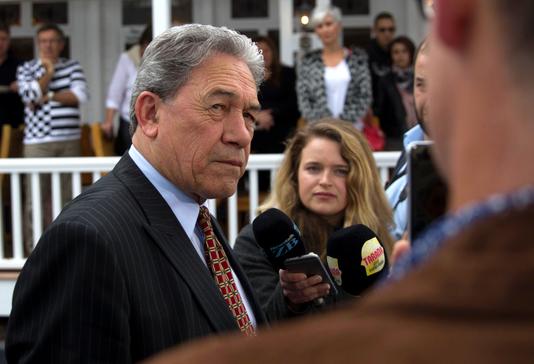
11. Dr PITA SHARPLES (Co-Leader—Māori Party) Link to this
to the Minister of Maori Affairs
He aha a ia i kore ai e tuku tono pērā i tā tētahi nūpepa i kī, mō tētahi pūtea kia pakari ai te Ao Māori, ā, ka taea e ia te whakamārama ki tēnei Whare te take ko tēnei te tau tuarua kāore i kapohia e ia he rawa hōu hei pūtea mō tōna tari?
[Why did he reportedly not submit a Budget bid to strengthen the position of Māori, and what explanation can he give the House for this being the second consecutive year that his department has not received any new funding?]
Hon PAREKURA HOROMIA (Minister of Māori Affairs) Link to this
This year the Government made it very clear that there would be limited funding for new initiatives. I asked Te Puni Kōkiri to look at how it could better utilise existing funding, and how that funding could be aligned with the Government’s priorities and the aspirations of the Māori people. It is about Te Puni Kōkiri being able to continue to work with Māori to support Māori, and to make the most of its resources and assets, its knowledge, its skills, and its leadership capability. The member is wrong; Budget 2005 did provide more money for Vote Māori Affairs.
He aha ai kāre i tono mō tētahi ake pūtea mā Te Puni Kōkiri, ā, i tono rānei ki Te Tāhuhu o te Mātauranga kia noho tonu te pūtea Manaaki Tauira mō ngā tauira Māori iwa mano?
[An interpretation in English was given to the House.]
[Why did he not bid for alternative funding for Te Puni Kōkiri or for the Ministry of Education, to keep the manaaki tauira student grant scheme going on behalf of those 9,000 Māori students?]
Hon PAREKURA HOROMIA Link to this
It is part of the general premise of where Te Puni Kōkiri is moving, and manaaki tauira is out of that area. When it started to be delivered there were about 8,000 students receiving tertiary education; there are now 90,000 students—only 11 percent were using it. The money has not been cancelled and it has not disappeared. It has moved to strengthening teacher capability in secondary schools, in order for young people to be encouraged and developed, so that when they get tertiary education they do better.
Does the Minister’s failure to seek more funding in the latest Budget round lead him to agree with the National Party view that there has been considerable wastage in Te Puni Kōkiri’s activities, and that it is extremely hard to work out exactly what that ministry does?
Hon PAREKURA HOROMIA Link to this
The financial report with its recommendation on how Te Puni Kōkiri has performed is there for that member to read. If he got out more often amongst Māori like I do, as the real Māori spokesperson, he would see that a lot of good action is done by Te Puni Kōkiri. [ Interruption] That member never ever went out; he stayed home from Thursday night through to Sunday night.
I raise a point of order, Madam Speaker. The Minister may sling off at me all he likes, but he does have some obligation to address the question. The question was whether he agreed that Te Puni Kōkiri has had considerable waste attached to it, and that it is very, very hard to work out exactly what it does.
Hon PAREKURA HOROMIA Link to this
I am very clear, along with a whole lot of Māori people, about exactly what Te Puni Kōkiri does. That my friend over there is slow in picking it up and understanding it is not my problem.
Te Ururoa Flavell Link to this
E whakapono ana ia e pai ana te haere o ngā mahi a ngā tari matua, ā, mēnā kei te whakaae ia kei a ia ngā whakaaturanga hei kī, e pai ana ngā mahi o aua tari?
[An interpretation in English was given to the House.]
[Does he believe that mainstreaming works; if he does, what proof does he have of the success of mainstream departments?]
Hon PAREKURA HOROMIA Link to this
I believe that if Māori can get to Harvard, and that is mainstreaming, I am supportive of it. If Māori people can build a house and keep their family comfortable, and that is mainstreaming, I believe in it. If mainstreaming means that Māori become business owners and business managers, I believe in it. But I also believe in recognising our tikanga and culture and keeping it strong. That is what I believe in.
Could the Minister please explain, in light of comments in this House associating Vote Māori Affairs baseline funding with the fact that Māori unemployment has dropped from a record high of 18.9 percent to 8.6 percent, why on the East Coast, his own electorate, in 2001, 50 percent of the population receiving the unemployment benefit were Māori, and in March 2006 that percentage had increased to 64 percent; why in Waiariki the percentage increase in Māori unemployment grew from 49 percent in 2001 to 66 percent in 2006; and why in my own electorate of Te Tai Tokerau the percentage increase in Māori unemployment also grew, from 53 percent in 2001 to 64 percent in 2006—and what will Te Puni Kōkiri be doing to address these disparities?
Hon PAREKURA HOROMIA Link to this
A number of issues are relevant to the statistical assumptions of my learned friend from Te Tai Tokerau, but first I want to remind him that when we came in the unemployment rate was 22.6 percent, and it tracked down to 6.4 percent. It has now risen to 8.1 percent. At the end of the day, that is about a lack of industry and a lack of skills, and that is what this Government is focusing on. It is about a strong economy, as we were reminded by Dr Cullen yesterday, but these people do not seem to like it.
I raise a point of order, Madam Speaker. The question was specifically directed to unemployment on the East Coast, in Waiariki, and in Te Tai Tokerau, and it was not answered.
No, the member cannot require a specific answer. But the Minister certainly addressed the question of unemployment.
E hia te pūtea i roto i ngā tahua pūtea e pahore tata ake nei i whiwhia ki Te Tari Māori?
[What was the funding allocated recently to the Ministry of Māori Affairs in the Budget?]
Hon PAREKURA HOROMIA Link to this
This Government has been in power for 6 years. When we came to office, Vote Māori Affairs was $55 million. The previous Government got rid of $200 million in that area—got rid of it. Budget 2005 provided $14.8 million for Kāpohia ngā Rawa over 4 years. Budget 2005 provided $4.6 million for Māori radio broadcasting over 4 years, $2.5 million for the Hui Taumata action task force, and $200,000 for Mā Te Reo to help all New Zealanders understand this great language well.
In response to the Minister’s comments that the figures I gave were an assumption, I say they were not. I seek leave of the House to table the numbers on the unemployment benefit as at March 2001 and March 2006.
I runga i te whakautu i tērā wiki, ehara tēnei Whare i te wāhi hei whakawā i te kāwana mō ngā mahi kuare a Te Puni Kōkiri, ka taea e ia te kōrero ki tēnei Whare, kia haere rātau ki whea, whakawā ai i ia me tōna tari?
[An interpretation in English was given to the House.]
[Following the response last week that this House is not the forum to hold the Government accountable for the poor performance of Te Puni Kōkiri, where would he recommend this House go to hear him account for his performance and the performance of his department?]
Hon PAREKURA HOROMIA Link to this
E tautoko ake anō wētahi o ngā whakaaro nō tōku whakahoki ki a koe e Pita i tērā rā, e kōrero anake mō te whakaae o te taea i konei hei kōrero ake anō. Engari nā te whakaaro i roto i āku, nā tō wera Māori mō ngā kanohi Māori i roto i a te Tari. Tēnā ake anō te mea. Kāre e hiahia au i roto i a āku e tautokotia ake anō tō whakaaro, e taea ake anō ngā kōrero i runga i te Whare Pāremata nei. My response to my learned elder Dr Sharples is that I also added, after he had asked the question, that this was the place to bring that issue, but I thought it was not the place to make his insinuation and wero—his challenge—about the Māori members and the Māori ministry, and that that was for other places. That is what I meant.